




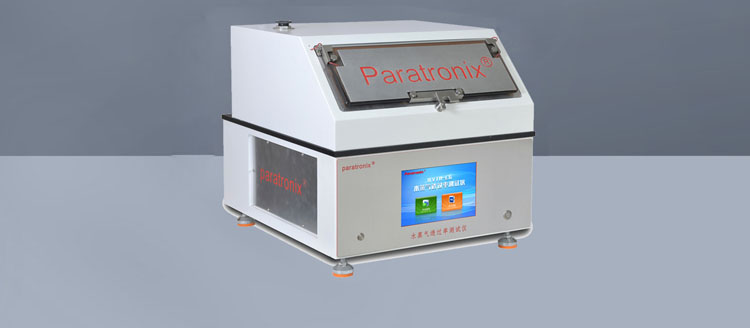
Can a WVTR Tester Test Aluminum Foil Laminates?
Yes, a WVTR tester can test aluminum foil laminates, provided its sensitivity, specimen mounting, and operating conditions suit the extremely low transmission rates expected.
For pharmaceutical packaging and other demanding applications, the central question is whether the instrument can distinguish genuine moisture transmission from background signals and fixture leakage.
Why do WVTR results differ between laboratories? Temperature, humidity, exposed area, specimen condition, sealing methods, and measurement endpoints can all change the reported result.
For packaging developers, quality teams, and laboratory managers, reliable testing begins with matching the measurement system to the material, specification, and intended packaging application.
What Does a WVTR Result Actually Tell You?
Water vapor transmission rate, or WVTR, describes the mass of water vapor passing through a defined specimen area per unit time under specified conditions.
Results are commonly expressed in grams per square meter per day. A lower value generally indicates a stronger moisture barrier under the stated test conditions.
An aluminum foil laminate combines foil with supporting layers such as polymers, paper, or adhesives. These layers provide mechanical strength, sealability, printability, and protection.
Intact aluminum foil provides an exceptionally strong moisture barrier. Measured transmission through a laminate may therefore be dominated by defects, damage, or unintended leakage paths.
A flat specimen result characterizes the tested material and preparation. It does not automatically establish the moisture protection of a finished pouch, blister, or container.
That distinction matters commercially: approving a laminate solely from flat material data can overlook moisture entering through package seals, closures, folds, or processing damage.
Is Your Tester Sensitive Enough for the Specification?
Start with the acceptance requirement and expected WVTR range. A tester suitable for ordinary plastic films may lack sufficient sensitivity for aluminum foil laminates.
Compare the specification against the instrument’s validated detection limit, quantification limit, and measurement uncertainty under the proposed conditions, rather than relying on its advertised range.
The detection limit concerns distinguishing a signal from background. The quantification limit concerns reporting a numerical value with an established level of measurement reliability.
These limits depend on the complete setup, including test cell, exposed area, carrier gas where applicable, temperature, humidity, and the laboratory’s actual operating performance.
Request evidence from representative high barrier materials and documented blank measurements. General claims about sensor sensitivity alone do not establish suitability for your specific laminate.
If the required acceptance threshold lies too close to the method’s quantification limit, selecting a more capable system may prevent inconclusive results and repeated testing.
Which Test Method Should You Choose?
Instrument methods differ in how they detect transmitted water vapor. Available approaches include infrared detection, electrolytic detection, and humidity sensor methods, depending on system design.
Selection should follow the required measurement range, applicable specification, material compatibility, and validated performance. No detector type guarantees reliable results for every foil laminate.
ASTM F1249 is commonly associated with modulated infrared measurements through plastic film and sheeting. Its use for a particular laminate requires checking scope and suitability.
The ISO 15106 series describes several instrumental approaches for plastic films and sheets. Identify the relevant part and edition when preparing or comparing test reports.
Gravimetric cup methods may suit some materials, but very low transmission can demand long durations and careful control of weighing uncertainty, seals, and environmental stability.
Before purchasing equipment, ask suppliers to demonstrate your material under agreed conditions. Evaluate repeatability, background performance, test duration, and reporting capability against your acceptance requirement.
How Can You Prevent Edge Leakage from Dominating the Result?
When transmission through the specimen is extremely low, a small leak around its perimeter can contribute more moisture than the laminate itself during measurement.
The cut edge also exposes the laminate’s layered structure. Depending on construction and mounting, moisture may travel laterally through polymer or adhesive layers into the cell.
Use the instrument manufacturer’s validated mounting procedure, including appropriate gaskets, masks, sealants, and clamping conditions. Confirm that mounting materials are compatible with the test temperature.
Keep sealing surfaces clean, flat, and undamaged. Wrinkles, trapped particles, uneven clamping, and poorly positioned specimens can create leakage paths that compromise otherwise careful testing.
Where the procedure permits edge masking, document the masking material, application method, and effective exposed area. Uncontrolled changes can make comparisons between laboratories misleading.
Investigate unexpectedly high readings with blank checks and independently prepared specimens. Repeatedly measuring one mounted sample cannot establish that the original installation was free from leakage.
Could Cutting, Folding, or Handling Damage the Foil?
Foil laminates can develop cracks, pinholes, or local separation during converting, transport, cutting, and handling. Thin foil layers may be particularly sensitive to mechanical stress.
Prepare specimens using sharp tools and a controlled procedure. Avoid creasing, stretching, or pressing the test area while cutting and transferring samples into the fixture.
Choose sampling locations that represent the roll or batch. Include relevant positions across the web and document visible abnormalities instead of selecting only flawless areas.
Keep specimen orientation consistent and record which side faces the humid chamber. Asymmetric laminate structures can show different transient behavior when the exposure direction changes.
If packaging will undergo folding or flexing, consider testing specimens after a defined conditioning procedure. Pristine flat material may not represent its condition after conversion.
WVTR testing alone cannot identify every defect mechanism. Microscopy, suitable pinhole inspection, or other complementary examinations may help explain unusual results and guide corrective action.
Why Do WVTR Results Differ Between Laboratories?
Two laboratories can obtain different results without either instrument being faulty. Comparability requires agreement on the material, exposure conditions, preparation procedure, and reported measurement basis.
Temperature and humidity differences are frequent causes. A value measured under one moisture gradient should not be treated as interchangeable with a value measured under another.
Check humidity on both sides of the specimen, not just the humid side. Differences in dry side conditions can change the driving force for transmission.
Compare effective test areas and masking arrangements. Because WVTR is normalized by area, an incorrect exposed area directly affects the numerical value reported by software.
Also compare conditioning, test duration, endpoint criteria, calibration status, gas quality where relevant, and background correction. Each laboratory should provide sufficient detail to reproduce its procedure.
Finally, review specimen variability and measurement uncertainty. Differences between samples cut from separate roll locations may be mistaken for instrument disagreement, particularly when defects dominate transmission.
How Long Should a High Barrier Test Run?
A displayed value is not automatically a valid endpoint. High barrier measurements require sufficient time for system background, specimen moisture, and the transmission signal to stabilize.
Polymer and adhesive layers may release previously absorbed moisture during testing. This transient contribution can initially obscure the much smaller flow passing through the laminate.
Ending a test too early can therefore produce a misleading result. Extending every test indefinitely also wastes capacity without necessarily improving confidence in the measurement.
Define an endpoint through a validated procedure, using appropriate stability criteria and any required minimum duration. Apply those rules consistently to comparable materials and conditions.
Review the measurement trend when results appear unusual. A declining signal, persistent drift, or abrupt jump can suggest conditioning effects, instability, leakage, or handling problems.
For routine production testing, establish expected behavior during method development. This helps operators recognize abnormal runs and supports realistic turnaround commitments to production and customers.
How Should You Report Results Below the Quantification Limit?
A result below the quantification limit does not establish zero moisture transmission. It means the method cannot reliably assign a numerical value at that level.
Report such findings using the laboratory’s validated convention, with the applicable limit and test conditions. Avoid presenting an unsupported zero or excessive decimal precision.
Keep detection and quantification statements distinct. A laboratory may detect a signal without being able to quantify it with sufficient confidence for a numerical claim.
For pass or fail decisions, agree on the acceptance rule in advance. Consider measurement uncertainty and whether the reporting limit supports the customer’s specification.
If the specification is lower than the laboratory can reliably assess, a below-limit result may remain inconclusive. Improve method capability before claiming compliance from that result.
Reports should identify the laminate, specimen orientation, conditions, method, exposed area, individual results, and relevant deviations. Include uncertainty or other decision information where required.
What Is a Practical Workflow for Reliable Testing?
First, define the business decision: material qualification, supplier comparison, process investigation, or routine release. The decision determines the required sensitivity, sampling plan, and reporting detail.
Second, confirm instrument readiness through calibration or verification procedures, background checks, and a suitable reference material where available. Record acceptance criteria before testing begins.
Third, prepare multiple independent specimens using the agreed handling and mounting procedure. Separate specimen variability from repeat readings collected from a single installation in the cell.
Fourth, run the agreed exposure conditions and endpoint criteria. Retain measurement trends so unusual results can be investigated using evidence beyond the final reported number.
Fifth, review variation before averaging results. One unusually high specimen may reveal a defect or mounting problem that a batch average would otherwise conceal.
When laboratories disagree, arrange a controlled comparison using adjacent specimens, matched procedures, and shared reporting requirements. Change one suspected factor at a time during investigation.
When Is Finished Package Testing Also Necessary?
Material WVTR data supports laminate selection, but finished package performance also depends on seal quality, package geometry, forming stresses, and the distribution environment encountered.
A laminate with excellent barrier properties can still produce inadequate packaging if sealing or conversion introduces moisture pathways. Evaluate these risks before finalizing material approval.
Select complementary package tests according to the product and failure mechanism. Package integrity testing and moisture ingress studies answer related questions with different measurement objectives.
For pharmaceutical applications, connect barrier data with the product’s moisture sensitivity and stability program. Material transmission results alone cannot establish a defensible shelf life.
Paratronix Instruments provides packaging testing instruments for pharmaceutical packaging, plastic packaging materials, and high barrier applications. Equipment discussions should begin with the intended testing decision.
Share your laminate structure, expected transmission range, acceptance threshold, and preferred method when consulting Paratronix. These details support a meaningful assessment of equipment suitability.
Making a Defensible Testing Decision
A WVTR tester can assess aluminum foil laminates when its demonstrated capability matches the required measurement range and its mounting procedure controls unintended moisture entry.
Reliable interpretation depends on representative specimens, defined exposure conditions, appropriate endpoints, and transparent reporting. Laboratory comparisons become meaningful only when those essential details are aligned.
Choose equipment and procedures around the decision you need to make. Combine material measurements with package evaluation when the final objective is protecting a moisture-sensitive product.