




Recent Posts
 How to select torque range for a bone screw torsion testerSep 22, 2026
 What does a bone screw torsion tester measure during implant testing?Sep 22, 2026
 When ASTM F1306 is suitable for laminated film puncture testingSep 21, 2026
 Selecting a laminated film puncture force tester for low-force filmsSep 21, 2026
 Which standards should an ampoule break force tester support?Sep 20, 2026
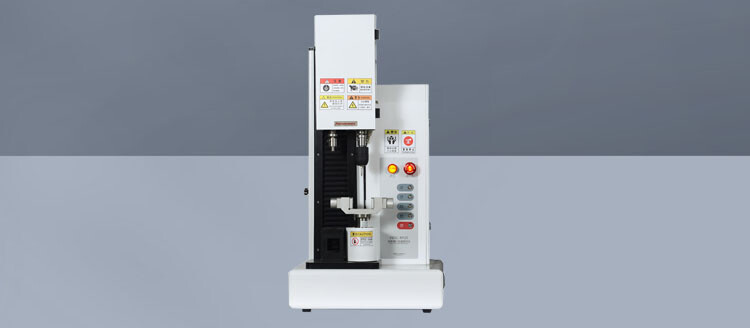
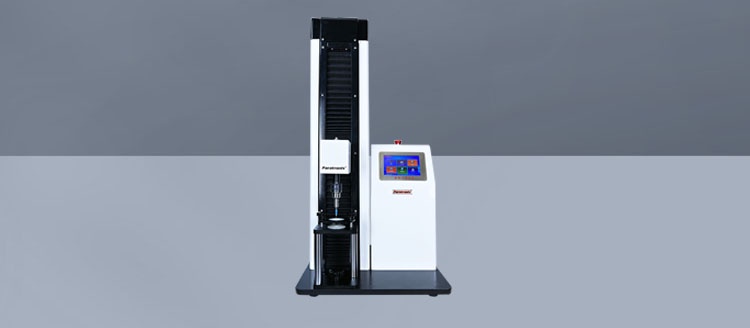

Tiny leaks rarely look dramatic, yet they can shorten shelf life, weaken sterility protection, and undermine confidence in a package long before visible failure appears. That is why a Non-destructive Micro-Leakage Tester has become a serious point of interest in packaging test equipment. It offers a way to detect very small leakage paths without opening, puncturing, or otherwise damaging the sample, which is especially relevant in pharmaceutical packaging, plastic packaging materials, and high-barrier structures.
Why micro-leak detection matters now
Package integrity has moved from a routine quality check to a strategic control point. Products are more sensitive, barrier expectations are higher, and regulatory review is often more detailed than before.
A leak that seems insignificant in production can become a major risk during transport, storage, or end use. Moisture ingress, oxygen exposure, microbial contamination, and loss of vacuum may all begin with defects too small to spot visually.
This is where the Non-destructive Micro-Leakage Tester stands out. Instead of sacrificing samples for destructive evaluation, it helps reveal integrity issues while keeping the package intact for additional review, traceability, or stability-related comparison.
What a Non-destructive Micro-Leakage Tester actually does
At its core, the instrument is designed to identify whether a sealed package allows gas movement through an unintended channel. The principle sounds simple, but the measurement requires high sensitivity and stable control.
A Non-destructive Micro-Leakage Tester usually evaluates changes in pressure, vacuum response, or gas flow behavior around the package. If the seal area, material interface, or closure system contains a defect, the measured signal changes in a detectable way.
The key point is that the package is not cut open during testing. That makes the method useful when sample preservation matters, when retesting is helpful, or when product value makes destructive loss undesirable.
The difference from destructive leak tests
Traditional methods often rely on dye penetration, burst testing, or peel-based evaluation. These can provide valuable information, but they usually change the sample permanently.
A Non-destructive Micro-Leakage Tester focuses on finding leaks while preserving package condition. In practice, that changes how many samples can be checked, how data can be compared, and how investigations can be structured.
How tiny package leaks are detected
Although exact technology differs by instrument design, the detection path usually follows a clear logic. The package is placed in a controlled test environment, exposed to a defined condition, and monitored for a measurable response.
If the package is perfectly sealed, the response stays within an expected range. If there is a micro-channel, pinhole, weak seal, or closure defect, the pressure or leakage profile shifts beyond the accepted limit.
- The chamber or test zone is stabilized before measurement begins.
- A vacuum or pressure condition is applied in a controlled way.
- Sensors record response changes over a set period.
- Software compares actual behavior with a qualified threshold.
- The result indicates whether leakage is present or absent.
What makes this process valuable is not only sensitivity, but repeatability. Reliable micro-leak testing depends on stable instrument control, proper sample positioning, and a method suited to the package format being evaluated.
Where leaks usually originate
Not every leak comes from the same source. A Non-destructive Micro-Leakage Tester is often used to investigate several failure points that behave differently under test conditions.
Why non-destructive testing changes decision-making
The value of a Non-destructive Micro-Leakage Tester goes beyond finding defective samples. It improves how packaging performance is judged over time and across development stages.
In early material evaluation, it helps compare package concepts without losing every sample during screening. In validation work, it supports consistent evidence around seal integrity. In routine quality control, it can strengthen trend analysis.
This matters for industries that depend on package reliability rather than appearance alone. Pharmaceutical packaging is an obvious example, but the same logic applies to high-barrier pouches, specialty films, and sensitive plastic packaging structures.
Companies focused on packaging test equipment increasingly look for methods that connect laboratory sensitivity with practical production relevance. That is one reason the Non-destructive Micro-Leakage Tester is now discussed alongside barrier testing, seal strength evaluation, and package integrity programs.
Typical packaging formats and use cases
The technology is not limited to one package style. Its usefulness depends on the test method matching the structure, headspace, material behavior, and expected risk of the package.
- Blister packs that require tight cavity protection and dependable sealing.
- Flexible pouches used for moisture-sensitive or oxygen-sensitive products.
- Small bottles and closures where micro-leaks affect shelf performance.
- High-barrier laminate packaging where hidden defects reduce functional barrier value.
- Development samples that need further examination after leak testing.
In practical terms, the instrument is often most useful when the cost of missing a tiny leak is higher than the cost of performing a more sensitive integrity check.
Why high-barrier materials deserve closer attention
High-barrier materials are designed to resist transmission, so even a small sealing defect can outweigh the benefit of the material itself. A strong barrier layer cannot compensate for a leaking closure path.
That is why packaging assessment should connect material properties with seal integrity testing. Looking at one without the other can produce an incomplete picture of actual package protection.
What to evaluate when comparing instruments
Not every Non-destructive Micro-Leakage Tester is equally suitable for every package. A useful evaluation goes beyond headline sensitivity and looks at method fit, data stability, and operational practicality.
- Leak detection limit relative to the actual risk level of the package.
- Compatibility with rigid, semi-rigid, or flexible formats.
- Test repeatability across multiple runs and operators.
- Data recording quality for validation, traceability, and comparison.
- Ease of method setup for different sample dimensions and materials.
It is also worth asking how the instrument fits into a broader packaging testing workflow. A leak result becomes more useful when it can be interpreted alongside seal strength, permeability, or other package performance indicators.
How this fits into a broader packaging testing approach
A Non-destructive Micro-Leakage Tester should not be viewed as an isolated tool. It is part of a larger effort to understand whether packaging performs as intended under real business conditions.
That broader effort often includes material barrier analysis, seal performance studies, transport-related evaluation, and routine integrity checks. The strength of the leak tester lies in showing whether the finished package remains functionally closed.
Paratronix Instruments Co., Ltd. works in this wider packaging test equipment space, with attention to pharmaceutical packaging, plastic packaging materials, and high-barrier applications. That background is relevant because micro-leak detection is rarely a standalone question. It is usually part of a more complete packaging testing solution.
A practical next step for evaluation
A good starting point is to define the package type, the likely leak risk, and the consequence of failure. From there, it becomes easier to judge whether a Non-destructive Micro-Leakage Tester should be used for development, validation, routine inspection, or all three.
It also helps to compare the instrument method with actual sample behavior, especially when dealing with flexible structures, complex seals, or high-barrier materials. The right decision usually comes from matching the testing principle to the package, not from choosing the most aggressive specification on paper.
For anyone reviewing packaging test equipment, the most useful next move is to build a clear checklist: package format, required sensitivity, repeatability, reporting needs, and how the leak test connects with other integrity data. That approach turns the Non-destructive Micro-Leakage Tester from an interesting device into a practical decision tool.
Leave A Reply
Search by Keywords