




Recent Posts
 How does an oxygen permeability tester measure coated paper?Nov 11, 2026
 What Does an Oxygen Permeability Tester Measure in Blister Packaging?Nov 11, 2026
 What does a falling dart impact tester measure in plastic film?Nov 11, 2026
 ASTM D1709 method A vs. method B for falling dart testingNov 11, 2026
 Does ASTM D3985 apply to oxygen transmission testing of solar backsheets?Nov 10, 2026
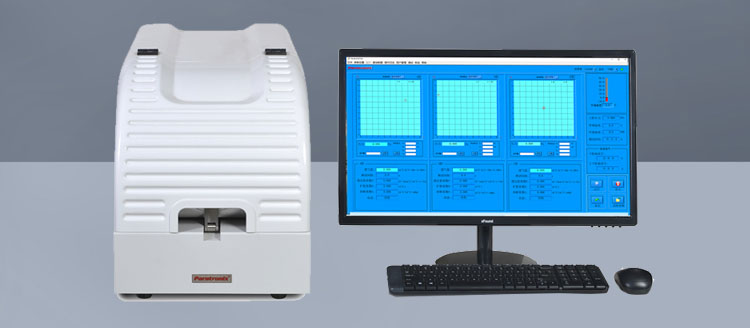

An oxygen permeability tester measures coated paper by exposing one side of a sealed sample to an oxygen-containing gas and detecting how much oxygen reaches the other side. The instrument calculates an oxygen transmission rate, or OTR, from the measured oxygen flow and the exposed sample area under specified conditions.
The result describes the performance of the tested sheet, not the coating in isolation. Paper fibers, coating coverage, pinholes, humidity, temperature and the integrity of the sample seal can all influence how much oxygen gets through. A low OTR indicates a stronger oxygen barrier under the stated test conditions, but it does not by itself establish how a finished package will perform.
What happens when oxygen crosses coated paper?
Coated paper is rarely a perfectly uniform barrier. Its paper substrate contains a network of fibers and pores, while the coating forms a layer intended to reduce the pathways available to gases. Depending on the material and coating process, oxygen may pass through the coating itself, through thin or discontinuous regions, or through defects such as pinholes and cracks.
Gas movement is driven by a difference in oxygen partial pressure between the two sides of the sample. In a typical measurement, one side is exposed to oxygen while the other side is kept at a lower oxygen concentration. Oxygen travels toward the lower-concentration side, where the instrument measures the quantity arriving over time.
For an intact, relatively uniform coating, oxygen transport can involve gas dissolving in the coating and diffusing through it. In paper-based materials, however, defects and exposed porous areas can provide additional routes. The tester measures their combined effect across the exposed area; it does not automatically identify which route is responsible for the result.
How the test cell and sensor work together
The central component of an oxygen permeability tester for coated paper is a test cell that clamps the specimen between two chambers. A gasket or other sealing arrangement defines the exposed area and prevents gas from traveling around the edges instead of through the sample.
In a common sensor-based arrangement, oxygen or an oxygen-containing test gas is supplied to one side of the specimen. A carrier gas with a low oxygen concentration flows across the opposite side and transports permeated oxygen to a detector. The detector produces a signal related to the amount of oxygen in the carrier stream, and the instrument converts that signal into an oxygen flow rate.
Different instruments use different detection systems and gas arrangements. Some use an oxygen-specific sensor; other methods determine gas transmission from changes in pressure. The details of gas supply, calibration and calculation therefore depend on the instrument and test method. What they share is the need to establish controlled conditions and distinguish oxygen passing through the sample from oxygen entering through a leak or remaining in the system.
The instrument does not simply take a reading as soon as the sample is clamped. The cell and gas lines may need purging to remove residual oxygen, and the specimen may need time to approach a stable transmission condition. A changing signal can reflect gas remaining in the system, changing moisture in the paper, or the time required for oxygen transport through the material to stabilize. The applicable method and instrument procedure determine when a result can be reported.
From sample preparation to a reported OTR
A useful measurement starts with a representative specimen. A sheet cut from a smooth, undamaged area may be appropriate when the purpose is to compare coating formulations. If the purpose is to assess material after folding or converting, specimens need to reflect that treatment. These are different questions and should not be treated as interchangeable tests.
The specimen must also fit the test cell without wrinkles or damage in the sealed area. Coated paper can be more difficult to seal than a smooth plastic film because its surface may be rough or uneven. A poor seal can produce an apparently high transmission rate even when the coating itself is effective. Conversely, a measurement area that misses local defects can make a variable material appear better than it is across a larger sheet.
Before testing, the sample is conditioned as required by the chosen method. Paper and many coating materials respond to moisture, so the temperature, relative humidity and conditioning history matter. The sample is then mounted in the cell, the test gases and environmental conditions are set, and the measurement continues until the method’s endpoint is reached.
The reported OTR is generally expressed as a volume of oxygen transmitted per unit area per unit time, such as cm³/(m²·day). The report should also identify the conditions associated with that value, including temperature, relative humidity, the oxygen exposure or partial-pressure difference, and the test method. Gas volume reference conditions can matter when comparing results from different sources.
For example, an OTR reported for one side exposed to pure oxygen should not be compared without qualification with a value obtained under a different oxygen concentration. The driving force for transmission is different. Likewise, two identical-looking units do not guarantee that humidity or other test conditions were the same.
Why humidity can change the result
Moisture is especially important for coated paper because both the substrate and some barrier coatings interact with water. A coating that restricts oxygen effectively when dry can become less effective at higher relative humidity if absorbed moisture changes its structure and makes gas transport easier. Paper can also absorb moisture, changing its dimensions and affecting the coating or the contact between layers.
Not every coating responds in the same way. A result at one humidity level describes performance at that level; it cannot reliably be used to predict performance at another without supporting data. For materials intended to face changing moisture conditions, measurements at relevant humidity levels can reveal whether the oxygen barrier is stable or sensitive to moisture.
The humidity on each side of the specimen may also matter. Test methods and instruments differ in how they control or specify humidity, so a report that simply says “high humidity” is less useful than one stating the actual conditions. Conditioning time matters for the same reason: the paper and coating need an opportunity to respond to the selected environment.
What the reading says about the coating—and what it does not
The OTR represents oxygen passage through the complete specimen within the test area. If the coating is applied to only one side, the measured sheet still includes both the coating and the paper substrate. If the structure contains primers, additional coatings or laminated layers, their combined contribution is included as well.
This distinction matters when comparing formulations. A lower OTR for one coated paper does not prove that its coating chemistry alone is better if the two samples also differ in paper grade, coating weight or surface condition. A more meaningful comparison holds those variables as consistent as practicable and records any differences that remain.
Coating thickness and coverage are related but not identical. Adding more coating can improve coverage or increase the distance oxygen must travel, yet the effect depends on how evenly the layer forms and whether defects remain. A coating with a favorable average weight can still have local weak points over a rough paper surface. The transmission test captures the consequences of those weak points within the exposed area, but a separate examination is needed to locate and identify them.
Sheet orientation should be recorded as well. For an ideal uniform layer tested under equivalent conditions, reversing the sheet does not necessarily change the steady-state barrier value. Real coated paper can be asymmetric, however, and reversing it may alter which surface contacts a gasket or which side experiences a particular humidity. Keeping the orientation consistent helps make comparisons interpretable.
Why repeated samples may produce different results
Coated paper can vary across a roll or sheet. Differences in substrate roughness, coating distribution, creasing or handling damage may not be visible without inspection, but they can affect oxygen transmission. Testing only one small specimen gives a result for that specimen and location, not a complete picture of variation across the material.
Replicate specimens taken from defined positions help distinguish a consistent material response from an isolated defect or preparation problem. If one result is much higher than the others, it should not automatically be discarded. A seal leak, damaged specimen or local coating defect are all possible explanations; the test record and sample condition should be reviewed before drawing a conclusion.
Very low readings also need interpretation. When the oxygen passing through the specimen approaches the instrument’s detection or reporting limit, background oxygen and system leakage become more significant relative to the sample signal. A result reported as below a stated limit means the instrument and method could not quantify transmission below that level under the test conditions. It does not mean that no oxygen passed through the material.
How standards shape a comparable test
Published methods help laboratories define test conditions, specimen preparation, equipment checks and reporting. ASTM D3985, for example, describes oxygen gas transmission rate measurement through plastic film and sheeting using a coulometric sensor. ASTM F1927 addresses oxygen transmission rate through barrier materials using a coulometric detector under specified conditions of temperature and relative humidity.
Not every standard is automatically suitable for every coated-paper structure. The material’s roughness, stiffness, expected transmission range and ability to form a reliable seal all affect whether a particular method and instrument can be used as intended. A test report should name the method actually followed and disclose relevant deviations, rather than implying that a standard applies simply because an oxygen sensor was used.
Instrument verification and calibration are equally important. A system leak check helps establish whether gas can bypass the specimen, while appropriate reference materials or other checks can support confidence that the instrument is responding as expected. The precise procedures depend on the equipment and method.
How a sheet result relates to a finished package
A coated-paper OTR is useful for comparing materials and monitoring whether a coating process produces a consistent barrier. It is not the same as the oxygen ingress rate of a complete package. A finished package can admit oxygen through seals, folds, closures or damaged areas, as well as through the main material.
The distinction is particularly important where coated paper is folded, creased or heat-sealed. Mechanical deformation can create cracks or alter the coating locally, while the seal region introduces materials and interfaces not represented by a flat-sheet test. A low OTR measured on an undamaged specimen is therefore evidence about the material under that test condition, not proof that the finished package is leak-tight.
The most useful interpretation keeps the measurement tied to its question: a flat, controlled specimen shows how the tested sheet transmits oxygen; additional testing of converted material or complete packs is needed when the question concerns the performance of the package as used.
Leave A Reply
Search by Keywords