




Recent Posts
 How does an oxygen permeability tester measure coated paper?Nov 11, 2026
 What Does an Oxygen Permeability Tester Measure in Blister Packaging?Nov 11, 2026
 What does a falling dart impact tester measure in plastic film?Nov 11, 2026
 ASTM D1709 method A vs. method B for falling dart testingNov 11, 2026
 Does ASTM D3985 apply to oxygen transmission testing of solar backsheets?Nov 10, 2026
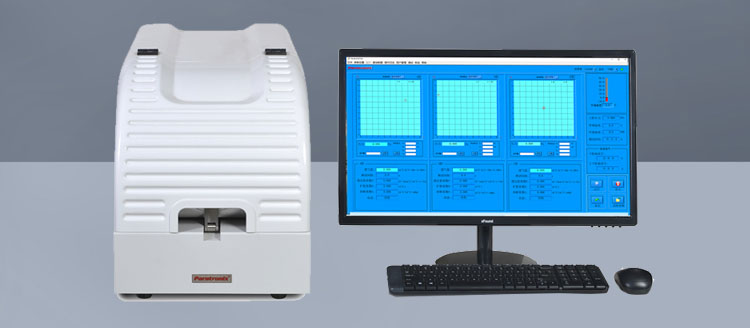

An oxygen permeability tester for blister packaging measures the passage of oxygen through a packaging material or, when equipped and validated for the purpose, into an assembled blister pack. The result describes the package’s oxygen barrier under specified test conditions; it does not directly measure how long a medicine will remain stable.
That distinction matters when a blister film looks suitable on a material specification sheet but the finished pack must also protect an oxygen-sensitive product. The film, lidding, seals and pack geometry can affect the oxygen exposure inside the cavity. A useful test begins by deciding whether the question concerns the material alone or the complete packaging system.
What the measurement represents
Oxygen permeation is the movement of oxygen through a material from a region of higher oxygen partial pressure toward a region of lower partial pressure. In a typical film test, the sample separates two sides of a test cell. One side is exposed to an oxygen-containing gas, while the other is monitored for oxygen that passes through the sample.
The instrument detects oxygen reaching the measurement side and uses the test setup to calculate a transmission rate. Depending on the instrument and method, detection may rely on a sensor responding to the oxygen carried from that side of the cell. The reported value applies to the exposed specimen and the conditions used during the measurement.
A lower transmission rate generally indicates a stronger oxygen barrier under comparable conditions. It does not mean that no oxygen is present in a blister cavity: air may remain inside after sealing, and oxygen can enter through routes other than the material area represented by a film test.
Material testing and finished-pack testing answer different questions
A blister pack usually combines a formed cavity with a lidding material. Its performance depends on more than the nominal properties of either component. Before interpreting a result, identify the test specimen.
Flat film or sheet
A flat specimen test measures oxygen transmission through the exposed area of the material sample. It is useful for comparing incoming materials, checking consistency between batches or evaluating candidate barrier structures. The result describes the sample as prepared and tested, not automatically the finished blister.
This distinction is especially important for thermoformed blisters. Forming can change the local thickness of a sheet, particularly around cavity walls and corners. A flat-sheet result may therefore be a useful starting point without fully representing the barrier of the formed cavity. A formed sample may require a suitable fixture or a different test approach.
Assembled blister pack
A finished-pack test, where supported by the equipment and method, assesses oxygen ingress into a defined package or cavity. Depending on the setup, the result can reflect contributions from exposed materials, seals and other package features. It is closer to the packaging configuration used for a product, but it does not necessarily identify which component caused the measured ingress.
Whole-pack results also depend on how the pack is mounted, which cavities are included, how the internal space is connected to the measurement system and whether the mounting itself remains tight. A fixture that introduces an unintended path can make the apparent package result misleading. Conversely, a fixture that masks part of the package may exclude a relevant exposure area.
Practical distinction: use a material result to investigate a material barrier; use an appropriately designed package test to investigate the assembled pack. Neither result should be relabeled as the other without explaining the specimen and method.
Reading the units without mixing up the results
Film results are often reported as an oxygen transmission rate, or OTR, expressed as a volume of oxygen per unit area per unit time, such as cm³/(m²·day), under stated conditions. Some methods may use different units or report a rate normalized to a specified pressure difference. The volume basis and pressure conditions should be included when results are compared.
A finished package may instead be reported as an oxygen ingress rate per package, per cavity or for another defined test unit. The package’s exposed area and geometry are part of that result. A per-package rate cannot be compared directly with an area-normalized film OTR unless the relevant areas, materials and calculation assumptions are known.
The word “permeability” is also used in more than one way. In technical usage, a permeability coefficient relates transmission to material thickness and the oxygen partial-pressure difference under an applicable model. OTR is the measured transmission rate for a specimen under stated conditions. Dividing or multiplying by nominal thickness does not automatically produce a reliable material coefficient for a multilayer film, a nonuniform formed cavity or a package containing several possible entry paths.
Conditions that can change the number
Two valid results can differ because the specimens were tested under different conditions. Before treating a difference as a change in barrier quality, review the test record.
- Temperature: Oxygen transmission can change with temperature. A result obtained at one temperature should not be assumed to apply unchanged to another storage condition.
- Relative humidity: Moisture can affect some barrier layers more than others. Record the humidity on the relevant sides of the specimen and allow for the conditioning required by the method.
- Oxygen driving force: Oxygen concentration and pressure affect the partial-pressure difference across the specimen. Comparisons require compatible gas conditions and reporting conventions.
- Specimen condition: Thickness variation, orientation, wrinkles, damage and forming can influence the tested barrier. For a multilayer structure, record which side faced each test environment.
- Test duration: Oxygen may need time to pass through the specimen before the measured rate approaches a stable value. A reading taken too early may not represent the steady-state rate.
Conditioning and test duration are particularly relevant for high-barrier materials. A very low signal can take longer to distinguish from the instrument’s background. The method should define how stability is judged rather than relying only on an arbitrary elapsed time.
Permeation is not the same as a seal leak
Permeation occurs through a material. A leak is flow through an unintended pathway, such as a channel in a seal or physical damage to the package. Both can contribute to oxygen entering a blister, but they are different mechanisms and may require different tests to locate or characterize.
A material OTR test generally does not assess the integrity of the lidding seal. A whole-pack oxygen ingress test may respond to a leak as well as permeation, depending on its configuration and sensitivity, but the total result alone may not reveal the route. When an assembled pack performs worse than expected from its materials, examining seal quality and package integrity is a logical next step.
The reverse is also true: a pack can pass a selected leak test yet still permit oxygen to permeate through its materials. A leak test and an oxygen transmission measurement therefore provide complementary evidence rather than interchangeable results. Each has its own detection limits and test conditions.
From an oxygen result to a packaging decision
An oxygen ingress measurement can inform a stability assessment, but it is only one part of the exposure picture. Oxygen already trapped in the cavity, the amount and sensitivity of the product, the cavity’s headspace, the storage environment and any secondary packaging can all matter. The product may also consume oxygen, so the oxygen concentration inside a pack is not necessarily a simple direct reading of the total oxygen that has entered.
For that reason, an OTR value alone cannot establish a shelf life. Estimating exposure from barrier data requires a suitable model and defensible assumptions; demonstrating product stability requires evidence appropriate to the product and its packaging. A calculated estimate should be distinguished from an actual stability result.
When comparing two blister structures, begin with the question the comparison needs to answer. If the concern is a change in supplied film, test equivalent specimens under matching conditions. If the concern is the protection provided by the completed pack, define the cavity configuration and test the assembled packs with a suitable method. If only one result changes, the difference can help narrow the investigation, although it does not by itself prove a root cause.
What a useful test report should identify
The numerical result is much more useful when it can be traced to the specimen and procedure. For a material test, the report should identify the structure or sample, thickness as measured or specified, exposed area, conditioning, test temperature, humidity, gas conditions and the reported units. It should also state the number of specimens and describe any relevant variation among them.
For an assembled blister, record the pack configuration, cavity or cavities tested, whether the pack was empty or contained a substitute where the method permits, and how the fixture connected to it. The report should make clear whether the result is per cavity, per pack or normalized in another way. Any unusual sample preparation, damaged specimens or deviations from the intended procedure belong alongside the result.
Finally, check whether the measured rate lies within the instrument and method’s usable range. A reading near the detection or quantification limit may support only a limited conclusion. Reporting it as an exact comparison between very high-barrier samples can imply a level of certainty the measurement does not provide.
Leave A Reply
Search by Keywords