




Recent Posts
 Which ISO Test Conditions Matter for a Syringe Needle Puncture Tester?Sep 23, 2026
 How to choose the right load range for a bone screw insertion force testerSep 23, 2026
 How to select torque range for a bone screw torsion testerSep 22, 2026
 What does a bone screw torsion tester measure during implant testing?Sep 22, 2026
 When ASTM F1306 is suitable for laminated film puncture testingSep 21, 2026

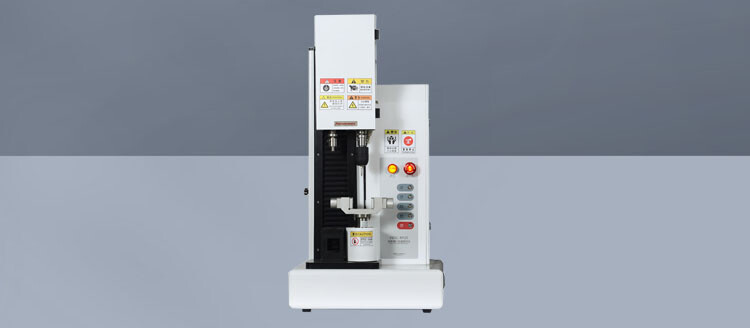
In high-performance textile manufacturing, precision testing is essential to balance breathability, durability, and end-use comfort. Which industries benefit most from air permeability testing? From technical textiles to medical fabrics and protective apparel, accurate air permeability analysis helps manufacturers improve product quality, meet strict standards, and stay competitive in demanding markets.
For textile producers, converters, laboratories, and procurement teams, air permeability is not a minor comfort metric. It directly affects thermal regulation, barrier behavior, coating consistency, and product acceptance in demanding applications.
This makes test equipment selection a strategic decision. Manufacturers need repeatable data, stable pressure control, practical sample handling, and reporting methods that fit both R&D and routine quality control across multi-batch production.
Although Paratronix Instruments Co., Ltd. is widely known for packaging testing instruments and professional testing solutions for pharmaceutical packaging, plastic packaging material, and high barrier material, the same measurement discipline is highly relevant to advanced textile testing where airflow control and material consistency matter.
Why Air Permeability Testing Matters in High-Performance Textile Manufacturing
Air permeability testing measures how much air passes through a fabric under a defined pressure difference and test area. In practice, common setups use pressure levels such as 100 Pa or 200 Pa, with results reported in units suited to textile standards and customer specifications.
For performance textiles, this value influences at least 4 critical outcomes: wearer comfort, heat dissipation, barrier behavior, and consistency after finishing. A fabric that performs well in one area can fail in another if airflow is not controlled within target tolerance.
More Than Breathability: It Is a Process Control Tool
Many buyers think air permeability testing only answers whether a fabric “breathes.” In manufacturing, it also helps detect coating non-uniformity, yarn density drift, lamination defects, and finishing variability between Lot A and Lot B.
If a fabric target is 80 to 120 units under a fixed method, repeated results outside that band may indicate unstable tension control, pore blockage, or fiber structure changes. That reduces the risk of downstream complaints and costly rework.
How It Supports Production and Supplier Qualification
In supplier management, air permeability data is often used as one of 3 to 5 acceptance criteria together with basis weight, thickness, and tensile performance. This is especially useful when multiple mills supply fabric for the same final product.
For internal quality systems, test frequency may range from every batch to every 2 hours depending on process criticality. Stable instrumentation reduces operator-to-operator variation and supports clearer pass-fail decisions on the shop floor.
Key reasons manufacturers prioritize airflow testing
- To align comfort performance with technical specifications
- To verify coating, membrane, or laminate uniformity
- To reduce returns caused by inconsistent fabric feel or function
- To compare samples during 2-stage or 3-stage product development
- To support customer audits and incoming material verification
The table below shows how air permeability testing connects directly to textile performance decisions across different manufacturing scenarios.
The pattern is clear: air permeability testing is relevant whenever a textile must deliver both comfort and controlled barrier performance. That is why it is increasingly integrated into qualification, process monitoring, and final inspection workflows.
Which Industries Benefit Most from Air Permeability Testing?
The question, “Which industries benefit most from air permeability testing?” matters because not all textile sectors use airflow data in the same way. The strongest demand usually comes from sectors where functional consistency is contract-critical rather than optional.
Technical Textiles
Technical textiles used in filtration, automotive interiors, industrial reinforcement, and composite support materials often require controlled porosity. Small changes in structure can shift airflow enough to affect bonding, filtration behavior, or acoustic performance.
In these applications, testing may be performed at 3 stages: incoming material verification, pilot production, and final lot release. This reduces mismatch between design intent and real manufacturing output.
Medical and Hygiene Fabrics
Surgical gowns, drapes, wound care layers, and hygiene nonwovens depend on a precise balance. Too much airflow may weaken protective performance; too little may reduce wearer comfort or process suitability in disposable medical products.
For medical fabric manufacturers, repeatability is crucial. When testing is part of a regulated documentation chain, acceptable instrument deviation and calibration routines become just as important as nominal airflow results.
Protective Apparel
Fire-resistant garments, chemical protective clothing, and workwear materials often require a defined balance between protection and physiological comfort. Air permeability testing helps evaluate whether fabric assemblies remain functional after coating, finishing, or multilayer construction.
A difference of even one finishing adjustment can alter airflow enough to change field acceptance. For buyers, this means test equipment must support comparative analysis between unwashed, washed, and post-treatment samples.
Sportswear and Outdoor Fabrics
In performance apparel, comfort claims often depend on measured breathability, not only marketing language. Outer shells, mesh panels, and laminated constructions all benefit from controlled air permeability data during product development and quality benchmarking.
R&D teams may compare 5 to 10 candidate structures before choosing one material platform. Reliable testing shortens this selection cycle and improves communication between design, sourcing, and manufacturing teams.
Packaging-Adjacent and Barrier Material Applications
There is also overlap with high barrier materials, coated substrates, and flexible technical sheets where airflow or gas passage must be understood in relation to structure quality. This is where broader test equipment expertise becomes valuable.
Companies experienced in packaging and barrier material testing, such as Paratronix Instruments, understand how controlled permeability measurement supports material development, quality assurance, and cross-industry testing consistency.
The table below maps the industries that benefit most from air permeability testing and the main reasons buyers invest in this type of instrument.
If the buying question is which industries benefit most from air permeability testing, the answer is straightforward: sectors with high product accountability, strict performance windows, and frequent material variation gain the most measurable value.
How to Choose the Right Air Permeability Test Equipment
Choosing an instrument is not just about price. Procurement teams should compare at least 4 dimensions: test range, repeatability, sample clamping reliability, and data management. These factors determine whether the equipment supports both development and production control.
Core Performance Factors
A practical textile air permeability tester should offer stable pressure regulation, repeatable readings, and sample fixtures suitable for different fabric structures. Lightweight nonwovens, dense woven fabrics, and coated materials do not behave the same during testing.
Buyers should check whether the system supports multiple test heads or sample areas, easy calibration access, and clear operator workflow. In busy laboratories, saving 20 to 30 seconds per test can make a meaningful difference over hundreds of samples per week.
Checklist for equipment evaluation
- Verify supported pressure ranges and applicable textile standards
- Ask about repeatability under routine use, not only under ideal conditions
- Review calibration method, maintenance cycle, and spare part availability
- Confirm data export format for QC records and customer reports
- Evaluate usability for both lab technicians and production staff
Why Solution Capability Matters
Many manufacturers do not need a standalone answer to one test method. They need a broader testing workflow that links permeability, barrier behavior, mechanical strength, and package or material integrity where required by the final application.
This is where an experienced test equipment supplier can offer more value than a simple machine quotation. Paratronix focuses on research, development, and sales of professional testing instruments and comprehensive testing solutions, which is especially useful for customers managing multiple material categories.
Common Buying Mistakes to Avoid
One common mistake is choosing an instrument based only on a current sample type. Production may expand from one fabric structure to 3 or 4 related materials within 12 months, making flexibility important from the start.
Another mistake is ignoring service response time. If calibration, troubleshooting, or spare parts take 2 to 4 weeks, quality control can be disrupted. For many B2B buyers, after-sales capability is part of the real equipment specification.
Implementation, Quality Control, and Long-Term Value
An air permeability tester creates value only when testing is embedded into a practical workflow. That usually includes method setup, operator training, sampling rules, acceptance limits, and periodic verification of instrument stability.
A Practical 5-Step Deployment Process
- Define product groups such as woven, nonwoven, laminated, or coated textiles
- Set method conditions including pressure level, test area, and conditioning time
- Run baseline tests on 10 to 20 representative samples
- Establish pass-fail or warning limits for routine QC
- Review data trends monthly and adjust process controls when drift appears
This structured approach turns testing into a control system rather than a paperwork exercise. It is also the best way to answer customer questions quickly when comparing historical lots or validating a process change.
What Good Data Looks Like
Useful results are repeatable, explainable, and linked to action. If operators repeat the same sample 3 times and the spread is unusually wide, the issue may be sample preparation, clamping, environmental conditions, or equipment calibration rather than the fabric itself.
Well-managed facilities typically document conditioning time, test pressure, sample orientation, and batch identity. These 4 records make it easier to compare materials over time and identify the real source of variation.
Service, Maintenance, and ROI Considerations
Routine maintenance is usually simple, but it must be planned. Buyers should ask about calibration frequency, seal inspection intervals, software support, and replacement part lead times. Even a robust instrument benefits from a preventive service schedule.
The return on investment often comes from 3 areas: fewer rejected lots, faster development decisions, and stronger customer confidence. In applications where one failed batch can disrupt delivery schedules, better testing discipline pays back faster than many buyers expect.
Questions to ask a supplier before purchase
- Which standards and sample structures can the instrument handle?
- What is the recommended calibration and verification routine?
- How long is the typical lead time for installation and training?
- Can the system integrate with existing QC documentation practices?
- What support is available for multi-material testing programs?
Air permeability testing is highly relevant for high-performance textile manufacturing because it gives measurable control over comfort, barrier behavior, and product consistency. The industries that benefit most include technical textiles, medical fabrics, protective apparel, sportswear, and other advanced material sectors where airflow performance affects acceptance and reliability.
For B2B manufacturers and laboratories, the right test equipment should deliver stable results, practical operation, and long-term service support. If you are evaluating permeability testing solutions alongside broader material or barrier testing needs, Paratronix Instruments can help you review your application, compare options, and build a suitable testing plan.
Contact us today to discuss your testing requirements, request product details, or get a customized solution for your textile or material quality control workflow.
Leave A Reply
Search by Keywords