




Recent Posts
 How test speed affects lipstick breaking strength resultsOct 10, 2026
 Choosing a Water Vapor Transmission Rate Tester for flexible filmsOct 10, 2026
 How to select a friction peel tester for flexible packaging filmsOct 09, 2026
 Key Specifications to Compare When Selecting a Lipstick Break Force TesterOct 08, 2026
 What Does a Lipstick Break Force Tester Measure in Quality Control?Oct 08, 2026

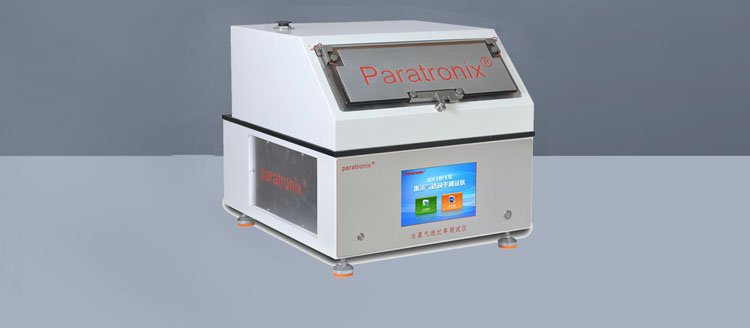

A Torque Tester is one of the most practical checks for reducing bottle-cap leaks before finished goods leave the line. It does not replace a complete package integrity program, but it gives a fast, repeatable indication of whether the closure has been applied and performs within an acceptable torque range. That matters because a cap can look properly seated while still being too loose to maintain a seal, or too tight for a customer to open without excessive force.
Leak complaints often lead teams to inspect the bottle, liner, induction seal, filling temperature, or transport conditions. Those factors all matter. Yet closure torque is frequently the first variable worth checking because it directly affects the compression between the cap, liner, bottle finish, and sealing surface. A consistent torque-check routine can catch a drifting capping head, worn chuck, incorrect setup, or variable closure lot before the issue becomes a warehouse rejection or a customer complaint.
The goal is not simply to achieve the highest possible torque. The goal is to apply enough torque to create and maintain the intended seal, while still protecting the package components and keeping opening force acceptable for the end user.
Why a Torque Tester helps identify leak risk early
A bottle closure is a working system, not just a cap placed on a bottle. The final sealing result depends on the interaction between the closure design, bottle neck finish, liner or plug, product formulation, filling process, capper settings, and time after capping. Torque is one of the easiest measurable signals within that system.
When application torque is too low, the cap may not compress the liner sufficiently or may fail to engage the threads as intended. The package can then leak during inversion, vibration, pressure change, or thermal cycling. This is common when a capping head slips, a chuck does not grip the cap consistently, or a changeover setting is not fully verified.
When torque is too high, the risk changes rather than disappears. Excessive tightening can damage threads, distort a closure, stress a bottle finish, deform a liner, or create an opening torque that customers cannot manage. On certain packages, excessive torque can also create a misleading result: the cap feels secure on the line, but the sealing interface has been damaged or the closure later relaxes.
A torque measurement therefore gives more useful information than a visual cap inspection alone. It allows the team to compare actual values with the validated or internally approved range for that specific bottle-and-cap combination. The acceptable range should come from package development, supplier recommendations, validation work, or documented production trials. It should not be borrowed casually from a different cap diameter, liner material, neck finish, or product type.
Direct answer: routine torque checks reduce cap-leak risk by finding under-tightened, over-tightened, and inconsistent closures while corrective action is still possible. The measurement is most valuable when it is linked to the actual package specification and reviewed together with leak, seal, and opening-performance checks.
Application torque and removal torque are not the same measurement
A common mistake is to treat every torque reading as interchangeable. In practice, the timing and method of measurement affect what the number means.
Application torque describes the force applied by the capping equipment when the closure is installed. It is useful for setup verification and process control, but the setting shown on a capper is not automatically the torque experienced by every finished bottle. Cap orientation, chuck condition, bottle stability, closure variation, and line speed can all change the real result.
Removal torque, sometimes called opening torque, is the torque required to loosen and remove the closure after it has been applied. This is commonly measured with a Torque Tester by securing the bottle and turning the cap in the opening direction until the initial breakaway point is reached. It reflects the condition that a warehouse inspector or customer is more likely to encounter.
Removal torque may decline after capping because closures and liners can relax, settle, or respond to temperature changes. For this reason, a reading taken immediately after capping may not represent the package condition after a defined hold time. If the production specification requires a delayed reading, measure it at that specified interval. Do not compare an immediate result with a release limit established for a 24-hour sample.
Some closures have bridges, tamper-evident bands, child-resistant features, pumps, or other designs that require a more specific test method. A standard opening-torque check may still be useful, but it may not capture every functional requirement. In these cases, the method should state exactly what is being measured: first movement, bridge break, band separation, initial opening, or continued removal torque.
Build the check around the real failure mode
Torque testing becomes less effective when it is treated as a box to tick. Start by asking where leaks are actually appearing. Are they found immediately after capping, after palletizing, after transport simulation, during hot-fill cooling, or after exposure to temperature changes? The answer helps determine what samples and conditions should be tested.
For example, a bottle that leaks only after warm product cools may need more than a fresh-line torque reading. The cap may initially appear satisfactory, while pressure changes or material relaxation reveal insufficient residual sealing force later. A sensible evaluation may include torque measurements at defined intervals, plus the relevant package integrity check under realistic conditions.
For a liquid detergent, solvent-containing product, oil, syrup, or aggressive formulation, compatibility between the product and closure system can affect seal behavior. A torque result cannot prove chemical compatibility. It can show whether closure tightness is consistent, but it should be interpreted alongside storage tests, leak tests, and component evaluations appropriate to the product.
For dry products, the concern may be moisture ingress or loss of freshness rather than visible liquid leakage. Torque still matters, particularly where liners or seals need controlled compression. But again, torque is an indicator, not a universal proof of barrier performance.
This distinction prevents a familiar problem: a team tightens caps further after finding leaks, then creates difficult-to-open packages without solving the underlying defect. Before changing the capper setting, confirm whether the issue is low residual torque, damaged bottle threads, cap defects, liner variation, incorrect finish dimensions, fill contamination on the sealing land, or another cause.
A practical Torque Tester routine on the production floor
The most reliable routine is simple enough to be followed during normal production, but controlled enough that different people obtain comparable results. The details should be defined in the site procedure, especially for regulated products.
- Confirm the package configuration. Record the bottle, closure, liner or seal type, product, production line, and relevant lot information. A torque number without package identification has limited value.
- Use representative samples. Pull bottles across the run rather than taking several consecutive bottles from one point. Include samples after startup, after capper adjustment, after a closure-lot change, and at planned intervals during production.
- Check the instrument condition. Confirm that the Torque Tester is clean, stable, within its calibration status, and fitted with grips suitable for the bottle shape. A bottle that moves in the fixture can produce an artificial reading.
- Position the bottle correctly. Keep the bottle upright and securely supported without crushing thin walls. Ensure the cap is centered under the turning force. Misalignment can add friction or side loading that does not represent normal opening.
- Turn smoothly at a consistent rate. Jerking the closure can create a peak that is higher than the true breakaway torque. The test method should specify the direction, turning speed or technique, and whether the peak value is recorded at first movement.
- Compare with the approved range immediately. An isolated high or low result deserves attention, but the pattern is often more informative. Several values drifting toward one limit can signal a developing capping issue before any value formally fails.
- Document the response to exceptions. When a result falls outside the limit, record the action taken: recheck, capper inspection, setup adjustment, sample expansion, hold decision, or escalation. The value alone does not demonstrate control; the response does.
For repeated checks, consistency is more valuable than speed. A rushed test can turn a useful control into a collection of numbers that cannot be trusted. New staff benefit from observing several correctly performed tests and comparing their results with an experienced colleague before they perform routine release checks independently.
What to investigate when torque values vary too much
Variation is often the first warning sign. Even when the average value is within the approved range, a wide spread may indicate that some bottles are receiving insufficient or excessive torque. Looking only at an average can hide the bottles most likely to leak.
Start with the capping system. Examine chuck wear, spring condition, gripping surfaces, capper-head alignment, spindle behavior, bottle handling, and the stability of the container as it enters the capping zone. A capper can be set correctly on paper while the physical components no longer apply force consistently.
Then inspect the closures and containers. Mixed cap lots, dimensional variation, damaged threads, flash, ovality, contaminated liners, and inconsistent bottle finishes can all affect torque. If a problem appears after a packaging-material change, do not assume the line setting is the only variable. Compare retained samples from the previous lot with the current components under the same test method.
Product on the bottle finish is another easily overlooked source of trouble. Splashing, foaming, residue, or lubricity around the sealing area can change how the cap tightens and how it later opens. The result may be low residual torque, inconsistent readings, or leakage that only appears after handling. Improving fill control or bottle-cleaning conditions may solve the issue more effectively than increasing torque.
When torque testing is not enough on its own
A Torque Tester is a strong process-control tool, but it should not be asked to answer questions it cannot answer. It does not directly measure seal-channel defects, microscopic cracks, pinholes, induction-seal integrity, product compatibility, or package performance under every distribution condition.
If the package has a foil induction seal, torque control helps ensure the closure is applied correctly, but seal quality may also require a separate seal inspection or integrity method. If bottles are shipped by air, exposed to high temperature, stacked under load, or used with volatile liquids, the test plan should reflect those actual stresses. The correct approach is to combine torque data with the package tests that match the failure risk.
There is also a point where manual sampling is no longer sufficient. High-speed lines, frequent product changes, or repeated complaint history may justify a more structured statistical sampling plan, automated data capture, or additional package-integrity testing. The right level of control depends on product risk, production volume, and internal quality requirements.
Choosing a Torque Tester for routine closure checks
Selection should begin with the packages being tested, not with the largest available torque range. The instrument must cover the expected torque values with useful resolution, while still providing a secure way to hold the specific bottle shapes used on site. Small pharmaceutical bottles, lightweight PET containers, wide jars, and irregular consumer-product packs may need different fixtures or support arrangements.
Look for a clear peak-torque display, stable measurement behavior, practical bottle gripping, calibration support, and a workflow that matches the number of checks required per shift. Data output may be useful where results need to be reviewed electronically, trended, or included in batch documentation. For basic troubleshooting, a simple and robust setup may be more helpful than features that are rarely used.
Paratronix Instruments Co., Ltd. develops packaging testing instruments for applications including pharmaceutical packaging, plastic packaging materials, and high-barrier materials. When discussing a torque-testing solution, provide the bottle dimensions, closure type, expected torque range, sampling method, and any special opening or tamper-evidence requirement. This allows the fixture and test approach to be considered in the context of the actual package rather than as a generic instrument purchase.
Questions that often come up during closure checks
How often should bottle-cap torque be tested?
Use the documented production sampling plan. At a minimum, checks are commonly needed at startup, after adjustment or changeover, after component-lot changes, and at defined intervals during the run. Higher-risk or less stable processes may require more frequent sampling.
Can a cap pass torque testing and still leak?
Yes. Torque may be acceptable while another part of the package system fails, such as the liner, bottle finish, induction seal, thread condition, or product compatibility. Investigate leakage with complementary package tests rather than relying on torque alone.
Should the cap be tested immediately after capping?
Immediate testing is useful for process monitoring, but it may not show residual opening torque after the closure has settled. Follow the defined hold time in the package specification when the release criterion is based on delayed measurement.
Why do two people get different readings on the same bottle?
Differences usually come from bottle positioning, fixture grip, turning speed, test endpoint, or instrument handling. A written method and short operator-to-operator comparison study can identify whether the method needs clearer controls.
Cap-leak prevention works best when torque checks are treated as an early warning system rather than a final inspection ritual. Use the Torque Tester to verify that closure application remains consistent, investigate trends before they become failures, and connect the result to the full package system. That approach gives production teams a more defensible basis for reducing leaks without creating unnecessary opening-force problems.
Leave A Reply
Search by Keywords