




Recent Posts
 How to select a friction peel tester for flexible packaging filmsOct 09, 2026
 Key Specifications to Compare When Selecting a Lipstick Break Force TesterOct 08, 2026
 What Does a Lipstick Break Force Tester Measure in Quality Control?Oct 08, 2026
 Validation Records and Test Standards for Artificial Skin Puncture TestingSep 24, 2026
 Force Tester or Universal Testing Machine for Artificial Skin Puncture Tests?Sep 24, 2026
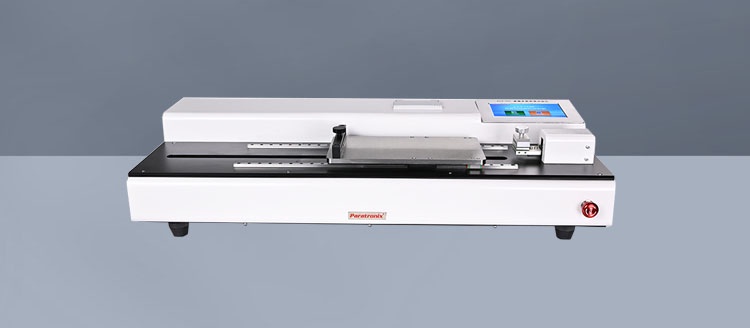

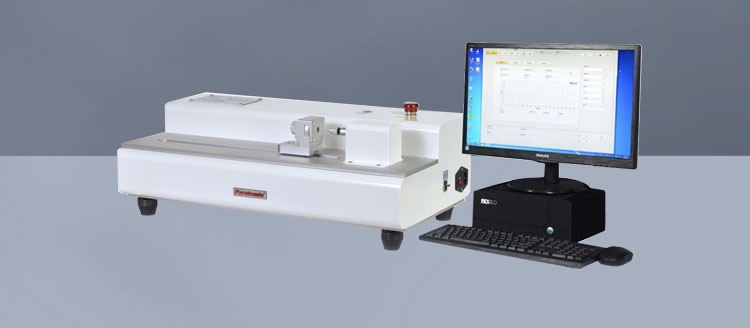
For quality and safety teams, the real question is not whether a Non-Destructive Leak Tester can find leaks at all. Most modern systems can. The harder question is whether it can detect micro leaks reliably enough to support release decisions, validation work, complaint investigations, and ongoing risk control without creating false confidence.
The short answer is yes—under the right conditions, a non-destructive method can detect micro leaks with very good reliability. But “reliably” depends on more than the instrument itself. It depends on package format, test method, pressure stability, material behavior, seal design, defect type, test parameters, and how the site defines an acceptable leak threshold. In practice, the method is highly useful, but it is not universal and it is not self-explanatory.
That distinction matters in regulated and high-risk packaging environments. If a pharmaceutical blister, sterile pouch, vial closure system, or high-barrier flexible pack passes a leak test, quality personnel need to understand what that result really means—and what it does not mean.
Why micro leak detection is difficult in real production environments
Micro leaks are rarely simple pinholes in ideal laboratory samples. In production, leaks may come from channel defects in heat seals, incomplete sealing due to contamination, stress cracks, weak corners, material thinning, closure interface failures, or damage caused during handling and transport. Two leaks with the same nominal size may behave very differently because the leak path geometry is different.
That is one reason why “leak size” alone is often a poor decision metric. A long tortuous channel leak may pass gas differently from a short direct puncture. The same package may also behave differently depending on internal headspace, product support, temperature, and film elasticity.
For QC and safety managers, this means reliability is not just about sensitivity. It is about whether the test method can consistently distinguish acceptable packs from risky packs in the actual defect modes seen on the line.
What a non-destructive leak test actually measures
Most non-destructive leak testing methods for packaging do not “see” the leak directly. They infer package integrity through a measurable physical response, often involving pressure change, vacuum decay, force response, or related signal behavior over time.
Vacuum decay is one of the most widely recognized approaches in package integrity testing. In a typical setup, the sample is placed in a test chamber, a vacuum is drawn, and the system monitors whether pressure behavior indicates gas escaping from the package. If a package has a defect that allows gas movement, the chamber response differs from that of an intact package.
The strength of this approach is that it is objective, instrument-based, and non-destructive. Unlike dye ingress or burst testing, the sample is not intentionally damaged during the test, which makes it useful for validation studies, retain sample evaluation, high-value products, and investigations where keeping the sample intact matters.
From a quality system perspective, this is a major advantage. You can trend data, compare lots, preserve evidence, and reduce operator subjectivity.
So, can it detect micro leaks reliably?
Yes, but only if reliability is defined correctly.
A non-destructive leak tester can be highly reliable for micro leak detection when:
- the package and defect type are compatible with the test principle;
- the test method has been properly developed and validated;
- the instrument resolution matches the integrity risk being controlled;
- environmental and sample conditions are stable;
- pass/fail limits are based on risk and evidence, not arbitrary settings.
Where users run into problems is assuming that a successful instrument demonstration on one package means universal micro leak capability across all formats. That is rarely true. A rigid tray with stable headspace is a very different test object from a soft pouch, a blister cavity, or a package with highly flexible walls. Micro leak reliability is always application-specific.
What “reliable” should mean for quality and safety teams
In operational terms, reliability should mean three things:
- Repeatability: the same sample gives consistent results under the same conditions.
- Discrimination: the method can separate good packages from defective ones at the required risk threshold.
- Robustness: normal variation in operators, lots, temperature, or production conditions does not make the test unstable.
This is especially important in regulated packaging applications. A highly sensitive result that is not repeatable is not useful. A stable test that cannot detect the relevant defect mode is also not useful. For release and compliance decisions, reliability must include both sensitivity and practical control.
The biggest factors that influence micro leak detection performance
Package format and material behavior
Rigid and semi-rigid packages are generally easier to evaluate with pressure-based non-destructive methods because the package response is more stable. Highly flexible packages can still be tested, but wall movement, elastic recovery, and material creep can complicate signal interpretation.
High-barrier materials may behave differently from more permeable structures, especially when test duration is short and the signal difference is small. Seal quality, laminate stiffness, and cavity volume all influence detectability.
Defect type, not just defect size
A common mistake is to think of micro leaks as a single category. In practice, instrument performance depends heavily on whether the defect is a pinhole, channel leak, cracked seal area, poor closure interface, or material fracture. Some defects are intermittent. Some open only under stress. Some are partially blocked by product contact. A method validated on laser-drilled holes may not fully represent real production failures.
Headspace volume
Packages with very low headspace can be challenging because the amount of measurable gas exchange may be limited. Packages with larger and more stable headspace often produce clearer test responses. This is one reason test development should be done on actual commercial pack configurations, not simplified substitutes.
Test parameter selection
Vacuum level, stabilization time, test duration, and decision thresholds all affect the outcome. If the cycle is too short, the instrument may miss borderline defects. If the settings are too aggressive, false rejects may increase. Parameter development is not a clerical task; it is part of method design.
Environmental control
Temperature fluctuation, vibration, chamber sealing condition, and even operator handling can affect highly sensitive measurements. When users report inconsistent micro leak results, the root cause is often not the sensor itself but uncontrolled test conditions.
Where non-destructive leak testing is especially valuable
For quality control and safety management, non-destructive methods are most valuable where sample preservation, objective data, and routine repeatability matter more than simple visual confirmation.
Typical high-value use cases include:
- pharmaceutical blister package integrity checks;
- sterile barrier and medical packaging evaluation;
- high-barrier food or nutraceutical packaging verification;
- process validation after sealing parameter changes;
- incoming or comparative packaging material assessment;
- failure investigation of customer complaints or transport damage.
In these scenarios, a destructive method may still have a role, but a non-destructive approach gives better support for traceability and evidence-based decision-making.
Where the limits begin
Non-destructive leak testing is not a magic replacement for every integrity test. There are clear limitations.
One limit is that the detectable leak threshold depends on the package-method combination. Another is that instrument sensitivity on paper does not automatically translate into field sensitivity under production conditions. Also, some packages may show strong material movement or unstable behavior that makes micro leak discrimination difficult.
There is also a standards-related issue: “micro leak” is widely used in industry, but acceptable defect thresholds are application-dependent. A leak that is negligible for one non-sterile product may be critical for another product with oxygen sensitivity, moisture sensitivity, microbial barrier requirements, or sterility expectations.
That is why quality teams should avoid asking only, “What is the smallest leak this instrument can detect?” A better question is, “Can this method detect the smallest leak that matters for my product risk profile?”
How standards and compliance should be approached
For technical and regulated users, the test method should be linked to recognized integrity testing frameworks where applicable. In pharmaceutical and medical packaging environments, deterministic methods have gained increasing attention because they reduce subjectivity compared with probabilistic techniques such as dye-based methods in some use cases. Exact regulatory expectations depend on market, product type, and application, so site-specific review is necessary.
Where a standard or guidance document is referenced internally, teams should confirm the current version and scope before using it in validation documentation. Method suitability, validation design, and acceptance criteria must be tied to actual product/package risk, not just to a generic test recommendation. If a specific international standard is being used for procurement or compliance claims, the exact standard number and revision should be checked against the latest official publication status 【待核实】.
In practical terms, auditors and technical reviewers will usually want to see:
- a clear rationale for method selection;
- evidence that the method can detect relevant defect types;
- defined acceptance criteria;
- repeatability and reproducibility data;
- control of calibration, maintenance, and operator training.
Common misconceptions that lead to poor decisions
Misconception 1: Non-destructive means less sensitive.
Not necessarily. In many applications, a deterministic non-destructive method can provide better consistency than older destructive screening techniques. Sensitivity depends on the method-package match, not on whether the sample survives.
Misconception 2: A passed test proves absolute package integrity.
A passed result only proves integrity within the capability and conditions of the validated method. It does not eliminate every possible defect scenario outside those conditions.
Misconception 3: Artificial defects fully represent real leaks.
They are necessary for method development, but they are not perfect proxies for all production failures. Validation should include realistic defect thinking, not just idealized holes.
Misconception 4: One global threshold works for all products.
Leak acceptance must reflect product sensitivity, shelf-life risk, barrier needs, and safety implications.
How to judge whether a system is suitable for your application
For selection or method review, QC and safety managers should focus less on marketing claims and more on evidence from package-specific testing.
Useful questions include:
- What package formats has the method been proven on?
- What defect types were used during capability studies?
- How stable are results across operators and lots?
- Can the system handle your actual production tolerances and package variability?
- What is the false reject and false accept behavior under routine conditions?
- How are calibration and performance checks performed?
- Can the data support investigations, audits, and trend analysis?
If the answers are vague, the issue is not just technical uncertainty—it is a quality risk.
What good implementation looks like on the plant floor
The most successful users treat the leak tester as part of a broader package integrity control strategy, not as a stand-alone gatekeeper. They correlate the method with seal process understanding, material control, complaint data, and stability risk. They also review failures by defect pattern rather than simply counting rejects.
Good implementation usually includes a structured method development phase, routine performance verification with known references where appropriate, controlled operator instructions, and periodic review of whether the test still matches current packaging materials and process settings.
This is especially important when seal temperatures, dwell times, material suppliers, or package geometry change. Micro leak detection capability can shift even when the packaging still looks visually acceptable.
The practical conclusion
A Non-Destructive Leak Tester can detect micro leaks reliably, but reliability is earned through method suitability and validation, not assumed from instrument ownership. For quality control and safety managers, the real value of the method is that it offers objective, repeatable, sample-preserving insight into package integrity—often with stronger operational usefulness than destructive or subjective alternatives.
Its limits should be taken seriously. Micro leak performance is highly dependent on package design, defect behavior, and test setup. When those factors are understood and controlled, non-destructive testing can be a strong tool for risk reduction, compliance support, and routine quality assurance. When they are not, even a sophisticated system can produce misleading confidence.
That is the right way to frame the decision: not whether the technology works in theory, but whether it is validated to detect the leaks that matter for your product, your package, and your risk profile.
Leave A Reply
Search by Keywords