




Recent Posts
 Validation Records and Test Standards for Artificial Skin Puncture TestingSep 24, 2026
 Force Tester or Universal Testing Machine for Artificial Skin Puncture Tests?Sep 24, 2026
 What Does an Artificial Skin Puncture Force Tester Measure in Needle Testing?Sep 24, 2026
 Calibration Checks That Keep a Lipstick Break Force Tester Measurement-ReadySep 24, 2026
 Which ISO Test Conditions Matter for a Syringe Needle Puncture Tester?Sep 23, 2026


Validation Records and Test Standards for Artificial Skin Puncture Testing
Reliable artificial skin puncture testing depends on more than obtaining a force value. Quality teams need validated methods, controlled conditions, traceable records, and defensible acceptance criteria.
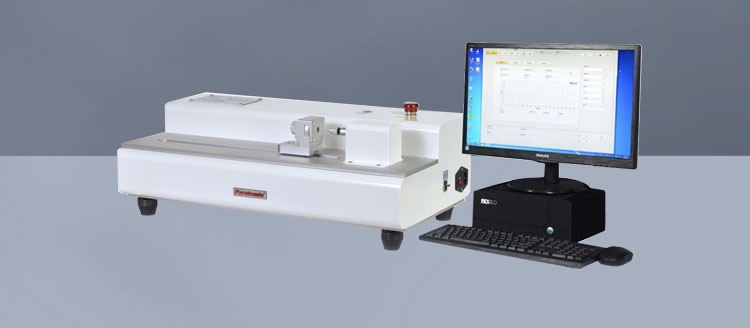
For safety and quality-control professionals, an artificial skin puncture force Tester can provide objective evidence of needle penetration behavior, material resistance, and product-related risk.
The most important question is whether a recorded puncture result can be trusted during audits, investigations, supplier assessments, and internal product-release decisions.
Why Validation Records Matter in Artificial Skin Puncture Testing
A puncture-force curve may appear precise, but its value is limited if the specimen, needle, fixture, speed, and software settings were not adequately controlled.
Validation records demonstrate that the testing process produces consistent, meaningful results under defined operating conditions. They convert a laboratory measurement into usable quality evidence.
For medical packaging, pharmaceutical devices, protective materials, and high-barrier packaging, puncture performance can influence product integrity, handling safety, and user confidence.
Artificial skin testing is especially relevant when evaluating needle penetration, cannula sharpness, injection-device behavior, or the resistance of simulated biological barriers.
Quality-control teams often use the test to compare incoming materials, verify supplier consistency, assess design changes, and monitor manufacturing variation over time.
Safety managers may use the same data to identify excessive penetration force, irregular breakthrough behavior, or conditions that could affect usability and injury risk.
Without complete records, a laboratory cannot easily explain whether a change in puncture force resulted from the sample, the operator, the instrument, or the test setup.
A well-managed validation package helps distinguish true product variation from normal measurement variation. This distinction is essential when making release, rejection, or corrective-action decisions.
Start with a Clearly Defined Test Purpose
Before selecting test parameters, define the decision the test must support. A method designed for supplier comparison may differ from one used for device-development verification.
For example, a manufacturer may need to confirm that a needle penetrates artificial skin within an acceptable force range without producing unstable force peaks.
Another organization may focus on comparing several needle coatings, bevel designs, or packaging conditions to identify the configuration with lower penetration resistance.
The intended use should identify the product, sample condition, simulated skin material, needle type, measurement outputs, and required level of reproducibility.
It should also state whether the test is comparative, specification-based, investigative, or part of a formal validation or regulatory documentation program.
A comparative method can show that Product A requires less force than Product B. It cannot automatically establish that either product is safe or clinically acceptable.
Where no mandatory product-specific standard exists, companies should create justified internal specifications based on risk analysis, development data, and historical performance.
Documenting the test purpose early prevents teams from collecting large datasets that cannot answer the actual quality or safety question under review.
Define the Critical Parameters of the Test Method
Artificial skin puncture testing is highly sensitive to setup conditions. Small changes can influence peak force, penetration displacement, force stability, and curve shape.
The artificial skin material must be identified by manufacturer, formulation, batch number, thickness, storage condition, and conditioning time before testing.
Artificial skin can vary in elasticity, moisture response, surface texture, and resistance. Different materials should not be treated as interchangeable without supporting equivalency evidence.
Needle characteristics require similar control. Record needle gauge, nominal outer diameter, bevel geometry, coating type, lot number, and any preconditioning requirements.
The selected puncture speed should reflect the approved method or intended use. Changing speed can change frictional behavior and the measured breakthrough force.
Fixture design is equally important. The specimen must remain securely clamped without excessive tension, wrinkling, slippage, or deformation near the puncture point.
Define the test position, penetration depth, travel limit, preload, and number of punctures per specimen. These settings should be fixed in the method version.
An artificial skin puncture force Tester should store or display relevant settings so reviewers can confirm that every run followed the approved configuration.
What Performance Data Should the Tester Record?
The minimum test record should include peak puncture force, displacement at puncture, test speed, instrument identification, fixture identification, and the complete force-displacement curve.
Peak force is commonly used because it reflects the maximum resistance encountered before or during penetration. However, peak force alone rarely explains the full behavior.
Initial slope may help evaluate how resistance builds before puncture. A steep increase can indicate higher stiffness, altered friction, or inconsistent sample presentation.
Breakthrough displacement identifies where penetration occurs. Unexpected variation may indicate artificial skin inconsistency, needle geometry changes, or fixture-related instability.
Post-puncture force can be useful when evaluating friction during continued travel. This parameter may matter for needles, cannulas, and devices entering layered materials.
Curve irregularities should be reviewed rather than ignored. Multiple peaks, sudden drops, noise, or abnormal oscillation can reveal mechanical or procedural problems.
Test software should retain raw data whenever possible. Summary values are useful for reports, but raw curves are often necessary during deviation investigations.
Electronic records should also identify the operator, date, method revision, sample identifier, and any deviation from the approved procedure or standard work instruction.
Build a Defensible Method Validation Plan
Method validation should show that the artificial skin puncture test is suitable for its intended purpose. The required depth depends on the risk of the decision.
For routine quality control, the emphasis is usually repeatability, reproducibility, system suitability, and sensitivity to meaningful product differences.
For development studies, teams may also examine linearity, operating range, robustness, discrimination capability, and correlation with other performance or usability findings.
Repeatability measures variation when the same operator tests comparable samples under consistent conditions. It helps establish whether the procedure can produce stable results.
Reproducibility evaluates variation across operators, days, instruments, fixtures, or laboratories. This is particularly important for multi-site manufacturing organizations.
Robustness testing intentionally changes selected noncritical conditions within realistic limits. Examples include small changes in conditioning time, clamp force, or test speed.
A robust method should not produce materially different conclusions when controlled operating conditions shift slightly within predefined acceptable boundaries.
System suitability checks confirm that the testing system is functioning before samples are evaluated. These checks may use a reference needle, standard material, or control sample.
The validation plan should state acceptance criteria before data collection. Retrospective criteria are difficult to defend and can create concerns about data-driven decisions.
Use Standards Carefully Rather Than Assuming One Standard Covers Everything
There is no single universal standard that automatically governs every artificial skin puncture application. Applicable requirements depend on the device, material, market, and intended use.
Organizations should first identify whether a product-specific standard, regulatory guidance document, customer requirement, or internal specification defines relevant puncture expectations.
General mechanical-testing principles may support method design, including force measurement verification, controlled crosshead speed, fixture alignment, and sample conditioning practices.
Medical-device teams may need to consider risk-management expectations, usability evidence, biocompatibility context, and performance verification requirements alongside mechanical test results.
Packaging laboratories should determine whether puncture testing supports sterile barrier integrity, material comparison, transit risk assessment, or incoming-material acceptance.
Relevant standards should be cited by full title, revision, issuing organization, and applicable clause. Do not reference a standard merely because it contains related terminology.
When adapting a standard method, record each departure and explain its technical basis. Modifications should be reviewed for their effect on data comparability.
A documented standards matrix can help teams map customer requirements, internal procedures, test parameters, validation evidence, and reportable outputs in one controlled location.
Create Complete and Audit-Ready Validation Records
A validation record should allow an independent reviewer to understand what was tested, how the method was performed, what was observed, and why conclusions were justified.
Begin with a protocol that defines responsibilities, scope, instruments, materials, sample quantities, acceptance criteria, statistical approach, and deviation-handling requirements.
Each tested sample needs a unique identifier linked to production lot, supplier lot, material batch, device configuration, and relevant storage or aging condition.
Instrument records should include calibration status, load-cell range, software version, preventive-maintenance history, and evidence that the selected test range was appropriate.
Fixture records should identify the fixture type, contact surfaces, clamping method, alignment checks, and any components that may affect specimen tension or positioning.
Raw data files should be protected from uncontrolled alteration. When software permits, use access controls, audit trails, user roles, and secure data backup procedures.
Deviations must be documented at the time they occur. Examples include sample tearing before puncture, fixture slippage, unexpected equipment alarms, or environmental excursions.
The final report should summarize results, statistical findings, outliers, deviations, conclusions, and approval signatures. It should clearly state whether acceptance criteria were met.
Control Common Sources of Unreliable Results
Artificial skin conditioning is a frequent source of variation. Temperature, humidity, hydration, and storage duration can alter mechanical response significantly.
Establish controlled conditioning instructions, including container type, exposure duration, environmental limits, and maximum allowable time between preparation and testing.
Needles must be handled carefully before testing. Contact with hard surfaces, repeated use, damage, or contamination can alter penetration behavior and invalidate comparisons.
Use a defined rule for needle reuse. In many applications, single-use testing is the most defensible approach because previous punctures may change tip condition.
Specimen location should also be controlled. Testing too close to a prior puncture, edge, wrinkle, or clamping boundary can distort the measured force.
Operator technique can influence results when specimen placement is manual. Training should cover alignment, tension control, visual inspection, and response to abnormal curves.
Environmental monitoring should be proportional to risk. Laboratories should record temperature and humidity whenever those factors are known or suspected to affect results.
Trend charts are valuable for identifying gradual drift. A slow increase in control-sample force may indicate fixture wear, sensor issues, or material-conditioning changes.
Choose Acceptance Criteria That Support Real Decisions
Acceptance criteria should reflect product function and risk, not simply the average value obtained during a development study or the capability of one instrument.
A practical specification may include maximum peak force, minimum peak force, allowable force variation, and curve characteristics that indicate stable penetration behavior.
Upper limits can address excessive resistance that may affect user comfort, device performance, or material damage. Lower limits can detect abnormal sharpness or unexpected weakness.
Statistical criteria should consider sample size and process variation. A mean result within limits does not necessarily demonstrate that all individual units are acceptable.
For incoming inspection, sampling plans should be based on supplier risk, product criticality, historical performance, and the consequences of accepting nonconforming material.
For process validation, teams should examine lot-to-lot and time-based variation. The objective is to show that normal manufacturing conditions consistently meet requirements.
When a result falls outside limits, the investigation should review raw curves, reference samples, operator actions, material traceability, and instrument system-suitability evidence.
Do not automatically classify every unusual value as an outlier. Exclusion requires a documented, scientifically justified reason and approval under the quality system.
How to Select an Artificial Skin Puncture Force Tester
The right instrument should match the required force range, resolution, travel accuracy, speed control, fixture compatibility, and data-integrity expectations of the laboratory.
Force capacity should be high enough to avoid overload while remaining sensitive enough to resolve meaningful differences between compliant and noncompliant samples.
Verify that the instrument supports the required test speed and maintains stable movement throughout the puncture event. Speed accuracy matters for reproducible comparisons.
Fixture flexibility is important because artificial skin samples may require specific clamping geometries, tension control, and clearance below the puncture location.
Software should support method locking, user permissions, raw-curve storage, result export, report generation, and traceable method-revision control where required.
Consider calibration support, service response, training availability, and documentation quality. These factors influence whether the equipment remains reliable after installation.
Paratronix Instruments Co., Ltd. provides packaging testing solutions for pharmaceutical packaging, plastic packaging materials, and high-barrier materials where dependable mechanical evidence is required.
When evaluating an artificial skin puncture force Tester, request a demonstration using representative samples and confirm that the measured outputs support your approved quality decisions.
Conclusion: Turn Puncture Data into Reliable Quality Evidence
Artificial skin puncture testing becomes valuable when it is managed as a controlled measurement system rather than a simple instrument operation.
Clear method definitions, validated parameters, complete records, suitable standards, and scientifically justified acceptance criteria allow teams to trust their results.
For quality-control and safety professionals, the goal is not merely to measure puncture force. The goal is to make consistent, traceable, risk-informed decisions.
A properly validated artificial skin puncture force Tester program can strengthen supplier control, support investigations, reduce testing uncertainty, and provide credible evidence for product quality.
Leave A Reply
Search by Keywords