




Recent Posts
 Force Tester or Universal Testing Machine for Artificial Skin Puncture Tests?Sep 24, 2026
 What Does an Artificial Skin Puncture Force Tester Measure in Needle Testing?Sep 24, 2026
 Calibration Checks That Keep a Lipstick Break Force Tester Measurement-ReadySep 24, 2026
 Which ISO Test Conditions Matter for a Syringe Needle Puncture Tester?Sep 23, 2026
 How to choose the right load range for a bone screw insertion force testerSep 23, 2026
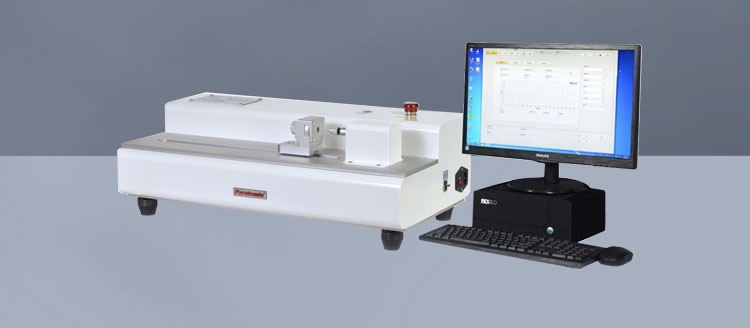


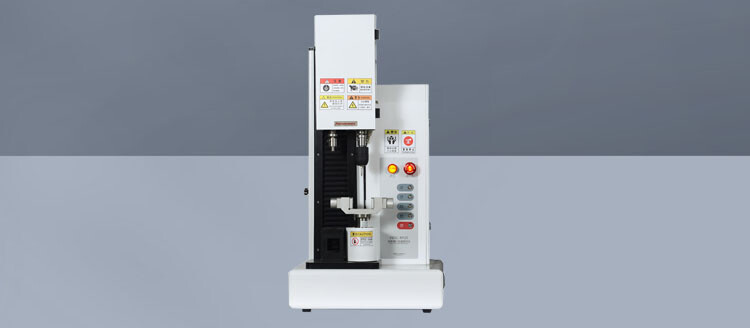
An artificial skin puncture force tester does not measure “needle quality” as a single abstract property. It measures the mechanical force generated while a needle tip contacts, deforms, penetrates, travels through, and sometimes withdraws from a controlled simulated skin material. The most useful result is therefore not always one number. It is usually a force–displacement record that shows where resistance develops during the insertion event.
In needle testing, this information is used to compare penetration behavior under repeatable laboratory conditions. A lower peak force may indicate a sharper or more effective needle point, but that conclusion is valid only when needle geometry, coating condition, insertion speed, artificial skin material, sample mounting, and test setup are controlled. The tester is a comparative measurement tool: it turns a short, difficult-to-observe puncture event into data that can be reviewed, trended, and linked to manufacturing or design changes.
The central measurement: force during controlled penetration
An artificial skin puncture force tester generally combines a force sensor, a motorized moving mechanism, a sample fixture, and software for recording force against displacement or time. A needle specimen is aligned above the artificial skin. The instrument drives the needle into the material at a defined speed and travel distance while continuously measuring resistance.
The resulting curve commonly begins near zero, rises as the needle tip compresses the surface, reaches a maximum when the material ruptures or the needle advances through its most resistant stage, and then changes as the needle shaft moves through the substrate. Depending on the test procedure, the instrument may also record force during withdrawal.
This curve captures several distinct physical events:
- Surface contact and deformation: the needle tip first touches the artificial skin and begins to stretch, compress, or indent it.
- Initial penetration: the point at which the needle creates an opening in the simulated skin.
- Peak puncture force: the highest recorded force during the defined penetration stage.
- Insertion or sliding force: resistance produced as the needle shaft continues through the material after initial penetration.
- Withdrawal force: resistance encountered when the needle is removed, if the method includes a return stroke.
Not every test reports every value. A quality-control method may specify only maximum puncture force, while a development study may examine the entire force–displacement profile. The second approach is often more informative because two needles can show similar peak values but differ materially in shaft friction or penetration consistency.
What peak puncture force means—and what it does not
Peak puncture force is the parameter most often associated with needle sharpness. It represents the greatest resistance observed within a specified testing window. For a defined needle design tested against the same artificial skin, a lower and more consistent peak can suggest more efficient penetration.
That interpretation has limits. Peak force is not a direct clinical measurement of pain, injection comfort, or patient experience. Human tissue is variable, living skin has layered structures and biological responses, and injection technique also affects perceived discomfort. Artificial skin is used because it creates a repeatable laboratory condition, not because it fully reproduces all anatomical conditions.
Nor should a low peak value automatically be treated as evidence of a better needle in every respect. A needle may have acceptable penetration force but insufficient strength, poor dimensional consistency, coating defects, or other performance issues outside the scope of this test. Puncture-force testing addresses a specific mechanical question: how much force is required for a defined needle and test material combination to achieve penetration.
Why the force–displacement curve is more revealing than a single result
A single maximum value is convenient for specification limits and lot-to-lot comparison, but it can conceal useful diagnostic information. The curve helps distinguish different sources of resistance.
A steep rise before the peak may indicate that the needle tip must substantially deform the artificial skin before breakthrough. A sudden drop after the peak is commonly associated with puncture or rupture of the material. If the force remains high after the breakthrough point, shaft friction, needle surface finish, lubricant condition, bevel geometry, or the artificial skin’s grip on the cannula may be contributing to resistance.
Curve shape can also reveal unstable behavior. Multiple peaks, irregular oscillations, or unusually wide variation between repeated specimens may arise from inconsistent needle points, damaged bevels, poorly controlled silicone lubrication, off-axis alignment, variation in artificial skin thickness, or inadequate specimen clamping. The tester does not identify the root cause on its own, but it can show that the abnormality is not simply random variation in one summary value.
For this reason, development teams often preserve raw curves and not only pass/fail records. The curve provides a reference when changes are made to grinding conditions, needle coatings, cannula suppliers, sterilization processes, or packaging configurations that could affect the needle surface.
Initial penetration, shaft friction, and withdrawal are different measurements
Needle insertion is a sequence of events, and the relevant force depends on the question being asked. Confusing these events is a common source of incorrect comparisons.
For example, two needles can have nearly identical puncture peaks but show different insertion-force plateaus. One may puncture efficiently but generate higher friction once the shaft enters the material. If the evaluation only considers the maximum force, that difference may remain hidden.
Conversely, a test designed solely to assess initial penetration should not be overloaded with conclusions about full insertion behavior. The measured travel distance, the location of the analysis window, and the selected reporting parameters must match the purpose of the test.
Artificial skin is part of the measurement system
The phrase “artificial skin” can imply a universal material, but simulated skin materials differ significantly. They may be polymer films, elastomer sheets, layered constructions, membranes, or other materials selected to create a controlled puncture challenge. Their thickness, hardness, elastic recovery, surface finish, aging behavior, and storage condition all affect recorded force.
This means a puncture-force result cannot be meaningfully interpreted without identifying the substrate and test conditions. A needle tested against a thicker or stiffer material will not necessarily produce the same result as the identical needle tested against a softer or thinner one. Results from different laboratories are comparable only when the relevant method details are closely aligned.
Material conditioning is especially important. Temperature and humidity can change the mechanical response of some artificial skin materials. A sheet that has been stretched, creased, repeatedly punctured, contaminated, or stored outside its intended conditions may no longer provide a stable test surface. Reusing the same puncture location can also distort results because the material has already been damaged.
The artificial skin should therefore be treated as a controlled test consumable rather than as a passive accessory. Its specification, lot traceability, storage, conditioning, mounting direction where applicable, and allowable use area should be included in the method.
Needle geometry strongly affects the reading
The test response is influenced by more than nominal needle gauge. Important geometric and surface-related variables include bevel angle, bevel length, point grinding quality, tip symmetry, lancet geometry, cannula outer diameter, wall thickness, surface roughness, and silicone or other lubricious coatings.
A finer gauge does not automatically guarantee lower puncture force. The point geometry and the interaction between the point and artificial skin can be more influential during initial penetration than diameter alone. Likewise, a needle coating may reduce friction along the shaft without producing an equally large change in the initial puncture peak.
Damage is another reason to examine force data carefully. A bent needle, blunted point, burr, incomplete grind, or surface contamination can produce higher force or irregular curve behavior. However, puncture-force data should not replace visual inspection or dimensional measurement. It is most useful when combined with other checks that address geometry, integrity, and manufacturing conformity.
Test setup can change the result as much as the needle
Because puncture testing measures relatively small mechanical differences, setup discipline matters. The needle must be positioned perpendicular to the artificial skin unless the method intentionally specifies an insertion angle. Even modest misalignment can alter how the bevel contacts the material and may introduce lateral loading.
Crosshead speed is another critical variable. Viscoelastic artificial skin materials can respond differently when penetrated slowly or quickly. A change in speed can change the apparent puncture resistance, so speed should be specified and kept constant across comparison samples. The same applies to penetration depth, preload or contact-detection rules, fixture design, and force-sensor range.
A force sensor with an excessively high capacity may not provide the resolution needed to distinguish subtle differences. A sensor with insufficient capacity risks overload or poor measurement integrity. The suitable range depends on the expected force and the acceptance criteria, not simply on the maximum capacity available in the laboratory.
Sample mounting deserves equal attention. Loose clamping allows the artificial skin to move or sag, reducing the apparent puncture resistance and increasing variability. Over-tensioning can make the substrate artificially resistant. A repeatable fixture holds the material securely while applying a defined and consistent mounting condition.
How puncture-force testing supports quality decisions
In manufacturing and incoming inspection, puncture-force testing can be used to establish a baseline for an approved needle configuration and to monitor whether later production remains within defined limits. It is particularly relevant when a process has variables that may affect point sharpness or surface friction, such as grinding, cleaning, lubrication, handling, sterilization, or changes in supplied cannula material.
For product development, the test supports comparison between alternative needle designs under identical conditions. It can show whether a revised bevel, coating process, or shaft specification changes penetration behavior. The test is also useful when evaluating consistency: a low average force is less meaningful if individual samples vary widely.
For pharmaceutical packaging and drug-delivery systems, the context may include prefilled syringes, injection needles, needle-based administration components, or devices in which reliable needle performance is part of the overall system assessment. In such cases, the needle should not be evaluated in isolation if the final product configuration can affect its condition. A protective needle shield, assembly process, transport vibration, or interaction with a drug product may affect lubricant distribution, point protection, or cannula surface condition.
The appropriate test arrangement depends on the claim being supported. A bare-needle study, a post-assembly check, and a test on a finished device may each answer a different question. Combining them without distinguishing their purpose can lead to misleading comparisons.
Standards and method control require careful interpretation
Needle performance may be addressed by product-specific standards, regulatory expectations, internal specifications, and validated test methods. The applicable requirements depend on the needle type, intended use, product jurisdiction, and whether the needle is part of a medical device or a combination product.
Some recognized needle standards include penetration-related requirements or test approaches, but the exact material, apparatus, calculation method, and acceptance criteria should not be assumed to be interchangeable across products. A laboratory should use the current edition of the applicable standard or an approved internal method, rather than treating any artificial-skin test setup as universally equivalent.
For compliance-oriented testing, traceability is as important as the numerical output. Records should identify the instrument, force sensor, calibration status, artificial skin specification, conditioning conditions, test speed, fixture, sample identity, data-processing rules, and any exclusions. If the software calculates peak force automatically, the method should define the relevant analysis range so that noise outside the penetration event is not mistakenly reported as the maximum.
Common misunderstandings when reviewing results
“Lower force always means better performance.” Lower puncture force may be desirable within a defined product requirement, but it does not establish complete needle quality. Mechanical strength, dimensional integrity, sterility assurance, particulate control, and compatibility with the final delivery system remain separate considerations.
“The tester measures skin pain.” It measures force against a simulated material. It can support engineering assessment of penetration behavior, but it does not reproduce all clinical, physiological, or user-related factors.
“Artificial skin is interchangeable.” The substrate is a major test variable. Different materials can produce different force values and curve shapes.
“One peak result is enough to explain a failure.” A high or variable peak identifies a performance signal, not necessarily its cause. The raw curve, sample inspection, process history, and repeat testing under controlled conditions are needed to investigate the source.
“A puncture-force tester is only for final inspection.” It can be used at several stages: design comparison, process validation support, incoming material evaluation, routine quality monitoring, and investigation of suspected performance changes.
What a meaningful result looks like
A meaningful puncture-force result is not merely a number displayed by an instrument. It is a number linked to a clearly defined needle, controlled artificial skin, specified motion conditions, calibrated force measurement, and a documented analysis method. When those elements are consistent, the tester provides a practical basis for comparing samples and detecting changes that may not be visible through nominal dimensions alone.
The value of an artificial skin puncture force tester lies in making needle penetration behavior measurable and repeatable. Its primary outputs—peak puncture force, insertion resistance, withdrawal behavior, and force–displacement curve characteristics—help distinguish a sharp, stable and consistently manufactured needle from one whose performance may have changed. The result is most reliable when interpreted as part of a controlled test system rather than as an isolated claim about real human skin or complete product performance.
Leave A Reply
Search by Keywords