




Recent Posts
 Which ISO Test Conditions Matter for a Syringe Needle Puncture Tester?Sep 23, 2026
 How to choose the right load range for a bone screw insertion force testerSep 23, 2026
 How to select torque range for a bone screw torsion testerSep 22, 2026
 What does a bone screw torsion tester measure during implant testing?Sep 22, 2026
 When ASTM F1306 is suitable for laminated film puncture testingSep 21, 2026
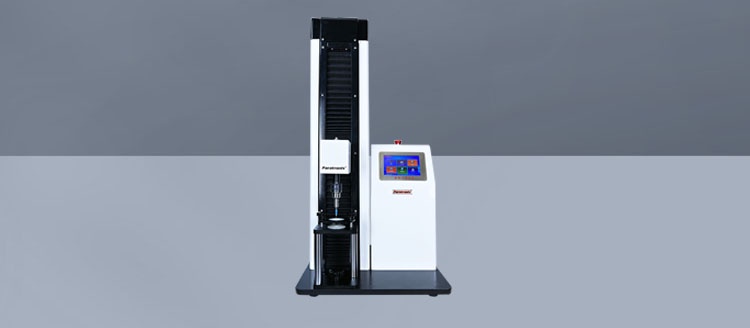
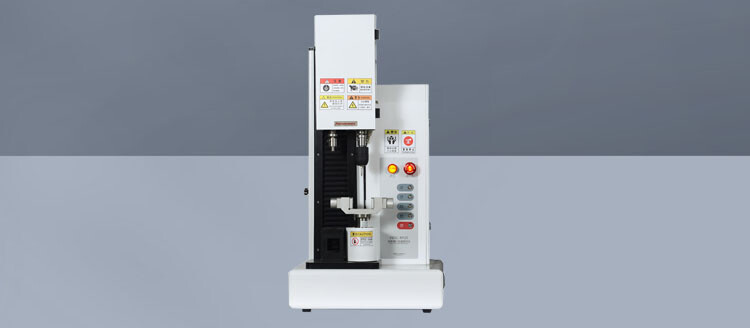
A syringe needle puncture tester can produce useful force data only when the test conditions represent the actual packaging and use scenario. For ISO-based work, the most important point is that there is rarely one universal “ISO setting” that applies to every rubber stopper, injection port, plastic film, or resealable package. The relevant conditions depend on the material being tested, the intended needle use, and the standard or validated method referenced by the product specification.
The conditions that usually determine whether puncture results are comparable and defensible are the needle specification, penetration speed, sample support, test direction, preconditioning environment, sample state, and the force values selected for evaluation. Changing any one of these can change the measured penetration force, the shape of the force-displacement curve, and the apparent consistency of the material.
That is why a syringe needle puncture tester should be treated as a controlled test system rather than simply a force gauge with a needle fixture. The instrument must apply the intended needle movement repeatably, while the method controls the variables that make one result meaningfully comparable with another.
Start With the Applicable Method, Not the Instrument Settings
When a packaging specification refers to ISO requirements, begin by identifying what the referenced method is intended to evaluate. Needle penetration testing may be used to assess puncturability, penetration resistance, reseal performance after puncture, fragment generation, or material integrity. These are related properties, but they are not interchangeable.
For example, a test designed to evaluate the initial force required to pierce an elastomeric closure should not automatically be used to judge the durability of a component after repeated needle entries. Likewise, a puncture method for a flexible plastic barrier material may require different sample support and penetration geometry than a method for a pharmaceutical vial stopper.
The first practical question is therefore: what decision will the result support? Possible decisions include release of incoming closure materials, comparison of alternate stopper formulations, investigation of difficult needle insertion, verification of a packaging change, or monitoring of a validated production process. The answer determines which test conditions must remain fixed and which additional observations are needed.
Needle Specification Is a Primary Test Condition
The needle is not a minor accessory. Its outer diameter, point geometry, wall design, bevel, sharpness, and condition all affect penetration behavior. A larger needle generally displaces more material and can require more force, but the result is also influenced by bevel geometry and the interaction between the needle surface and the tested material.
For this reason, the needle specification should be recorded in the test method with enough detail to prevent substitution by a visually similar needle. It is not sufficient to state only that a “syringe needle” was used. The method should define the needle type and size required by the relevant packaging application or referenced standard.
Needle condition also matters. A damaged, reused, contaminated, or inconsistent needle can alter both peak force and the smoothness of the force curve. If a method permits multiple tests with the same needle, it should define when replacement is required. If the purpose is to simulate a single clinical puncture, using a fresh needle for each specimen may be more representative. The right choice depends on the method objective, but the choice must be consistent.
Do Not Substitute a Needle for Convenience
One common testing error is selecting a needle simply because it is available in the laboratory. That can create data that look precise but do not reflect the product’s intended use. A material may pass under a smaller or sharper needle and show excessive force under the needle configuration used in practice. Conversely, an unnecessarily severe needle may lead to rejection of an otherwise suitable package.
Where more than one needle type is relevant, separate test series are usually clearer than averaging the results. A single average can hide the fact that one needle configuration produces a distinctly different risk profile.
Penetration Speed Changes the Measured Response
Elastomers, polymer films, laminated structures, and many packaging materials are rate-sensitive. Their resistance to puncture can change when the needle moves faster or slower. A rapid movement may produce a higher apparent peak force in some materials because the material has less time to deform and relax. At a slower speed, friction, elastic recovery, and material flow may influence the curve differently.
The required penetration speed should therefore be taken from the applicable method or from a validated internal procedure tied to the real use condition. Once established, it should not be changed to shorten the test cycle or improve apparent repeatability.
A capable syringe needle puncture tester should maintain the selected movement speed throughout the penetration phase and collect force data at a rate suitable for the event. If data capture is too sparse, the true peak can be missed. If the motion is unstable, differences between samples may be caused by the test system rather than the packaging material.
Speed should be documented alongside the measured force. A peak penetration force without a specified test speed is incomplete information because another laboratory may produce a different result using the same needle and material.
Sample Support and Puncture Location Must Represent the Package
How the specimen is held can have as much influence as the material itself. A rubber stopper mounted on a vial, a stopper held in a dedicated fixture, and a loose elastomer disc can behave differently under needle penetration. The same applies to films: a tightly clamped film, a loosely supported film, and a film placed over a cavity will not distribute stress in the same way.
The fixture should prevent unwanted slipping, rotation, or distortion while allowing the material to respond in the way the method intends. Over-tight clamping can artificially increase resistance in flexible materials. Inadequate support can cause sagging, off-axis penetration, or tearing that does not represent normal use.
Puncture location also needs control. Material thickness, curvature, molding marks, printed areas, and local stresses can vary across a component. For elastomeric closures, the method may distinguish between a designated puncture zone and other areas. For film structures, edge regions often behave differently from the central web area. A method should define the permitted test locations and spacing between punctures.
Repeated punctures require particular care. The distance between puncture sites must prevent a previous hole, crack, or locally stressed area from influencing the next test. If repeated penetration is the property of interest, the puncture sequence and location pattern should be intentional rather than incidental.
Condition the Samples Before Testing
Packaging materials respond to temperature and humidity. Rubber components can change in stiffness, films can change in tension and moisture response, and lubricated surfaces can behave differently after storage or handling. Testing specimens immediately after moving them from a warehouse, refrigerator, sterilization area, or production line can introduce avoidable variation.
A robust method defines the preconditioning environment and the time needed for specimens to stabilize before testing. It should also state whether testing takes place in that same controlled environment or whether a limited transfer time is allowed. The goal is not to create an ideal laboratory condition; it is to ensure that each sample is evaluated under the same stated condition.
Sample history deserves the same attention. Consider whether the closure or package has been washed, sterilized, aged, exposed to product contact, assembled onto a container, or subjected to transportation simulation. A new, unassembled component may not have the same puncture behavior as a finished package. The sample state should match the claim being made from the test result.
Define What the Tester Should Measure
“Puncture force” can refer to several different points in the test. The first resistance peak may represent initial surface break-through. A later peak may occur as the needle shaft passes through the material. Withdrawal force can indicate friction or reseal-related behavior. The entire force-displacement trace can reveal irregular tearing, intermittent resistance, or unexpected material failure that a single maximum value would conceal.
For routine control, a defined peak force may be sufficient when the material and use condition are stable. During development, complaint investigation, or packaging change assessment, reviewing the full curve is often more informative. A similar maximum force does not always mean the penetration mechanism is the same. One sample may puncture cleanly, while another may show unstable tearing or multiple force spikes.
Alignment and Travel Limits Prevent Misleading Results
The needle should enter the sample at the intended angle, commonly perpendicular unless the method specifies another orientation. Even a small alignment error can introduce side loading, scraping, or asymmetric deformation. This is especially relevant for thin films, curved closures, and small puncture zones.
Travel distance must also be defined. Driving a needle farther than required can add shaft friction and produce a maximum force that is unrelated to the initial puncture event. Stopping too early can miss the resistance associated with full penetration. The instrument should use a repeatable starting position, a clear zero point, and a programmed travel limit that matches the method.
Before routine testing, verify that the fixture, needle holder, and sample plane are aligned. Operators should not compensate for poor alignment by manually adjusting individual samples during the test. That approach makes results dependent on technique rather than the documented procedure.
Use Enough Specimens to See Material Variation
Puncture behavior can vary from specimen to specimen because of material thickness variation, molding differences, lubrication, local defects, or storage history. A single result may identify an obvious failure, but it cannot establish normal consistency. The sample quantity, selection method, acceptance rule, and treatment of invalid tests should all be defined before testing begins.
An invalid test is not simply an inconvenient low or high result. It should have a documented technical reason, such as sample slip, fixture failure, needle breakage, an off-location puncture, or a measurement interruption. Removing results because they do not fit the expected pattern weakens the value of the test record.
When comparing batches or suppliers, keep the test conditions identical. A comparison between samples tested at different speeds, with different needles, or under different conditioning environments is not a material comparison; it is a comparison of mixed variables.
Common Errors in ISO-Oriented Needle Puncture Testing
- Reporting force without the needle details: the result cannot be reproduced reliably.
- Using a generic fixture for every material: different package formats need different support conditions.
- Testing samples in an uncontrolled storage state: temperature and humidity effects can be mistaken for batch variation.
- Using only a maximum-force value: abnormal penetration patterns can remain hidden.
- Changing speed or travel during method transfer: the new result may not be comparable with historical data.
- Combining repeated-puncture and first-puncture data: these evaluate different material conditions.
- Ignoring instrument verification: load measurement, displacement, and fixture alignment all affect result credibility.
Choosing a Test Setup That Supports a Defensible Method
The equipment selection should follow the method requirements. A suitable system needs controlled linear motion, repeatable speed, adequate force measurement for the expected range, reliable displacement tracking, and fixtures designed for the actual packaging format. Data export and force-displacement curve review are also important when results support investigations, qualification work, or change control.
Paratronix Instruments Co., Ltd. develops packaging testing instruments for pharmaceutical packaging, plastic packaging materials, and high-barrier materials. For needle penetration applications, the useful discussion is not simply whether an instrument can measure force. It is whether the fixture, motion control, data handling, and method configuration can reproduce the specified conditions for the package under evaluation.
Before finalizing a method, confirm the intended needle, sample assembly state, conditioning procedure, penetration speed, puncture location, travel distance, force calculation rule, and acceptance basis. When these conditions are controlled together, syringe needle puncture testing becomes a practical tool for evaluating packaging consistency and identifying puncture-related risks before they reach the next stage of use.
Leave A Reply
Search by Keywords