




Recent Posts
 Which WVTR Tester Is Suitable for Pharmaceutical Packaging?Oct 26, 2026
 Heat Seal Tester vs Hot Tack Tester: Which ASTM Standards Apply?Oct 24, 2026
 Gas Permeability Testing: Differential or Equal Pressure?Oct 24, 2026
 ISO 9187 and Ampoule Break Force Testing: Which Requirements Apply?Oct 24, 2026
 What does a syringe needle puncture tester measure during insertion?Oct 24, 2026

Materials
The Science: Coulometric Sensor Technology
The precision of ASTM D3985 lies in its use of a coulometric oxygen sensor. The test procedure is elegantly simple in concept yet highly accurate in execution:
The Setup: A specimen is mounted as a sealed semi-barrier between two chambers at ambient atmospheric pressure. One chamber (the test side) is filled with or continuously exposed to oxygen. The other chamber (the carrier side) is slowly purged by a stream of oxygen-free nitrogen .
The Driving Force: Due to the difference in partial pressure (concentration) of oxygen between the two sides, oxygen molecules permeate through the specimen.
Detection: The oxygen molecules that successfully pass through the film enter the nitrogen carrier gas stream and are transported to the coulometric sensor.
Quantification: Here, the magic of electrochemistry occurs. The sensor contains a cathode and a lead anode in an alkaline electrolyte. The oxygen reacts and generates an electrical current. In accordance with Faraday‘s Law, the sensor produces four electrons for every molecule of oxygen. The magnitude of this current is precisely proportional to the amount of oxygen entering the detector per unit time .
Because the output is directly proportional to the number of oxygen molecules, the coulometric sensor is considered an absolute sensor, often requiring less frequent calibration than other methods.
Testing equipment:OTR-D3 Oxygen Permeability Tester (Coulometry)
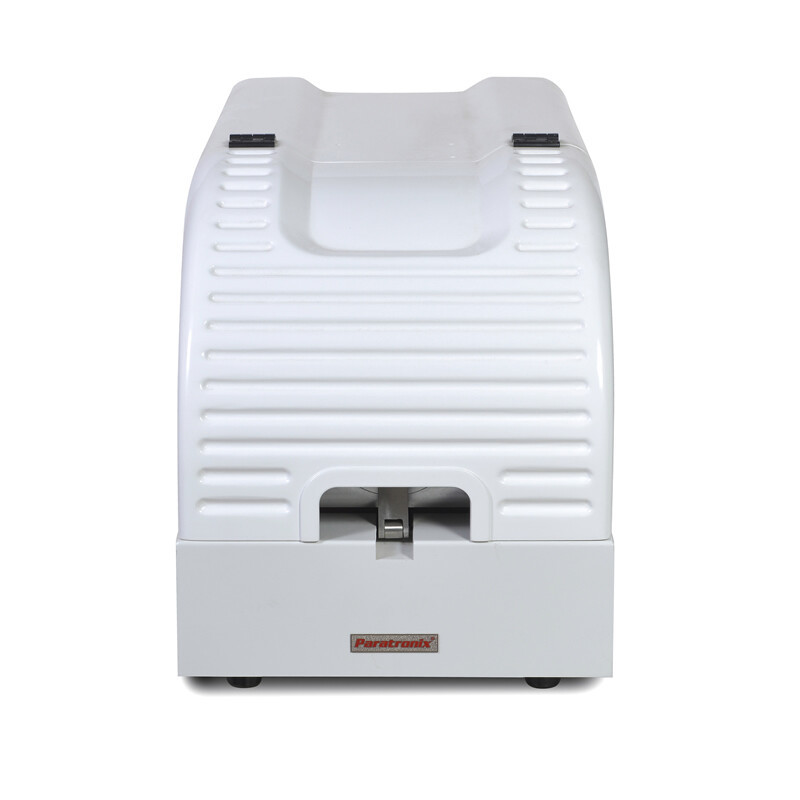
Critical Considerations for Testing
To achieve accurate and repeatable results, the standard highlights several critical factors:
Temperature Control: Temperature is a critical parameter affecting OTR measurement. Strict control is necessary, as even minor fluctuations can drastically alter permeation rates .
Interferences: The carrier gas stream must be free of interfering substances like free chlorine or strong oxidizing agents, which can cause unwanted electrical output. Exposure to carbon dioxide should also be minimized to prevent damage to the sensor‘s potassium hydroxide electrolyte .
Sensor Saturation: For very low-barrier (high-transmission) materials, high oxygen concentrations in the carrier gas can saturate the sensor. The standard allows for modifications, such as using an oxygen/nitrogen mixture on the test side or reducing the test area with a masked aperture .
ASTM D3985 has remained the cornerstone of oxygen barrier testing. Its reliance on the fundamental principles of electrochemistry provides a level of accuracy and reliability that is trusted worldwide. Whether ensuring a medication remains potent or a vacuum-sealed steak stays fresh, ASTM D3985 is the invisible guardian of quality, helping industries deliver safer, longer-lasting products to consumers.
Leave A Reply
Search by Keywords