




Recent Posts
 How test speed affects lipstick breaking strength resultsOct 10, 2026
 Choosing a Water Vapor Transmission Rate Tester for flexible filmsOct 10, 2026
 How to select a friction peel tester for flexible packaging filmsOct 09, 2026
 Key Specifications to Compare When Selecting a Lipstick Break Force TesterOct 08, 2026
 What Does a Lipstick Break Force Tester Measure in Quality Control?Oct 08, 2026

1. Scope
1.1 This test method covers a procedure for determination of the steady-state rate of transmission of oxygen gas through plastics in the form of film, sheeting, laminates, coextrusions,or plastic-coated papers or fabrics. It provides for the determination of (/) oxygen gas transmission rate (O2GTR), (2) the permeance of the film to oxygen gas (PO2), and (3)oxygen permeability coeficient (P'O2)in the case of homogeneous materials.
1.2 This standard does not purport to address all of the safety problems,if any, associated with its use. lt is the responsibility of the user of this standard to establish appropriate safety and health practices and deterine the applicabiliny of regulatory limitations prior to use.
1.3 This test method does not purport to be the only method for measurement of O2GTR. There may be other methods of O2GTR determination that use other oxygen sensors and procedures.
4. Summary of Test Method
4.1 The oxygen gas transmission rate is determined after the sample has equilibrated in a dry test environment. In this context, a “'dry" environment is considered to be one in which the relative humidity is less than 1 %.
4.2 The specimen is mounted as a sealed semi-barrier between two chambers at ambient atmospherie pressure. One chamber is slowly purged by a stream of nitrogen and the other chamber contains oxygen, As oxygen gas permeates through the film into the nitrogen carrier gas, it is transported to the coulometric detector where it produces an electrical current,the magnitude of which is proportional to the amount of oxygen fowing into the detector per unit time.
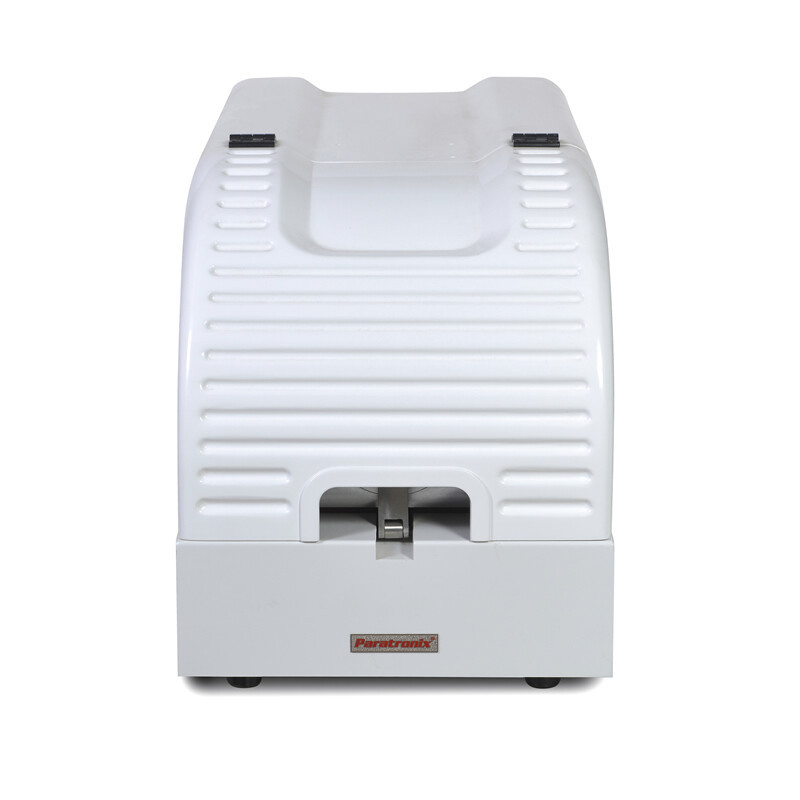
Testing equipment:OTR-D3 Oxygen Permeability Tester (Coulometry)
11. Test Specimens
1l.l Test specimens shall be representative of the material being tested and shall be free of defects, including wrinkles,creases, and pinholes, unless these are a characteristic of the material being tested.
11.2 Average thickness shall be determined to the nearest 2.5 μm (0.0001 in.), using a calibrated dial gage (or equivalent) at a minimum of five points distributed over the entire test area.Maximum, minimum, and average values shall be recorded.
11.3 If the test specimen is of an asymmetrical construction,the two surfaces shall be marked by appropriate distinguishing marks and the orientation of the test specimen in the diffusion cell shall be reported (for example,“side II was mounted facing the oxygen side of the diffusion cell").
Leave A Reply
Search by Keywords