




Recent Posts
 Which standards apply to oxygen permeability testing of coated paper?Nov 11, 2026
 How does an oxygen permeability tester measure coated paper?Nov 11, 2026
 What Does an Oxygen Permeability Tester Measure in Blister Packaging?Nov 11, 2026
 What does a falling dart impact tester measure in plastic film?Nov 11, 2026
 ASTM D1709 method A vs. method B for falling dart testingNov 11, 2026
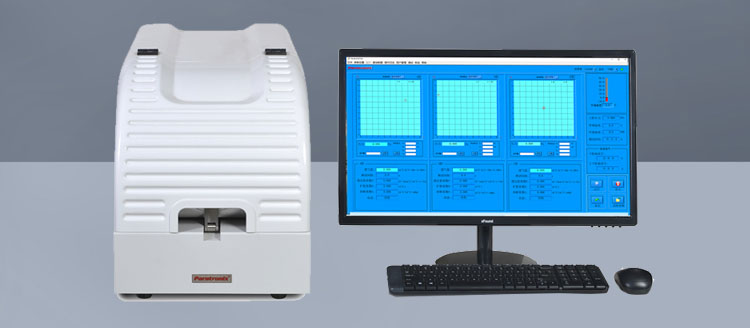

ASTM D3985 and ISO 15105-2 are relevant standards for measuring oxygen transmission through coated paper when the material and test apparatus fall within their respective scopes. Both use a coulometric detection principle for flat materials, but a shared sensor principle does not make results interchangeable: temperature, humidity, specimen preparation and the edition of the method can all affect the reported value.
The choice becomes less straightforward when the coating contains defects, the paper is highly permeable, or the intended claim concerns a finished package rather than a sheet. A valid test method measures oxygen transmission under defined conditions; it does not, by itself, certify that a package is safe, leak-free or suitable for a particular shelf life.
Which standards are relevant to coated paper?
The titles and scopes of several commonly referenced methods focus on plastic films and sheets. A coated paper may contain a plastic or other barrier layer, but that alone does not establish that every provision of a film standard is appropriate. The laboratory should review the full standard, the structure of the sample and the customer’s specification before selecting the method.
Standard numbers should also be accompanied by the edition used. Standards are revised, and a contract or qualification plan may specify a particular version. The official standard text—not an equipment brochure or a certificate heading—is the authority for mandatory apparatus, conditioning, procedure and reporting requirements.
ASTM D3985: a common reference for oxygen transmission
ASTM D3985 uses a coulometric sensor to determine oxygen transmission rate, or OTR, through a specimen separating two gas environments. Oxygen passing through the material reaches the sensor, and the instrument converts the measured response into a transmission rate for the exposed area.
For a coated paper, the result reflects the tested structure as a whole: paper substrate, coating and any other layers present. It is not a direct measurement of the coating in isolation. Pinholes, cracks, coating gaps and other discontinuities within the exposed area can affect the result, particularly when the uncoated substrate offers little oxygen resistance.
A laboratory should establish that its apparatus can seal the specimen without creating an edge leak or damaging the coating. The instrument’s validated measurement range also matters. A material outside that range cannot be assigned a reliable numerical value simply because the instrument produces a reading. Where the result is below the validated quantification limit, it should be reported accordingly rather than as zero transmission.
ASTM D3985 should not be used as shorthand for an unspecified test. The report needs to identify the edition, temperature, humidity conditions, exposed area and other method-relevant settings. Any departure from the standard should be identified as a deviation, not hidden behind a general statement that the material was “tested to ASTM D3985.”
ISO 15105-2 and the meaning of equal-pressure testing
ISO 15105-2 describes an equal-pressure method using an oxygen sensor. In practical terms, the specimen separates an oxygen-containing side from a receiving side while the total pressures are maintained approximately equal. Oxygen still moves across the material because its partial pressure differs between the two sides.
That distinction matters when comparing ISO 15105-2 with a pressure-difference method. Equal total pressure does not mean there is no driving force for oxygen transmission. Conversely, a pressure-difference method relies on a different arrangement and may impose different mechanical demands on the specimen.
Coated paper can be sensitive to clamping and handling. A thin or brittle barrier layer may crack if bent, creased or exposed to excessive mechanical stress. A porous sheet can also create challenges at the seal. Before adopting ISO 15105-2 for a specification, confirm that the particular sheet structure can be mounted as required and that its expected transmission falls within the laboratory’s demonstrated capability.
ASTM D3985 and ISO 15105-2 both use sensor-based approaches, but one should not be substituted for the other without agreement. Differences in prescribed procedures, permitted conditions and reporting can affect comparability. If a supplier and customer use different methods, a comparison on representative material under matched conditions is more informative than assuming the results are equivalent.
When humidity-controlled testing changes the decision
Humidity is not a minor detail for every coated paper. Paper absorbs moisture, and some barrier coatings are sensitive to water. A change in relative humidity can alter the substrate, the coating or their interaction, changing the oxygen transmission rate. A dry-condition result may therefore be unsuitable for predicting performance in a humid application.
ASTM F1927 addresses oxygen transmission through barrier materials using a coulometric sensor in a humidity-controlled environment. It is relevant when the specification requires controlled humidity and the material and apparatus meet the method’s conditions. The standard should not be treated as a guarantee that an instrument can independently maintain every humidity combination a user might request.
Humidity must be described on the appropriate side or sides of the specimen. A report stating only “tested at 50% RH” can leave uncertainty about which gas stream was controlled and whether a humidity gradient existed across the sample. Temperature, conditioning time and the state of equilibration also matter. These details are especially important when comparing material releases, qualifying an alternative coating or investigating a change in barrier performance.
OTR is not the same as intrinsic permeability
OTR is a rate of oxygen transmission through a defined area of material under stated test conditions. It is commonly reported in units such as cm3/(m2·day), with the gas-volume reference conditions and pressure basis stated as required. It is a practical value for comparing finished sheet structures when the test conditions match.
Permeability is a different property. For a homogeneous material under appropriate conditions, it relates transmission to thickness and the oxygen partial-pressure difference. Multiplying a coated paper’s OTR by its total thickness does not automatically produce a meaningful intrinsic permeability for the coating. The sheet is a multilayer structure; its layers have different properties, and defects or porous regions can dominate transmission.
This distinction affects purchasing specifications. If the requirement concerns the barrier delivered by the complete coated sheet, an OTR limit under defined conditions is generally clearer than a permeability figure without an agreed calculation basis. If a coating property is required, the parties need a suitable specimen and calculation method that actually isolate or characterize that layer.
Specimen preparation can determine whether results are comparable
The reported value applies only to the specimen placed in the cell. A coated paper roll can vary across its width or length, and converting operations can introduce damage. A sampling plan should identify where specimens are taken, how many are tested and whether the sampling represents incoming material, a production lot or a specific area of concern. Replicate count and treatment of results should follow the selected standard and the agreed specification.
Handling should protect the test area from folds, scratches and contamination. The laboratory should record the coating orientation, particularly for asymmetric structures. Although a steady-state result under matched boundary conditions is often discussed as a property of the complete sheet, reversing an asymmetric specimen can change the moisture exposure and transient response. Orientation therefore needs to be consistent and documented.
Sealing deserves particular attention. Oxygen reaching the sensor through the clamp or around the specimen is not transmission through the intended test area. An instrument’s leak-check procedure, suitable sealing materials and appropriate mounting technique are essential. Results that change unexpectedly with clamping pressure or sealing arrangement warrant investigation before a material failure is declared.
Conditioning is equally important. The time needed to reach a stable response depends on the material and test conditions. Ending a measurement before the required endpoint can produce a result that does not represent the method’s defined state. Conversely, prolonged exposure to an unsuitable environment may change a moisture-sensitive sample. The applicable standard and laboratory procedure should govern both conditioning and the endpoint.
What a defensible test report should contain
A result is useful for release or investigation only if another party can understand what was tested and how. Alongside the numerical result, retain:
- The standard designation and edition, including any deviations.
- Sample identification, construction, coating orientation and sampling location where relevant.
- Temperature, oxygen exposure and humidity conditions, including which side or sides were controlled.
- Conditioning details, exposed area, number of specimens and individual or summarized results as required.
- Units, relevant gas-volume reference conditions, instrument range and the applicable reporting or quantification limit.
- Any observations affecting validity, such as damaged specimens, sealing difficulties or results outside the validated range.
Acceptance limits should come from the product specification, validation work or a contractual agreement—not from the existence of a test standard. A standard defines a way to measure; it does not generally establish a universal pass limit for every coated paper application.
Sheet transmission is not finished-package performance
A flat-sheet test does not include every route by which oxygen can enter a finished pack. Seals, closures, folds, forming damage and intentional features can influence the package’s overall oxygen ingress. A sheet may meet its OTR specification while a defective seal allows oxygen to enter at a rate that undermines the intended protection.
For that reason, material qualification and package validation answer different questions. Sheet testing helps control the consistency of the supplied barrier structure. Finished-package testing and shelf-life assessment address the assembled system under relevant conditions. Neither should be presented as a substitute for the other.
When choosing an oxygen permeability tester for coated paper, the practical question is whether the instrument and laboratory method can produce a valid result for the expected transmission range, specimen structure and required temperature and humidity. The standard named in a specification is the starting point; the material’s behavior in the test cell and the completeness of the resulting report determine how confidently that result can be used.
Leave A Reply
Search by Keywords