




Recent Posts
 What does ASTM F1249 require for medical packaging WVTR testing?Nov 13, 2026
 Infrared vs Gravimetric WVTR Testing for Food PackagingNov 13, 2026
 ASTM F1249 and ASTM E96: Choosing a WVTR Test Method for Food FilmsNov 13, 2026
 What does a WVTR tester measure in pharmaceutical containers?Nov 13, 2026
 ASTM F1249 and E96: WVTR Test Standards for Biodegradable FilmsNov 13, 2026
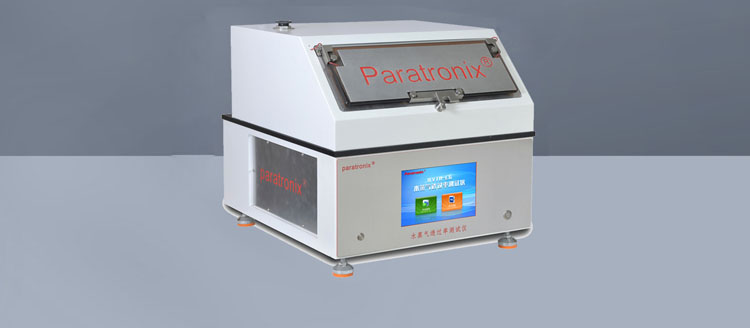
ASTM F1249 and ASTM E96/E96M measure water vapor transmission through packaging materials by different principles. ASTM F1249 uses a modulated infrared sensor to measure water vapor passing through a film, while ASTM E96/E96M uses a gravimetric cup method that tracks mass change over time. Both can produce a water vapor transmission rate (WVTR), but matching the units alone does not make the results interchangeable.
For a WVTR tester for food packaging, the choice starts with the material’s expected barrier level, the humidity and temperature required by the application, and the method specified for acceptance. F1249 is often considered for films requiring sensitive instrumental measurement. E96/E96M offers gravimetric procedures that can be useful across a range of materials, provided the mass change is measurable under the selected conditions. The applicable edition and procedure must be identified before results are used for a specification.
What each method measures
In ASTM F1249, a specimen separates a humidified side from a carrier-gas side. Water vapor permeating the film is transported to an infrared detector, which measures the vapor reaching the dry side. The reported rate is derived from the measured transmission through the exposed area under controlled conditions. The method is designed for plastic film and sheeting; suitability for a particular structure also depends on its expected transmission rate and the instrument’s validated range.
ASTM E96/E96M determines water vapor transmission from the change in mass of a sealed test assembly. A specimen covers the opening of a cup, creating a barrier between the atmosphere inside and the controlled atmosphere outside. In a desiccant procedure, moisture generally moves into the cup and the assembly gains mass. In a water procedure, moisture generally leaves the cup and the assembly loses mass. The rate is calculated from the slope of mass change versus time and the exposed area.
The direction of vapor movement matters for asymmetric structures. A coated or multilayer film can present different surfaces to the humid side in service, and surface effects or moisture-sensitive layers can influence the measured response. Record which face contacts the higher humidity in either method; flipping a specimen without recording its orientation makes a comparison harder to interpret.
Start with the expected transmission rate
A high-barrier food film may transmit so little water vapor that a cup gains or loses mass very slowly. A short weighing period can then produce a slope dominated by balance variability, sealing changes or environmental drift. Extending the test can improve the mass-change signal, but only if the assembly remains stable and the test conditions continue to meet the selected procedure. A longer test does not correct a leaking seal.
F1249 equipment may offer a more practical measurement approach for low-WVTR films, but an infrared detector does not automatically guarantee a usable result. The complete measurement range, including background transmission and uncertainty near the lower end, must suit the expected specimen. A result close to the system background deserves particular scrutiny: a small change in background or seal integrity can represent a large share of the measured signal.
At higher transmission rates, a gravimetric cup can produce a readily measurable mass change. The test still requires enough observations to establish a reliable slope after the initial conditioning period. The first interval after mounting can reflect changes in moisture stored in the film or test assembly, rather than stable transmission through the specimen. A straight, consistent mass-versus-time trend is more informative than a single difference between two weighings.
For either method, compare the expected result with the usable measurement range at the intended temperature, humidity and test area. A stated detection limit alone does not describe repeatability, background behavior or the time needed to reach a reportable result.
Why test conditions can change the ranking
WVTR is a rate under specified conditions. It is affected by temperature and by the water vapor pressure difference across the film. Relative humidity is part of that description, but relative humidity values cannot be interpreted independently of temperature: the same percentage at a different temperature represents a different water vapor pressure.
Two reports can both state WVTR in g/(m2·day) and still describe materially different tests. A comparison needs the temperature, humidity or vapor pressure on both sides, specimen orientation, conditioning, exposed area and method. The selected E96/E96M procedure also belongs in the report because desiccant and water arrangements create different boundary conditions.
Humidity can change more than the driving force. Some moisture-sensitive layers absorb water and change their barrier behavior as they become humid. A film that performs well under a moderate humidity gradient may behave differently when its barrier layer experiences a wetter environment. For that reason, dividing WVTR by a nominal vapor pressure difference does not necessarily make results equivalent across all humidity conditions.
When screening materials for a dry food packed in a humid environment, placing the intended exterior face toward the higher humidity gives the data a clearer relationship to service. For a moist product, the relevant direction can be reversed. Neither laboratory arrangement reproduces every feature of a filled package, but the chosen direction should be consistent with the question being tested.
Film construction and preparation affect the result
A film measurement represents the area exposed in the test cell or cup. It does not automatically include the contribution of package seals, folds, closures or formed corners. A sound flat-film result therefore does not establish the moisture barrier of a finished pouch. Conversely, a poor finished-package result does not by itself prove that the film has high intrinsic transmission.
Cut specimens from representative, undamaged material and identify the machine direction, surface orientation and sampling location when these are relevant to the construction. Pinholes, scratches, wrinkles and local coating defects can create results that differ sharply between specimens. Repeat tests at separate locations help distinguish local defects from the behavior of the film as a whole.
Thickness also needs context. For a uniform material, thickness affects transmission, but comparing two multilayer films only by total thickness can obscure changes in the barrier layer, coating continuity or adhesive structure. Record the construction and thickness information available with the sample. If permeance or permeability is calculated, report the basis and units; multiplying by total thickness is not a simple material-property comparison for every laminate.
Sealing is a separate concern from film performance. In a cup test, leakage around the specimen can be mistaken for transmission through it. In an instrumental cell, poor contact, damaged seals or contamination can likewise increase the apparent rate. A blank or other system suitability check appropriate to the equipment helps identify background and sealing problems before they are attributed to the material.
Comparing F1249 and E96/E96M data
There is no universal conversion factor between results from the two methods. They use different measurement systems and can expose a specimen to different humidity distributions, air movement and equilibration histories. Even when nominal temperature and humidity conditions are close, those differences can matter for a film whose properties change with moisture content.
If an existing specification names one method, use that method and its stated conditions for acceptance. Data from the other method can support development or troubleshooting, but replacing the specified method requires an agreed comparison. A useful study includes representative materials across the relevant transmission range, multiple specimens, consistent orientation and matched conditions as closely as the procedures permit. Examine both the differences between methods and the repeatability within each method; agreement for one film does not establish agreement for every construction.
Do not treat a difference between two single results as proof that one method is inaccurate. First review conditioning time, seal integrity, the calculation area, the steady-state interval and the actual humidity on each side. A test stopped during transient moisture uptake can disagree with a longer test even when both instruments function correctly.
Choosing the test setup for a food film
For a very low-transmission laminate, begin with an F1249 system whose demonstrated range covers the expected WVTR at the required conditions. Confirm that the background is sufficiently low and stable, and allow time for the specimen and cell to approach a steady response. If a cup method is specified, establish whether the expected mass change can be resolved over a feasible test period without losing control of the assembly.
For a more permeable film, an E96/E96M cup procedure can be a practical choice when its humidity arrangement matches the purpose of the test and a stable mass-change slope is obtainable. The selected procedure must still reflect the intended moisture gradient. A desiccant cup and a water cup should not be treated as equivalent simply because both yield a gravimetric WVTR.
Where several films are being compared, keep the method, conditions, conditioning and orientation consistent. If the expected rates span a wide range, one setup may not provide equally useful resolution for every sample; document any change in method or test conditions before interpreting the ranking.
The final report should identify the standard and edition, procedure, temperature, humidity conditions, exposed area, specimen orientation, conditioning, number of specimens and the reported WVTR with units. Include relevant deviations and the basis for selecting the steady measurement interval. Those details allow a later result to be compared against the same test rather than against an isolated number.
Leave A Reply
Search by Keywords