




Recent Posts
 What does ASTM F1249 require for medical packaging WVTR testing?Nov 13, 2026
 Infrared vs Gravimetric WVTR Testing for Food PackagingNov 13, 2026
 ASTM F1249 and ASTM E96: Choosing a WVTR Test Method for Food FilmsNov 13, 2026
 What does a WVTR tester measure in pharmaceutical containers?Nov 13, 2026
 ASTM F1249 and E96: WVTR Test Standards for Biodegradable FilmsNov 13, 2026
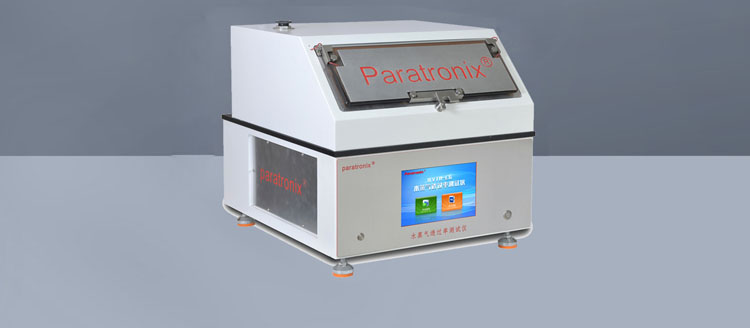
Evaluating the moisture barrier performance of biodegradable films requires more than placing a sample in an instrument and recording a number. ASTM F1249 and ASTM E96/E96M measure water vapor transmission rate (WVTR) using different principles, so the method, test environment, specimen preparation and reporting details all influence how the result should be interpreted. For technical evaluators selecting a WVTR tester for biodegradable films, the question is not simply which method is faster. It is which approach will produce defensible data for the material, application and decisions at hand.
A biodegradable film may contain a moisture-sensitive polymer, a blended formulation, a coating or a multilayer structure. Each can respond differently to humidity. A result that looks encouraging under one set of conditions may not predict behavior under another, particularly when the material absorbs water or changes dimensions during testing. Understanding the standards helps teams distinguish a genuine material difference from a difference in test design.
What ASTM F1249 and ASTM E96/E96M measure
Both standards address the passage of water vapor through a material under specified conditions. WVTR is commonly reported as mass of water transmitted per unit area per unit time, such as g/(m²·day). A lower value generally indicates less water vapor transmission under the stated conditions, but the number is meaningful only alongside those conditions.
ASTM F1249 uses a modulated infrared sensor to measure water vapor transmitted through a specimen. The film separates a humidified side from a dry side in a test cell. Water vapor moves through the specimen, and a carrier gas transports the transmitted vapor to the sensor. The instrument determines WVTR from the measured vapor flow and exposed area, following the applicable procedure and calibration requirements.
ASTM E96/E96M covers gravimetric, or cup, methods. A specimen is sealed over the open mouth of a test dish containing either desiccant or water. The assembled dish is placed in a controlled environment and weighed at intervals. Its change in mass over time is used to calculate water vapor transmission. The desiccant and water methods create different humidity exposures and vapor-flow directions; the selected procedure must therefore be identified in the report.
These standards describe test methods, not biodegradability certifications. A film can have a measured WVTR without having demonstrated compostability or biodegradation under a separate, applicable standard.
Infrared measurement versus the cup method
Neither technique is automatically the better choice for every biodegradable film. An infrared instrument can be useful when a laboratory needs instrument-monitored transmission data and has samples within the equipment’s validated measurement range. A cup method can be appropriate when a gravimetric procedure is specified or when the laboratory has suitable balance and environmental-control capabilities. In both cases, the laboratory must confirm that the procedure is appropriate for the material and the expected transmission level.
Test duration should also be assessed rather than assumed. A specimen may need time to condition and reach a stable transmission behavior, whether the signal is recorded by a sensor or inferred from repeated weighings. High-barrier films can be especially demanding because the measured signal or mass change may be small relative to background effects.
Why biodegradable films deserve closer attention
Many materials marketed as biodegradable are not a single, uniform category. Starch-based formulations, cellulose-based films, polylactic acid blends and other materials can differ substantially in their affinity for water. Additives, coatings and processing history introduce further variation. Consequently, the test method must be evaluated against the actual film construction rather than the biodegradable label alone.
Humidity can change the material being measured
Some films absorb moisture and may soften, swell or change their internal structure as relative humidity rises. In such cases, water vapor transmission may not respond in a simple linear way to the humidity difference across the film. A result measured at one humidity combination should not be treated as interchangeable with a result obtained at another.
For evaluation work, record the relative humidity on both sides of the specimen, not just a single environmental value. Temperature matters as well: it affects vapor pressure, material behavior and the driving force for transport. If the intended package will experience several climates, testing at more than one justified condition may reveal behavior that a single result would miss.
Conditioning and stabilization are part of the result
Before testing, specimens may have different moisture histories depending on storage, handling and manufacturing. A film taken from a dry storage area may behave differently from the same roll after exposure to humid air. Conditioning should follow the selected standard and the laboratory’s documented procedure, with any material-specific requirements clearly recorded.
During the test, watch for a stable trend rather than relying only on elapsed time. With moisture-sensitive films, the initial response can include moisture uptake or release by the specimen itself. The laboratory should apply the relevant standard’s criteria for data acceptance and document how it determined the reporting interval.
Physical integrity is easy to overlook
Thin films can wrinkle or stretch when mounted. A brittle sample may crack around the seal; a water-sensitive coating may be damaged by handling. These defects can create transmission paths that do not represent the intended material. Examine the specimen before and after testing, and reject or investigate visibly damaged samples in accordance with the laboratory procedure.
For coated or multilayer films, identify which surface faces the humid side. Direction can matter when the layers respond differently to moisture. Keep orientation consistent across replicates and include it in the test record.
Can ASTM F1249 and ASTM E96 results be compared directly?
They can be compared, but they should not be assumed equivalent. The methods may differ in humidity exposure, vapor-flow direction, specimen support, air movement, sealing arrangement and the way transmission is detected. Differences can be particularly pronounced for moisture-sensitive films or when the measurement is close to an instrument’s or balance’s practical limit.
A supplier’s F1249 result and an internal E96/E96M result are therefore not necessarily contradictory if the numbers differ. Before drawing conclusions, check:
- The exact standard designation, edition and procedure used.
- Temperature and relative humidity on each side of the specimen.
- Film construction, thickness, orientation and conditioning history.
- Exposed test area, number of specimens and treatment of replicates.
- How steady transmission was established and the units reported.
If the two methods must be used across a supply chain, a practical approach is to test representative materials under as closely aligned conditions as the methods allow. Examine agreement across the relevant range rather than applying a universal conversion factor. Any relationship established for one film formulation or humidity condition should be rechecked before it is applied elsewhere.
Selecting a WVTR tester for biodegradable films
Start with the decision the data must support. A research team screening new formulations may value the ability to investigate humidity response and monitor changes during a test. A quality-control laboratory may prioritize a repeatable procedure aligned with a customer specification. A laboratory resolving disputes may need particularly strong traceability of test conditions, calibration and specimen records.
For an ASTM F1249 instrument, evaluate the following against the intended workload:
- Measurement range and sensitivity: Confirm that the expected WVTR falls within the instrument’s stated, applicable range at the intended test conditions. Ask how performance is verified near the lower end of that range.
- Temperature and humidity control: Check the available settings, control capability and monitoring arrangements for both sides of the film. The required conditions should be achievable with the actual sample and test-cell configuration.
- Specimen mounting: Review cell geometry, exposed area and sealing arrangements. Delicate, curling or unusually thick specimens may need particular care to avoid leaks or damage.
- Calibration and verification: Understand the calibration procedure, reference materials or standards used where applicable, maintenance intervals and checks for leakage or background signal.
- Throughput and records: Consider sample capacity, conditioning time, test duration and how the system records conditions and results. A larger number of cells is useful only if sample preparation and environmental control can support the workload.
For ASTM E96/E96M, the equipment review is different but no less important. Balance resolution, environmental chamber stability, suitable dishes, seal integrity and a controlled weighing routine all affect confidence in the mass-change trend. The laboratory should assess whether the anticipated change in mass can be distinguished reliably from weighing variability and leakage over the chosen interval.
Paratronix Instruments Co., Ltd. manufactures packaging testing instruments and provides packaging testing solutions for materials including plastic and high-barrier packaging. When discussing a WVTR application with an equipment supplier, provide the film structure, expected transmission range if known, target temperature and humidity, and the standard or customer method to be followed. Those details make it easier to assess an appropriate configuration without assuming that one instrument setup suits every biodegradable material.
Build a test record that another laboratory can use
A WVTR value without context is difficult to evaluate. At minimum, the report should identify the material and specimen orientation, the standard and edition, the procedure used, test temperature and humidity conditions, exposed area, conditioning, number of specimens and individual or summarized results. Record thickness and how it was measured when relevant, along with observations such as wrinkling, swelling or seal problems. Follow the reporting requirements of the applicable standard and any agreed customer specification.
It is also important to distinguish WVTR from permeability. WVTR describes transmission through the tested specimen under specified conditions. Permeability is a normalized material property derived using factors including thickness and the vapor-pressure difference, subject to the assumptions and procedure used. Dividing a WVTR value by an arbitrary humidity difference does not automatically make results from different methods comparable, particularly for films whose behavior changes with moisture.
For a technical evaluator, a useful outcome is not merely a low number. It is a result that can be reproduced, explained and connected to the intended packaging environment. Choosing between ASTM F1249 and ASTM E96/E96M with the film’s moisture response, test conditions and reporting needs in mind gives that number a much stronger basis for material development and quality control.
Leave A Reply
Search by Keywords