




Recent Posts
 What does ASTM F1249 require for medical packaging WVTR testing?Nov 13, 2026
 Infrared vs Gravimetric WVTR Testing for Food PackagingNov 13, 2026
 ASTM F1249 and ASTM E96: Choosing a WVTR Test Method for Food FilmsNov 13, 2026
 What does a WVTR tester measure in pharmaceutical containers?Nov 13, 2026
 ASTM F1249 and E96: WVTR Test Standards for Biodegradable FilmsNov 13, 2026
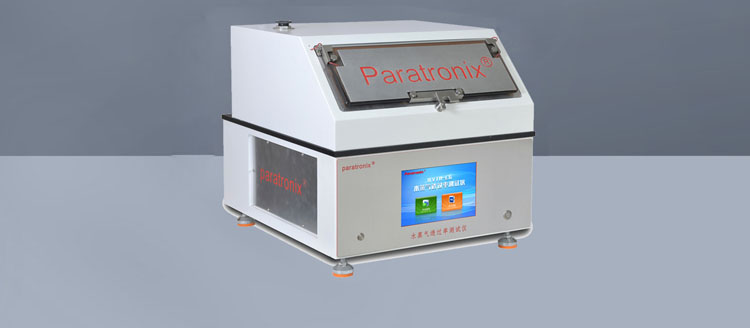
A WVTR tester for biodegradable films measures how quickly water vapor passes through a film when its two sides are exposed to specified conditions. The result, called the water vapor transmission rate, describes the mass of water vapor transmitted through a defined area over a defined time. It is commonly expressed in grams per square meter per day (g/m²/day).
A lower WVTR indicates that less water vapor passes through the film under the stated test conditions. That number helps describe moisture barrier performance, but it does not by itself establish whether a film will protect a particular product or how quickly the film will biodegrade. To interpret it, the test conditions, film thickness, material structure, and intended package environment all matter.
What the measurement represents
During a WVTR test, a film specimen separates two environments with different water vapor conditions. Water vapor moves from the side with higher water vapor partial pressure toward the side with lower partial pressure. The tester determines the amount transmitted over time, and the result is related to the exposed film area.
The measured rate reflects the performance of the specimen as tested. A biodegradable film made from a single material, for example, may have a different WVTR from a multilayer film containing the same material with a moisture-resistant coating. The reported value represents the whole tested structure, including its thickness, coatings, and any imperfections present in the exposed area.
WVTR describes water vapor transmission. It does not directly measure the passage of liquid water, oxygen, aromas, or grease. A film that resists splashes can still allow water vapor to pass through it, and a strong oxygen barrier does not necessarily provide an equally strong moisture barrier.
Why test conditions change the result
Temperature and relative humidity are part of the measurement, not incidental details. A WVTR value without them is difficult to compare with another result or relate to storage conditions.
The humidity difference across the film establishes the driving force for vapor transmission. A larger difference often produces greater transmission, although the relationship is not always proportional. Many biodegradable materials absorb moisture, and their structure and transport behavior can change as humidity rises. A result obtained with a dry side opposite a highly humid side therefore cannot automatically be converted into a result for a smaller humidity difference.
Temperature also affects vapor pressure and the movement of water molecules through a material. Raising the test temperature can increase the measured transmission rate. If a package will encounter warm, humid storage or transport, a value measured under milder conditions may understate the moisture exposure relevant to that application.
For comparison, two reports should identify the temperature and relative humidity on both sides, or provide enough information to establish the humidity gradient. They should also indicate whether the reported value was taken after the measurement stabilized and which test method was used.
Biodegradable films respond differently to moisture
Biodegradable films are a broad group, not a single barrier material. Their moisture behavior depends on the polymers and additives used, how the film is processed, and whether it contains coatings or other layers.
Some starch- or cellulose-based structures are sensitive to ambient humidity because their components interact readily with water. As the material absorbs moisture, the film can swell or become more flexible, changing the path water vapor takes through it. A barrier value measured after conditioning in a dry environment may differ from one measured after the same structure has equilibrated at a higher humidity.
Other biodegradable polymers can be blended or coated to alter moisture resistance. The finished film’s performance still depends on the complete construction. A thin coating may reduce transmission, while cracks, incomplete coverage, or damage from folding can create easier paths for vapor. A change in formulation that improves flexibility may also change barrier performance, so the effect needs to be established on the finished structure.
These observations do not make biodegradability a proxy for WVTR. Biodegradation concerns a material’s breakdown under particular conditions; WVTR concerns vapor transmission under a specified test environment. Neither result alone predicts the other.
Thickness, permeance, and permeability
WVTR is a transmission rate for the specimen at its tested thickness. Two films made from the same formulation can produce different WVTR values simply because one is thicker. For a reasonably uniform film under comparable conditions, increasing thickness often reduces the rate, although the relationship can be affected by processing, defects, and material changes.
This distinction matters when comparing a new biodegradable film with an existing packaging film. If the biodegradable sample is thicker and has a lower WVTR, the result describes the performance of those two samples; it does not prove that the biodegradable material has an inherently better barrier at equal thickness.
Water vapor permeance relates transmission rate to the water vapor partial-pressure difference across the film. Permeability additionally accounts for film thickness, and is commonly used to describe the transport behavior of a homogeneous material under specified conditions. Neither term should be treated as interchangeable with WVTR, and reports may use different units. For humidity-sensitive materials, a permeability value can also vary with the conditions used to determine it.
Thickness normalization is less straightforward for a multilayer structure. A coated film may contain layers with very different barrier properties, and simply multiplying its measured transmission by the total thickness does not turn it into an intrinsic property of a single material. Comparing finished structures at their intended thickness is often more useful when the question concerns package performance.
How a tester obtains a WVTR value
Different test methods detect transmitted water vapor in different ways. In a gravimetric method, the film is sealed over a test assembly and a change in mass is measured over time as water vapor moves through the specimen. The assembly may contain a desiccant or water, depending on the procedure. The direction of mass change and the interpretation of the result follow the chosen arrangement.
Instrumental methods use a controlled test cell and a sensor to measure water vapor reaching the receiving side. Depending on the instrument and method, the receiving side may be swept by a carrier gas. The measured signal is used to calculate transmission through the exposed area.
Both approaches require a sound seal around the film. Leakage at the edge gives water vapor a route around the specimen and can produce a falsely high result. Wrinkles, pinholes, scratches, and contamination can also affect the measurement. A specimen that has been stretched during mounting may no longer represent the film in its original condition.
Before a stable transmission rate is reached, moisture can be absorbed into or released from the film itself. This is particularly relevant to moisture-sensitive biodegradable materials. Recording a value too early can mix that transient behavior with the rate of vapor passing through the film. The conditioning history and the criterion used to identify a stable result therefore help explain differences between reports.
Reading and comparing test results
A meaningful WVTR result includes more than a number. The material description should identify whether the specimen is a single layer or a coated or laminated structure, along with its measured thickness. Test temperature, humidity conditions, method, exposed area, and conditioning information provide the context needed to interpret the result. For an asymmetric film, the report should identify which surface faced the more humid side.
For example, two films may both be reported at the same WVTR, yet one result could come from a thicker specimen tested under a smaller humidity gradient. Those values do not establish equivalent barrier behavior under the same conditions. Conversely, a higher reported rate does not necessarily indicate a poorer material if it was measured under a more demanding temperature or humidity condition.
Replicate measurements add context when a film is uneven or contains localized defects. A wide spread between specimens can point to thickness variation, coating inconsistency, pinholes, or mounting leakage; the WVTR result alone does not identify which cause is responsible. Inspecting the specimens and reviewing the sealing and preparation procedure helps distinguish a material issue from a test issue.
When a reading is close to the measurement limit of a method or instrument, the reported precision deserves attention. A very low value may indicate a strong barrier, but a result below a stated detection or reporting limit should not be treated as an exact numerical measurement. Comparisons are most useful when the method has sufficient sensitivity for the transmission rates being assessed.
From flat film to package performance
A flat-film WVTR describes vapor transport through the tested area of film. A finished package introduces additional paths and conditions: heat seals, folds, closures, punctures, and the amount of exposed surface can all affect moisture ingress or loss. A good film result cannot establish the integrity of a poorly formed seal.
The direction of moisture movement also matters. A dry product in humid surroundings may gain moisture, while a moist product in a dry environment may lose it. The relevant humidity gradient can change during storage as the product and the air inside the package exchange moisture. A single film test gives a defined comparison point rather than a complete time history of those changes.
Package suitability therefore requires connecting the film result to the product’s moisture sensitivity, the expected environment, and the finished package design. Where the application warrants it, testing the formed package and monitoring product moisture over time provide evidence beyond the flat-film measurement.
Leave A Reply
Search by Keywords