




Recent Posts
 What does ASTM F1249 require for medical packaging WVTR testing?Nov 13, 2026
 Infrared vs Gravimetric WVTR Testing for Food PackagingNov 13, 2026
 ASTM F1249 and ASTM E96: Choosing a WVTR Test Method for Food FilmsNov 13, 2026
 What does a WVTR tester measure in pharmaceutical containers?Nov 13, 2026
 ASTM F1249 and E96: WVTR Test Standards for Biodegradable FilmsNov 13, 2026
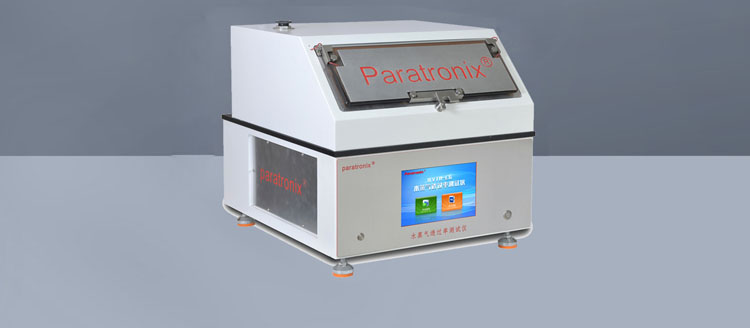
ASTM F1249 specifies an infrared sensor method for measuring the water vapor transmission rate (WVTR) of plastic film and sheeting. For medical packaging teams, its central requirement is a controlled, documented material test: the specimen separates a humid environment from a dry carrier-gas stream, and the instrument measures the water vapor that passes through it under stated conditions.
The result helps assess a packaging material’s moisture barrier, but ASTM F1249 does not set a universal pass or fail limit for medical packaging. It also does not, by itself, establish that a finished sterile barrier system maintains sterility or protects a device throughout its shelf life. Those judgments require product-specific acceptance criteria and, where applicable, separate package-level validation.
What the method measures
In an ASTM F1249 test, a prepared specimen is mounted in a diffusion cell so that it separates two controlled environments. One side is exposed to a humid atmosphere; the other is swept by a dry carrier gas. Water vapor permeating through the specimen is carried to an infrared detector, which measures the vapor reaching it. The transmission rate is calculated for the exposed area and reported under the test conditions used.
The result is commonly expressed as mass of water transmitted per unit area per unit time, such as g/m²/day. It describes transmission through the tested specimen under the specified conditions. It should not be treated as an inherent value that remains constant across every temperature, humidity, material orientation, or package configuration.
For quality control, this controlled material measurement can support incoming inspection, comparison of film lots, supplier qualification, or investigation of a barrier change. For safety and packaging teams, it can provide one input to a broader assessment of moisture-sensitive devices or components. The value becomes useful for a release or design decision only when the team has defined how much transmission the application can tolerate.
Which materials and packaging questions does ASTM F1249 cover?
The method addresses plastic films and sheeting. It can be relevant to individual plastic layers and multilayer structures used in medical packaging, provided the material can be tested within the method’s scope and the instrument’s validated capabilities. A representative sample of the actual packaging structure is more informative than a result for one component layer alone when the layers act together as the moisture barrier.
For example, a film used in a pouch may have an acceptable material WVTR while the finished pouch still allows moisture to enter through seals, a damaged area, or another component. A flat-sheet test does not measure those routes. Conversely, a package-level result may indicate an unwanted increase in moisture ingress without identifying whether the film, seals, or package geometry caused it. Material and package testing answer related but different questions.
Porous materials, coatings, foil-based laminates, and unusual constructions need particular care when selecting a method. Their suitability depends on the material and the scope and limitations of the applicable test procedure. A team should not assume that every medical packaging substrate can be evaluated appropriately under ASTM F1249 simply because it forms part of a medical package.
ASTM F1249 is a test method, not a certification of the material or device. Any claim of conformity should identify the edition used and the relevant test conditions. If a customer specification, regulatory submission, or internal procedure calls for a particular edition or additional requirements, the laboratory should follow that controlled document.
What must be controlled during the test?
The method’s value depends on creating a known driving force for water vapor and measuring the resulting transmission reliably. Temperature, relative humidity, specimen preparation, test area, and instrument operation all affect whether the reported result can be interpreted and compared.
Temperature and relative humidity
The laboratory must use and report the test conditions specified for the work. A result obtained at one temperature and humidity condition should not be compared directly with a supplier result obtained under different conditions as though both describe the same performance.
When a customer specification names the conditions, those conditions govern the comparison. For development work, the team should select conditions that answer the intended question and document the rationale. A more severe condition may help distinguish materials or support a particular study, but it does not automatically predict the rate at every storage condition. The relationship between test conditions and real distribution or storage exposure needs its own justification.
The humidity difference across the specimen matters as well as the stated humidity on the exposed side. If the dry side is not adequately controlled, the driving force and the measured transmission can be affected. The laboratory should operate the instrument and verify its environmental controls in accordance with the applicable method and its internal procedures.
Specimen selection, preparation, and mounting
A test specimen should represent the material being evaluated. Sampling decisions may need to account for roll location, manufacturing variation, material direction, and the number of specimens required by the applicable procedure or specification. Comparing a supplier’s development sample with production material is less useful if the samples differ in construction or processing history.
Before mounting, specimens should be handled and conditioned as required by the selected method and test plan. Creases, pinholes, contamination, and surface damage can distort a measurement or make it unrepresentative. Thickness should be measured and reported where required or relevant, particularly when comparing lots or constructions. However, dividing or multiplying a WVTR result by thickness should not be assumed to produce a reliable comparison for every multilayer structure.
The specimen must be mounted securely over the defined test area, with the intended side facing the humid environment when orientation matters. Multilayer materials can have different surface properties or layers on each side, so the orientation should be recorded and kept consistent across comparative tests. Leakage around the specimen can be mistaken for transmission through the material; careful sealing and appropriate system checks are therefore essential, especially for high-barrier samples.
Equilibrium and instrument checks
The reading should represent a stable measurement under the method’s requirements, not an early transient caused by the specimen or system adjusting to the test environment. The time needed can vary with the material, its construction, and the conditions. A fixed short test time is not a substitute for meeting the applicable stability or endpoint criteria.
Calibration, verification, and maintenance should follow the instrument manufacturer’s instructions and the laboratory’s controlled procedures, alongside the requirements of the applicable ASTM edition. Checks for leakage and background contribution are important when the material transmits very little water vapor: a small unwanted contribution can become significant relative to the specimen result.
What should the test report contain?
A report should make the result traceable and give another laboratory or reviewer enough context to understand how it was obtained. The applicable edition of ASTM F1249 governs the formal reporting requirements; the test plan or customer specification may require additional detail.
In practice, a useful report identifies the material and sample source, specimen characteristics such as thickness where applicable, conditioning, test temperature and humidity, specimen orientation where relevant, and the WVTR results with their units. It should also identify deviations from the method or agreed procedure and provide the other information required by the standard.
For a medical packaging decision, retain the link between the tested material and the packaging configuration being assessed. A result for a film roll is easier to apply when the record identifies its construction, lot, and intended use. If the tested sample differs from the production structure, that difference belongs in the technical assessment rather than being left for a reviewer to infer.
Replicate results and the way they are summarized matter too. An average can conceal variation that is relevant to a material specification. The number of specimens, treatment of individual results, and acceptance rule should be defined by the applicable method and quality procedure. A laboratory should not silently exclude an unexpected result merely because it fails to fit the others; investigate whether a documented preparation, specimen, or equipment issue justifies its treatment.
How should a team set and use a WVTR limit?
ASTM F1249 tells the laboratory how to measure; it does not decide the allowable moisture exposure for a particular medical device. An acceptance limit should come from the product and package requirements: the device’s sensitivity to moisture, the intended shelf life, storage and distribution conditions, the package design, and any protective measures used within the package.
A material limit can then be established as part of the packaging specification and linked to the test conditions. It should be tight enough to support the product’s moisture-control strategy while allowing for justified material and measurement variability. The team should also define what happens when a result falls outside the limit or when supplier data and internal data disagree.
Care is needed when translating a flat-material WVTR into a moisture-ingress estimate for a finished package. The exposed area and humidity conditions matter, but so do seals, other materials, package configuration, and changes over storage. A simple calculation based on film area can support an initial assessment; it should not be presented as proof of package performance unless the assumptions and other ingress paths have been addressed.
Sterility and moisture protection are also separate performance questions. A package can require a sterile barrier assessment even when the device is relatively insensitive to humidity, and a moisture-sensitive product may require a tight moisture specification in addition to applicable sterile barrier requirements. ASTM F1249 data can support the material portion of that work without replacing package integrity, sealing, aging, or other validation activities selected for the product.
Choosing equipment and comparing results
A WVTR tester for medical device packaging should be selected against the materials, expected transmission range, and conditions the laboratory actually needs to evaluate. A high-barrier laminate and a more permeable plastic film may place very different demands on measurement sensitivity and test duration. The stated instrument range should be considered alongside the laboratory’s ability to verify performance at the low end of the intended range.
Ask how the instrument controls temperature and humidity, how it checks for leakage and background contribution, and how calibration and verification are performed. The ability to record test conditions, specimen identity, and results in a traceable form is also relevant for controlled quality records. Equipment capability alone does not establish that every result is valid; specimen handling, operator procedures, and maintenance remain part of the measurement system.
When two laboratories report different values, start by comparing the test conditions, specimen construction and thickness, orientation, conditioning, and endpoint criteria. Then review sampling, mounting, calibration, and leakage checks. If the original reports omit those details, requesting the underlying test information is often more useful than treating the difference as evidence that one material or instrument has failed.
The strongest use of ASTM F1249 data is a defined comparison: a representative material, tested under documented conditions, against an acceptance criterion tied to the packaging’s intended function. That gives quality and safety teams a defensible basis for deciding whether a material remains suitable or whether the package assessment needs further work.
Leave A Reply
Search by Keywords