




Recent Posts
 What does ASTM F1249 require for medical packaging WVTR testing?Nov 13, 2026
 Infrared vs Gravimetric WVTR Testing for Food PackagingNov 13, 2026
 ASTM F1249 and ASTM E96: Choosing a WVTR Test Method for Food FilmsNov 13, 2026
 What does a WVTR tester measure in pharmaceutical containers?Nov 13, 2026
 ASTM F1249 and E96: WVTR Test Standards for Biodegradable FilmsNov 13, 2026
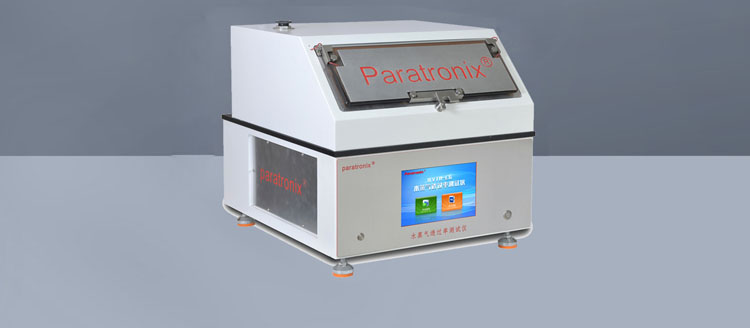
A WVTR tester for pharmaceutical containers measures how quickly water vapor passes through a container or its packaging materials under specified test conditions. This measurement helps manufacturers assess moisture protection, compare packaging options, and support product stability throughout shelf life. Understanding what the test measures—and how temperature, humidity, and container design affect the results—is essential when evaluating packaging for moisture-sensitive medicines.
The distinction matters because a medicine may be carefully formulated and manufactured, yet still encounter moisture during storage. A bottle, blister, pouch, or vial system is part of its protection. WVTR testing provides evidence about one aspect of that protection: the movement of water vapor across the tested packaging barrier.
What does a WVTR result actually describe?
WVTR stands for water vapor transmission rate. It describes the amount of water vapor that passes through a material or package over a specified period under defined conditions. For a flat material, the result is commonly normalized by exposed area and reported in units such as grams per square meter per day (g/m²/day).
For a complete container, the result may instead be expressed as moisture ingress per container over time, such as milligrams per container per day. The reporting unit depends on the method and the item being tested. A container-level result and a material-level result should not be compared directly without accounting for their different test configurations and units.
In general, a lower transmission or ingress rate indicates a stronger barrier to water vapor under the stated conditions. It does not, on its own, establish that a package will protect every medicine for a particular shelf life. The acceptable level depends on the formulation, the available headspace, the presence of a desiccant, storage conditions, and the product’s sensitivity to moisture.
Material barrier or complete container performance?
One of the most useful questions to ask before reviewing a result is: What was actually tested? A sheet of packaging material and a closed pharmaceutical container answer related but different questions.
Testing a packaging material
A material test evaluates water vapor transmission through a defined area of film, sheet, laminate, or another barrier material. It is useful for comparing candidate materials, checking whether a supplied film is consistent, or investigating the effect of a change in material construction.
For example, two blister films may look similar but have different barrier structures. A flat-material test can help distinguish their moisture resistance under the same conditions. It does not, however, include the influence of formed cavities, sealing parameters, or defects introduced during packaging.
Testing a finished container or package
A container-level test examines the assembled system in its test configuration. Depending on the method, moisture may enter through the container wall as well as through the closure, seal, or other interfaces. This makes the result relevant to the way the package is used, but it can be harder to isolate the contribution of one component.
Consider a plastic bottle with a cap and an induction seal. A material result for the bottle wall alone cannot establish how the closure and seal perform. Conversely, an elevated moisture ingress result for the complete bottle does not automatically identify which component or interface is responsible. Additional testing may be needed to investigate the cause.
The same distinction applies to blister packs: a film test characterizes the barrier material, while a suitably designed package test can assess the formed and sealed configuration. The test objective should determine which measurement comes first.
How does a WVTR tester measure water vapor transmission?
Most approaches establish a humidity difference across the specimen and measure water vapor moving from the higher-humidity side toward the lower-humidity side. The tester controls or monitors the relevant conditions while the measurement develops. Depending on the technique and sample, the instrument may use a humidity-sensitive detector, or the test may determine moisture uptake by weighing a desiccant or another suitable material.
In an instrumental material test, a specimen is typically mounted between two chambers. One side is exposed to a specified humid environment, while the other side is kept at a lower humidity. Water vapor that crosses the exposed area is detected and used to calculate the transmission rate. The exact arrangement, carrier gas requirements, and calculation depend on the instrument and method.
A gravimetric approach follows a different principle: moisture transfer is inferred from a change in mass over time. For a container test, a dry material may be placed inside the closed package before it is exposed to a controlled environment and weighed at defined intervals. Sample preparation, sealing, weighing precision, and correction for handling effects are all important to the reliability of the result.
Barrier materials do not all reach a measurable steady state at the same speed. A highly resistant material may require a longer test, and the instrument must be sensitive enough for the expected transmission level. A quick reading is not necessarily a useful one if the method has not allowed the measurement to stabilize or meet its specified endpoint.
Why test conditions belong next to every result
A WVTR figure without its conditions is difficult to interpret. Water vapor transmission depends not only on the barrier but also on the environment and the way the specimen is prepared.
- Temperature: Permeation through many polymers changes with temperature. Results obtained at different temperatures may therefore differ even when the same material is tested.
- Relative humidity: The humidity on each side affects the driving force for vapor transfer. Some materials also change their barrier behavior as they absorb moisture.
- Exposed area and thickness: For material tests, area is needed to calculate an area-normalized rate. Thickness and construction can also influence the result, so sample details matter when comparing materials.
- Sample preparation: Creases, punctures, contamination, or poor mounting can distort a film result. For containers, closure application and seal preparation are equally important.
- Test duration and endpoint: The time needed to obtain a representative result varies with the material, package, and method. Measurements taken at different stages may not describe the same behavior.
When comparing data from suppliers or laboratories, check that the test method, temperature, humidity conditions, sample configuration, and units are compatible. A lower number from one report is not automatically evidence of a better barrier if it was obtained under less demanding conditions or with a different type of specimen.
What can the measurement tell pharmaceutical teams?
WVTR data is most valuable when it is connected to a packaging decision. For a moisture-sensitive tablet, the question may be whether a proposed bottle and closure system provides sufficient resistance to water vapor for the intended storage period. During material selection, the immediate question may instead be which film deserves further evaluation.
Typical uses include:
- Comparing packaging materials or container configurations under the same test conditions.
- Screening a proposed change in film, container resin, wall thickness, closure, or sealing process.
- Investigating differences between production batches or packaging suppliers.
- Generating packaging data to support development and stability studies.
- Checking whether barrier performance remains consistent with an established specification, where an appropriate method and limits have been defined.
These applications do not all require the same test. A laboratory investigating incoming film may need a different specimen holder and measurement range from a team assessing closed bottles. Starting with the decision to be made helps prevent a technically valid result from answering the wrong question.
WVTR is not the same as shelf-life prediction or leak testing
It is tempting to turn a transmission rate into a simple shelf-life estimate. In practice, the relationship is more complicated. A medicine’s response depends on how much moisture it initially contains, how it absorbs water, and what level of change affects its quality. Desiccant capacity and storage history may also matter. WVTR or moisture ingress data can inform an assessment, but it should be considered alongside product-specific stability evidence.
Likewise, water vapor permeation is not identical to a gross leak. Moisture can gradually pass through an intact polymer wall, while a defective seal or closure may create an unintended ingress pathway. A container-level moisture ingress test can reflect the combined effect of these mechanisms, depending on the method, but it may not locate a defect or characterize every type of leak.
For sterile products, container closure integrity testing addresses whether the package maintains its required integrity against potential contamination pathways. WVTR testing and integrity testing can be complementary, but one should not automatically be treated as a substitute for the other.
How to evaluate a WVTR testing approach
For someone new to packaging testing, instrument specifications can be difficult to interpret without a clear application. Before selecting a tester or requesting a service, define the sample and the expected result as precisely as possible.
- Identify the specimen. Is the goal to test flat film, a formed blister, a bottle with its closure, or another finished package? Confirm that the method and fixtures accommodate its shape and size.
- Estimate the required measurement range. High-barrier materials may transmit very little moisture. The instrument and method need adequate sensitivity for the expected range, with an appropriate test duration.
- Set relevant conditions. Decide which temperature and humidity conditions are needed for material comparison, specification testing, or investigation. Record them with every result.
- Choose the reporting basis. Determine whether the decision requires an area-normalized material rate or moisture ingress per package. Specify the units and number of specimens.
- Review the method and data quality. Use an applicable, documented standard or validated procedure where appropriate. Ask how the system is verified, how samples are prepared, and how repeatability is assessed.
Recognized methods for water vapor transmission and container moisture permeation may apply to different specimen types and purposes. A method designed for a flat film should not be assumed suitable for a finished pharmaceutical container without checking its scope. Pharmacopoeial requirements, relevant standards, and the organization’s own quality procedures should be considered for the intended application.
Turning a measurement into a better packaging question
A useful WVTR report should make it possible to understand both the number and the circumstances behind it: what was tested, how it was prepared, which conditions were used, and how the result was calculated. If a result is unexpected, retain that context before changing the package design. The issue may lie in the material, the seal, the test setup, or normal variation between specimens.
Paratronix Instruments Co., Ltd. develops and supplies packaging testing instruments for pharmaceutical packaging, plastic packaging materials, and high-barrier materials. When exploring a testing solution, a practical starting point is to discuss the sample type, anticipated barrier range, required conditions, and applicable method. Those details help establish whether a material test, a container-level measurement, or a combination of approaches is needed.
Ultimately, a WVTR tester measures the passage of water vapor under defined conditions—not the quality of a medicine by itself. Used with an appropriate method and interpreted alongside stability and package integrity information, the result helps turn a difficult-to-see moisture risk into evidence for packaging decisions.
Leave A Reply
Search by Keywords