




Recent Posts
 Key Specifications to Compare When Selecting a Lipstick Break Force TesterOct 08, 2026
 What Does a Lipstick Break Force Tester Measure in Quality Control?Oct 08, 2026
 Validation Records and Test Standards for Artificial Skin Puncture TestingSep 24, 2026
 Force Tester or Universal Testing Machine for Artificial Skin Puncture Tests?Sep 24, 2026
 What Does an Artificial Skin Puncture Force Tester Measure in Needle Testing?Sep 24, 2026

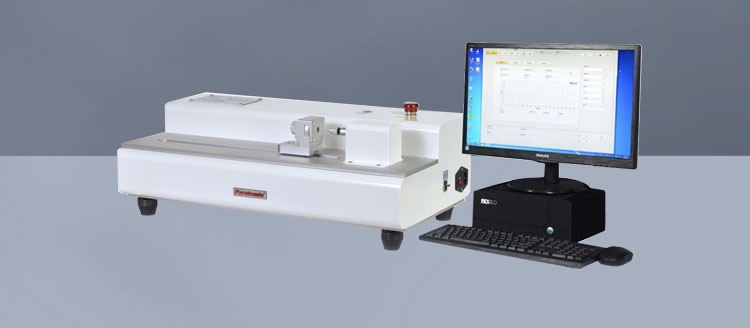
1. Scope
1.1 This specification provides requirements for materials,finish and marking,care and handling, and the acceptable dimensions and tolerances for metallic bone screws that are implanted into bone. The dimensions and tolerances in this specification are applicable only to metallic bone Screws described in this specification.
1.2 This specification provides performance considerations and standard test methods for measuring mechanical properties in torsion of metallic bone screws that are implanted into bone.These test methods may also be applicable to other screws besides those whose dimensions and tolerances are specified here.
1.3 This specification is based, in part, upon ISO 5835, ISO6475, and 1SO 9268.
1.4 The values stated in SI units are to be regarded as standard.No other units of measurement are included in this standard.
1.5 Multiple test methods are included in this standard.However, the user is not necessarily obligated to test using all of the described methods. Instead, the user should only select,with justification, test methods that are appropriate for a particular device design.
5. Material
5.1 Screws shall be fabricated from a metallic material intended for surgical implant applications, and meeting the requirements for an ASTM medical material. In addition, the materials shall be biocompatible for the intended application.
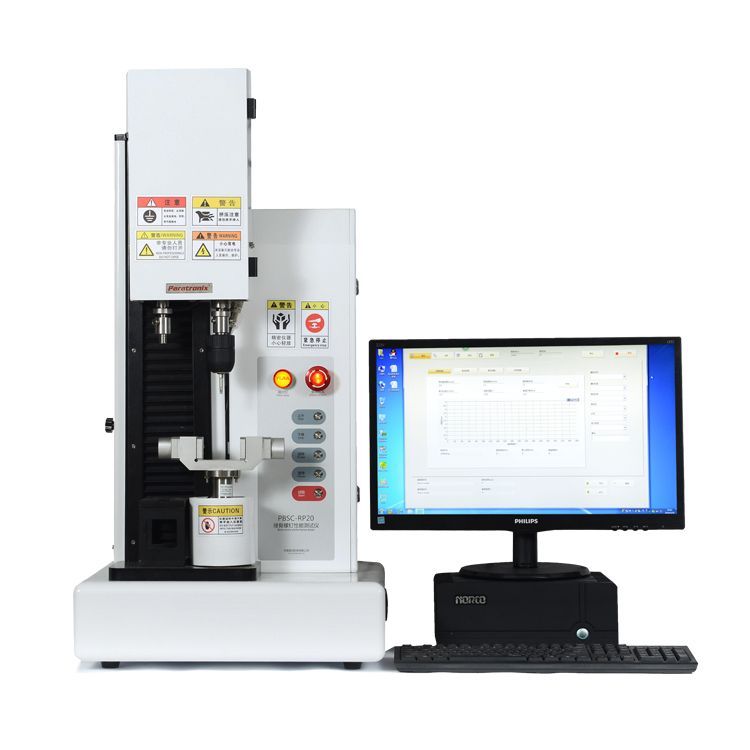
Testing equipment:PBSC-RP30 Bone Screw Performance Tester
10.Performance Considerations and Test Methods
10.1 The following properties may be important when determining the suitability of a screw for a particular application, However, the test methods referenced as follows may not be appropriate for all types of implant applications. The user is cautioned to consider the appropriateness of the test methods in view of the devices being tested and their potential application.
10.1.1 Torsional Strength-This test method is an important parameter to prevent screw breakage during insertion or removal. The torsional strength shall be determined using the test methods described in Annex Al.
10.1.2 Breaking Angle-This test method provides a measure of the ductility of the screws when undergoing a torsional moment. A screw with a greater breaking angle may provide an earlier tactile warning to the surgeon that the screw is reaching its maximum torsional strength. The breaking angle shall be determined using the test methods described in Annex Al.
10.1.3 Axial Pullout Strength-This test method may be an important parameter if the screws is subjected to axial tensile forces, or if the screw is fixed into poor quality or osteoporotic bone. The pullout strength may be determined using the test methods described in Annex A3.
10.1.4 Insertion Torque-This test method may be an important parameter to avoid failure of the screws during insertion and to ensure that the screws may be easily inserted by the surgeon.The insertion torque should be much less than torsional yield strength of the screw and of the appropriate screwdriver bit, The insertion torque may be determined using the test methods described in Annex A2.
10.1.5 Removal Torque-This test method may be an important parameter to avoid failure of the screw during removal and to ensure that the screw may be easily removed by the surgeon, The removal torque should be much less than torsional yield strength of the screw and of the appropriate screwdriver bit, The removal torque may be determined using the test methods described in Annex A2.
10.1.6 Self-Tapping Force-This test method may be an important parameter to ensure that the screws may be easily inserted by the surgeon, particularly if the screws is fixed in poor quality or osteoporotic bone. The self-tapping force maybe determined using the test method described in Annex A4.
11. Performance Requirements
11.1 Screws shall meet the mechanical performance requirements specified in its associated specification annex.
Leave A Reply
Search by Keywords