




Recent Posts
 Using Leak and Seal Strength Tests for Medical Pouches and Sterile Barrier SystemsSep 18, 2026
 How Leak and Seal Strength Testers Use Vacuum Decay, Burst, and Peel MethodsSep 18, 2026
 Which Features Have the Greatest Impact on Puncture Force Tester Cost?Sep 17, 2026
 Bone Screw Torsion Tester Requirements for ASTM F543 Mechanical TestingSep 17, 2026
 Self-Tapping Screw Tester Metrics for Torque, Insertion, and Pull-Out TestingSep 17, 2026
How Leak and Seal Strength Testers Use Vacuum Decay, Burst, and Peel Methods
A package can look intact and still fail its intended barrier function. A channel in a heat seal, a pinhole in a flexible laminate, or a seal that opens under modest handling pressure may not be visible during routine inspection. For pharmaceutical packaging, plastic pouches, high-barrier films, and similar applications, this creates a difficult validation question: is the package actually sealed, or does it only appear sealed?
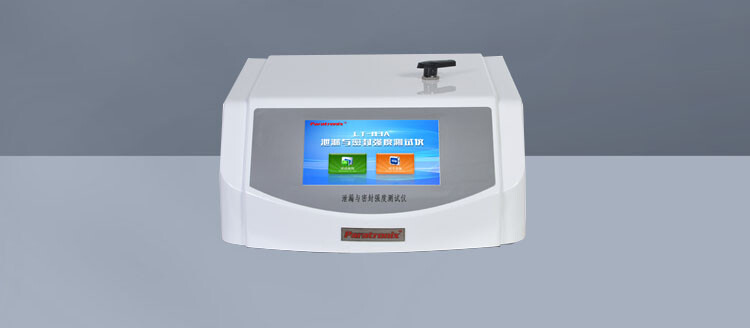
A Leak and Seal Strength tester addresses that question through different physical principles. Vacuum decay evaluates whether a sealed pack allows pressure loss under vacuum. Burst testing determines how much internal pressure a package or seal can withstand before failure. Peel testing measures the force needed to separate a seal. These methods are related, but they do not provide interchangeable results. A package may pass a peel-strength requirement while still containing a leak path, and a package with excellent leak resistance may have a seal strength that is too high for convenient opening.
The practical task is not simply to choose a tester with more functions. It is to define the failure mode that matters, identify the test method that can reveal it, and establish parameters that produce repeatable decisions. This is especially relevant when material structures, sealing conditions, package geometry, or product configurations change.
Three Methods, Three Different Integrity Questions
The distinction matters because packaging specifications often mix the terms “leak,” “seal integrity,” and “seal strength.” They overlap in daily conversation, but they describe different risks. Leak integrity concerns the presence of a route through which gas, moisture, microorganisms, or other contaminants may pass, depending on the application. Seal strength concerns mechanical resistance. A strong seal can be defective in a localized area, while a lower-strength peelable seal may be entirely consistent and fit for use.
Vacuum Decay: Looking for Pressure Behavior Rather Than Visible Bubbles
Vacuum decay testing places a sample in a sealed chamber and applies a programmed vacuum. After a stabilization period, the instrument observes the pressure behavior during a defined test period. If the package contains a leak, gas escaping from the package can alter the chamber pressure response. The tester compares the measured result with the method’s acceptance criteria.
This approach is commonly associated with ASTM F2338, which covers nondestructive detection of leaks in packages by vacuum decay. The standard is useful as a methodological reference, but it does not remove the need for package-specific method development. Chamber volume, package headspace, material flexibility, vacuum level, stabilization time, test duration, and the expected defect type all influence sensitivity and repeatability.
Unlike a water-bath bubble test, vacuum decay does not depend on an operator seeing a stream of bubbles. That can make it suitable where a quantitative pressure-based result, electronic record, or repeatable acceptance threshold is needed. It also preserves samples in many applications, which is valuable when testing expensive packages, retained samples, or units intended for subsequent inspection. “Non-destructive,” however, should not be interpreted as “universally suitable for every leak.” Some flexible packages deform substantially under vacuum; some contain very little headspace; some product forms alter the pressure response. Those factors must be evaluated during feasibility work.
A recurring mistake is to treat the tester’s pressure resolution as the same thing as actual package leak sensitivity. They are not identical. The smallest defect that a method can reliably discriminate depends on the entire system: the package, leak geometry, material behavior, test recipe, fixtures, environmental conditions, and reference samples. A useful validation study therefore includes known-good packs and intentionally defective samples that represent realistic defects, rather than relying only on instrument display resolution.
Where vacuum decay adds the most value
Vacuum decay is particularly relevant when the main concern is microleak detection without opening the pack. It can support development of forming and sealing processes, incoming or in-process quality checks, and package validation studies. In high-barrier packaging, a small discontinuity may matter even if the seal feels mechanically robust. In pharmaceutical packaging, the required approach should be aligned with the product risk assessment, packaging system design, and applicable regulatory expectations rather than selected solely because it is a familiar test method.
Burst and Creep Testing: Measuring Resistance Under Internal Pressure
Burst testing applies increasing internal air pressure until the package fails. The recorded pressure at failure can reveal whether the package is weak at the seal, at a corner, around a port, or in the material itself. For flexible packages, ASTM F1140 is widely referenced for internal pressurization failure resistance of unrestrained packages. ASTM F2054 addresses burst testing of flexible packages using restrained plates, which limit package expansion and can produce a different stress state.
That difference between restrained and unrestrained testing should not be overlooked. A pouch expands when pressurized, and the resulting load distribution may be closer to certain real-world conditions. A restrained test may be more controlled for particular package forms, but its results should not be compared casually with unrestrained results. The fixture, package orientation, pressure ramp rate, and definition of failure all need to be fixed in the test procedure.
Creep testing is related but answers another question: can the package survive a specified pressure for a defined dwell time? This is useful when a package does not need to reach rupture for the evaluation to be meaningful. A seal that survives a rapid pressure ramp may still relax and open under sustained stress. Creep testing can expose that weakness, especially when the seal interface is affected by wrinkles, contamination, variable cooling, or material variation.
Failure location is often more informative than the pressure value alone. A clean adhesive separation, a cohesive tear through a seal layer, a material rupture away from the seal, and a failure near a sharp package transition point point to different corrective actions. Recording pressure without documenting the failure mode can make process troubleshooting unnecessarily slow.
Peel Testing Shows How the Seal Opens
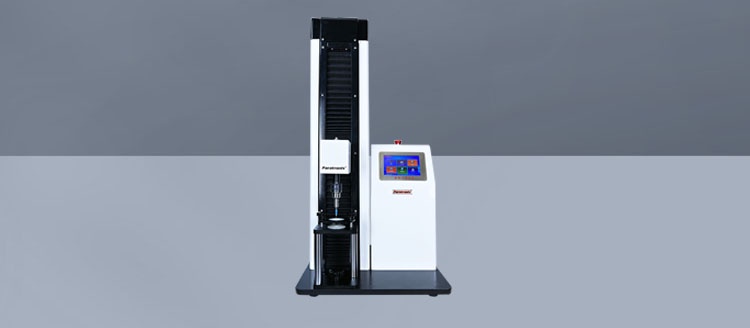
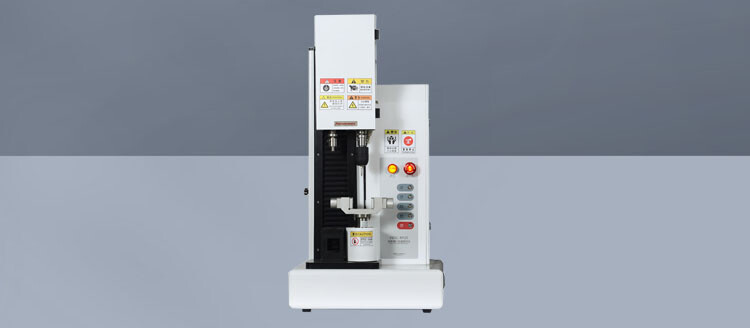
Peel testing separates a prepared seal specimen at a controlled speed and angle while measuring force. ASTM F88/F88M is a commonly used reference for seal strength of flexible barrier materials. The result may be reported as average force, maximum force, or other defined values, but the force curve and observed failure mechanism deserve equal attention.
A stable peel curve can indicate a more uniform seal. Sharp peaks and valleys may suggest inconsistent heat distribution, uneven pressure, variable coating behavior, or intermittent contamination. Yet a smooth curve is not automatically proof of suitability. A medical or pharmaceutical package intended for aseptic presentation may require a controlled peel behavior, while an industrial liner or transport pouch may prioritize high resistance to opening. The acceptance criterion must reflect the package’s intended use.
Specimen preparation is one of the most underestimated variables. Seal width, cutting accuracy, peel angle, grip alignment, dwell time after sealing, and conditioning can all affect results. When comparing material lots or sealing settings, laboratories should keep these elements consistent. Otherwise, apparent process variation may actually be variation introduced by sample preparation.
Building a Method That Produces Defensible Results
A reliable Leak and Seal Strength tester is only one part of a defensible test system. Before setting routine limits, it is worth defining what decision the result must support. Is the purpose to release production lots, compare film structures, establish a sealing window, investigate complaints, or qualify a new package? The answer affects the appropriate method, sample quantity, fixture design, reporting format, and level of validation.
For a practical evaluation, the following points usually need to be documented:
- The package configuration, material structure, dimensions, headspace, and product state.
- The defect or mechanical risk to be detected, including likely location and severity.
- Test settings such as vacuum profile, pressure ramp, dwell time, test speed, and fixture arrangement.
- Acceptance criteria and the logic behind them, rather than a limit copied from an unrelated package.
- Calibration, verification, operator instructions, data retention, and treatment of invalid tests.
For regulated packaging systems, method selection should also be considered within the broader packaging validation framework. ISO 11607 is frequently relevant to terminally sterilized medical device packaging, while specific product categories may introduce additional requirements. It is not safe to assume that one test standard alone demonstrates full compliance. The relationship between package design, sealing process validation, integrity testing, transport conditions, and shelf-life evidence must be assessed for the actual application.
Choosing Equipment Without Reducing the Decision to a Feature List
When assessing test equipment, method fit comes before maximum stated capability. A vacuum decay chamber needs to accommodate the package while maintaining a controlled test volume. A burst fixture needs to connect securely without damaging the sample or creating an artificial failure point. A peel tester requires appropriate grips, a stable crosshead arrangement, and data acquisition that allows the operator to review the full force curve rather than only a single numerical result.
Ease of recipe control and traceable reporting are also operational concerns, not cosmetic extras. If the laboratory runs several pouch sizes, material structures, or seal formats, users need to know which method was applied to which sample. For quality systems that require electronic records or audit-ready output, data handling should be reviewed early, together with access control, result export, and calibration procedures.
Paratronix Instruments Co., Ltd. develops packaging testing instruments for pharmaceutical packaging, plastic packaging materials, and high-barrier material applications. In this type of work, the useful conversation is usually not “Which tester is best?” but “Which package failure must the method distinguish, under which standard or internal specification, and with what evidence?” A supplier that can discuss sample behavior, method parameters, and fixture suitability can help prevent an instrument from being installed before the test method is truly defined.
Use Complementary Evidence, Not a Single Number
Vacuum decay, burst, and peel testing form a more complete picture when used for the risks they are designed to reveal. Vacuum decay can investigate leakage without destroying the sample. Burst and creep testing show resistance to internal pressure and reveal weak locations. Peel testing characterizes opening force and seal uniformity. None should be used as a shortcut for the others.
The strongest testing programs connect each result to a known packaging risk and a documented decision. Before finalizing equipment or acceptance limits, confirm the relevant test standard, package configuration, defect model, and reporting requirements. That work takes more care than selecting a generic test cycle, but it is what turns a Leak and Seal Strength tester into a dependable tool for packaging validation and routine quality control.
Leave A Reply
Search by Keywords