




Recent Posts
 Using Leak and Seal Strength Tests for Medical Pouches and Sterile Barrier SystemsSep 18, 2026
 How Leak and Seal Strength Testers Use Vacuum Decay, Burst, and Peel MethodsSep 18, 2026
 Which Features Have the Greatest Impact on Puncture Force Tester Cost?Sep 17, 2026
 Bone Screw Torsion Tester Requirements for ASTM F543 Mechanical TestingSep 17, 2026
 Self-Tapping Screw Tester Metrics for Torque, Insertion, and Pull-Out TestingSep 17, 2026

Using Leak and Seal Strength Tests for Medical Pouches and Sterile Barrier Systems
For a medical packaging project, the pouch is not simply a container. It is part of the product’s sterile barrier system, and its performance must remain dependable through sealing, sterilization, transport, storage, handling, and aseptic presentation. A pouch that looks acceptable on the production line may still contain a channel, a localized weak seal, or a material-related defect that becomes evident only when the package is stressed.
That is why a Leak and Seal Strength tester should be considered early in a medical packaging project rather than added after validation difficulties appear. For project managers, the practical value is not limited to obtaining pass-or-fail results. Proper leak and seal strength testing helps connect package design decisions, sealing process settings, supplier quality, validation evidence, and routine production control.
The most useful test plan is rarely the one with the largest number of samples or the most equipment. It is the one that can answer a clear question: where could sterility be lost, how likely is that failure mode, and which test method can reveal it before product is released?
Why medical pouch failures are often harder to see than expected
Medical pouches commonly combine flexible films with porous materials such as medical-grade paper, nonwoven substrates, or Tyvek-type materials. Their seal area may be narrow, and the seal must be strong enough to protect the contents while remaining peelable or opening in a controlled manner when the intended use requires aseptic presentation.
This creates a familiar tension in packaging development. Raising sealing temperature, pressure, or dwell time may improve measured bond strength in one trial, but it can also cause distortion, material damage, fiber tear, excessive peel force, or an inconsistent opening behavior. Reducing the seal condition may improve peelability, yet leave too little process margin when line temperature drifts or incoming material varies from lot to lot.
Visual inspection remains necessary, but it is not enough. Operators can identify obvious wrinkles, incomplete seals, contamination in the seal zone, or poorly aligned webs. They cannot reliably judge every microscopic channel or determine whether the seal will maintain its integrity after sterilization and distribution. This is especially relevant at the corners of pouches, around gussets, near die-cut features, and in areas affected by particulate contamination or uneven pressure from worn sealing jaws.
A good testing program therefore separates two related questions. Is the package leaking today? And does the seal have a repeatable mechanical strength appropriate for its intended use? These questions overlap, but they are not interchangeable.
Leak testing and seal strength testing reveal different risks
Leak testing is concerned with package integrity. Depending on the package format and the selected method, it can help detect defects such as channels, pinholes, incomplete seals, or areas where the package does not retain pressure or vacuum as expected. Seal strength testing focuses on the force required to separate a sealed interface and on the way that interface fails during peeling.
The distinction matters during troubleshooting. A pouch may have a relatively high average seal-strength result but still leak through a narrow channel created by a fold or contamination event. Conversely, a pouch may not show a leak in a particular test but may produce a very low or highly variable peel-strength profile, signaling that the process has little safety margin.
In practice, the two tests should inform one another. When a project team sees declining peel force together with occasional integrity failures, the likely investigation is different from a situation in which peel force is stable but leaks appear at a specific pouch corner. The first may point toward a changing thermal sealing process or material surface. The second may point toward tooling geometry, pouch conversion, web tracking, or the physical handling of filled packs.
Start with the failure modes, not with the instrument
Project teams sometimes choose a test method because it is familiar, because a supplier already uses it, or because an instrument is available in another department. That can be reasonable, but it should not replace a packaging risk review. The selected method needs to match the package material, package geometry, intended sterile barrier, defect type of concern, and the stage of the project.
For example, a transparent film pouch may be suitable for one type of visual or dye-based investigation, while a porous material system requires a method that is appropriate for that material structure. Vacuum-decay approaches, bubble emission methods, dye penetration methods, internal pressurization approaches, and tensile peel tests each have different strengths and limitations. Some are useful for development screening; others are better suited to a validated quality-control procedure. A method should never be described as “more sensitive” in the abstract. Sensitivity depends on the defect mechanism, test conditions, package construction, and the acceptance criteria established for the project.
Standards such as ISO 11607 are often relevant when validating terminally sterilized medical-device packaging, while ASTM methods may be referenced for specific test approaches, including seal-strength and package-integrity evaluations. The applicable edition, customer requirements, product risk, and local regulatory expectations should be checked by the quality and regulatory teams. A standard can guide the work, but it does not eliminate the need to demonstrate that the chosen method is suitable for the actual pouch system.
A practical risk map for pouch projects
Before finalizing equipment and sampling plans, it is useful to map the package journey: incoming rollstock or preformed pouches, forming and filling, heat sealing, sterilization exposure where applicable, secondary packaging, transport, warehousing, and clinical or laboratory opening. At each stage, ask what can change the seal or create a leak path.
- Material-related factors: coating consistency, film thickness variation, surface contamination, sealant compatibility, or lot-to-lot changes.
- Sealing-process factors: jaw temperature uniformity, dwell-time repeatability, pressure distribution, worn sealing surfaces, and registration accuracy.
- Product-related factors: sharp edges, trapped air, product migration into the seal area, unusual pouch dimensions, or high headspace pressure changes.
- Post-seal factors: sterilization effects, compression during packing, vibration, drops, temperature cycling, and operator opening technique.
This exercise often exposes a weak assumption: that the seal is the only part of the sterile barrier system that matters. For many pouches, failures emerge where materials transition, where stress concentrates, or where the package is manipulated after sealing. Test samples should reflect those conditions rather than being limited to the easiest samples to prepare.
Building seal strength into process validation
Seal-strength testing is most valuable when it is treated as a process-development tool, not merely a release test. During early trials, project teams can use peel data to understand the workable sealing window: the range of conditions where seals are consistent, adequately strong, and appropriate for the opening requirement. The goal is not necessarily to produce the highest force reading. A very strong seal can be undesirable if it tears the substrate unpredictably, sheds material, or makes aseptic opening difficult.
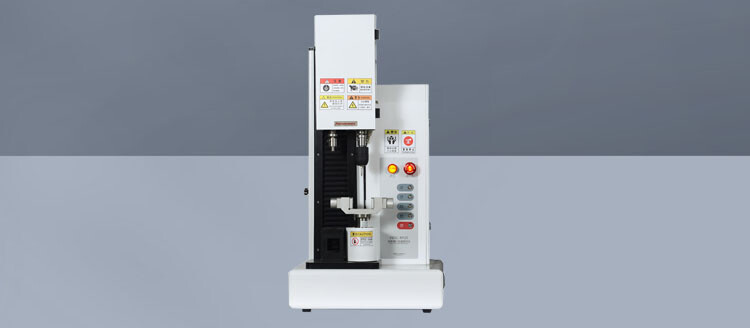
A tensile testing setup should be selected and configured to suit the sample. Grip design, sample width, peel angle, test speed, gauge length, and data capture all influence the usefulness of the result. Just as important, the team should record the failure mode. A numerical value without an observation of how the seal separated can hide meaningful variation. Cohesive failure, adhesive separation, fiber tear, film rupture, and mixed-mode failure do not carry the same engineering meaning.
During validation, evaluate more than the average. Wide variation across a pouch width, between cavities, between shifts, or across a roll can indicate that the process is not centered or that the equipment is not controlling heat and pressure evenly. Averages can look acceptable while individual locations are close to the lower limit. This is one reason why test location and sample orientation should be defined in the protocol rather than left to operator preference.
How leak tests help when the line appears stable
A packaging line can produce stable seal-strength results and still develop integrity issues. Consider a situation where a sealing jaw has a small damaged area, or a pouch web occasionally wrinkles as it enters the station. The overall seal may peel normally in a tensile test, but a narrow local channel can remain. This is precisely where a complementary leak test is useful.
Leak testing is also valuable after a process change that seems minor on paper: a new pouch supplier, a revised coating formulation, changed pouch dimensions, replacement sealing jaws, altered sterilization load configuration, or a modified shipping carton. Project managers should be wary of treating these changes as independent. Packaging performance is usually the outcome of interactions among material, equipment, and handling conditions.
For development and root-cause work, it can be sensible to use more than one method. One method may help localize a defect visually; another may provide more repeatable quantitative evidence. The final routine-control method should be practical for the quality system, supported by documented work instructions, and appropriate for the expected production volume. A laboratory method that requires extensive operator judgment may be useful during investigation but less suitable for day-to-day release decisions.
Supplier control: test the converted pouch, not just the material certificate
Material certificates and supplier documentation are important, but they do not fully prove that a converted pouch will perform correctly on a specific packaging line. The same laminate or porous substrate can behave differently when pouch-making settings, seal geometry, storage conditions, or surface treatment vary. If the medical-device manufacturer seals the final pouch, the incoming pouch material and the actual sealing response should both be considered.
A sound supplier-control plan may include defined incoming checks, retained samples, change-notification requirements, and comparative testing when new lots or alternate sources are introduced. The level of control should reflect the product risk and supplier history. It is not necessary to test every possible attribute every time, but it is risky to rely only on visual acceptance for materials that directly affect the sterile barrier.
When a supplier change is proposed, compare samples under the same seal settings and test conditions before assuming equivalence. If a new material needs a different sealing window to achieve comparable results, it may not be a simple like-for-like replacement. That difference can affect validation scope, production instructions, and the amount of process margin available to operators.
Choosing equipment that supports the project, not just one test
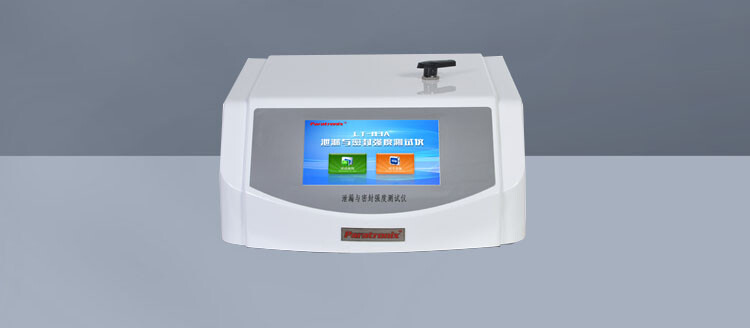
A Leak and Seal Strength tester should fit the way decisions are made across the packaging project. For a development team, flexibility in fixtures, test settings, data review, and sample handling can be more useful than a narrowly configured system. For a quality-control laboratory, repeatability, clear operating procedures, controlled test parameters, and traceable records may be the first priority.
The practical questions are straightforward: Can the equipment accommodate the largest and smallest pouch formats? Are fixtures suitable for flexible films and porous-material pouches? Can the team reproduce the required test conditions? Is the output sufficiently clear to investigate abnormal results? What calibration, maintenance, and method-verification activities will be needed in the site quality system?
Paratronix Instruments Co., Ltd. develops packaging testing instruments for pharmaceutical packaging, plastic packaging materials, and high-barrier material applications. In medical pouch projects, the benefit of working with an experienced testing-instrument provider is often the ability to discuss the package structure and failure concern before specifying a system. The right recommendation should begin with the application: pouch construction, seal type, expected defect, validation stage, and the team’s required reporting workflow.
Common testing mistakes that create avoidable rework
One recurring mistake is establishing acceptance limits from a very small early trial and then treating those limits as permanent. Development data can be useful, but acceptance criteria should reflect product requirements, package function, method capability, and a justified understanding of process variation. Another is testing only seals made immediately after setup. Sealer behavior can shift after warm-up, during long runs, or after cleaning and maintenance.
Teams also underestimate sample conditioning. Packaging materials may respond to temperature and humidity, particularly when porous substrates or adhesives are involved. If conditioning requirements are relevant to the material and method, document them. Otherwise, a difference attributed to a seal-setting change may actually be a difference in sample environment.
Finally, do not treat a failed package test as only a laboratory event. A leak or abnormal peel result needs a process context: production time, line, cavity or lane, material lot, operator activity, sealing settings, maintenance status, and any unusual handling. Without that information, even a capable test instrument can only report the symptom.
A more reliable path from packaging design to release
For medical pouches and sterile barrier systems, leak testing and seal-strength testing work best as part of one evidence chain. Use risk analysis to identify likely failure modes. Use development testing to establish a realistic sealing window. Confirm that the package remains intact after the relevant downstream stresses. Then carry the most meaningful tests into supplier control, validation, change management, and routine quality decisions.
The central judgment is simple: a package is not proven safe because it looks well sealed, and a high peel-force number is not proof of sterile barrier integrity. Projects become more defensible when the selected tests reflect the real package, the real production process, and the ways that pouch performance can fail in service.
Leave A Reply
Search by Keywords