




Recent Posts
 Which Features Have the Greatest Impact on Puncture Force Tester Cost?Sep 17, 2026
 Bone Screw Torsion Tester Requirements for ASTM F543 Mechanical TestingSep 17, 2026
 Self-Tapping Screw Tester Metrics for Torque, Insertion, and Pull-Out TestingSep 17, 2026
 Non-Destructive Sealing Tester Methods for Blister Pack Integrity ControlSep 17, 2026
 ASTM and ISO Requirements for Plastic Film Puncture Force Test Method ValidationSep 16, 2026

Non-Destructive Sealing Tester Methods for Blister Pack Integrity Control
For quality-control and safety teams, blister pack integrity is essential to protecting product performance, compliance, and consumer safety. A non destructive sealing tester enables reliable leak detection and seal evaluation without damaging valuable samples, supporting efficient in-process inspection and final quality assurance. This article explores key non-destructive testing methods, their practical applications, and how the right packaging test equipment can strengthen blister package integrity control.
A blister package can look acceptable and still have a failure path. Fine channels at the lidding interface, incomplete heat-seal areas, pinholes in formed cavities, and damage caused during cartoning or transport may not be apparent in routine visual checks. For pharmaceutical products, these defects can expose tablets or capsules to moisture, oxygen, contamination, or loss of child-resistant and tamper-evident performance. In medical and high-barrier applications, the consequences may be more serious still.
The difficulty is that traditional seal-strength or dye-penetration tests often consume the sample. Those methods remain valuable for development, process validation, and investigation, but they are not always suitable when retained samples are limited, inspection must be repeated, or a package needs to continue through another stage of assessment. That is where non-destructive package integrity testing becomes a practical part of a modern control strategy.
Integrity Is Not the Same as Seal Strength
“Sealing tester” is often used broadly, yet quality teams should separate two related questions. Seal strength asks how much force is required to separate the lid material from the blister web. Package integrity asks whether the closed package contains a leak path under defined test conditions. A blister may have acceptable peel strength but still contain a narrow channel caused by contamination, uneven pressure, poor web flatness, or an intermittent sealing temperature issue.
Conversely, an aggressively strong seal does not automatically mean a better package. Some blister packs are designed for controlled peel opening, while others rely on push-through access. Excessive sealing conditions can distort the cavity, damage sensitive lidding layers, create difficult opening behavior, or alter the appearance of the pack. A complete quality program therefore normally evaluates seal strength, seal appearance, dimensions, material consistency, and leak integrity as separate but connected attributes.
The most appropriate method depends on the package construction: PVC/PVDC or cold-form aluminum blister, aluminum lidding foil, paper-foil laminate, formed cavity geometry, cavity count, product shape, headspace, and the expected defect type. It also depends on whether the objective is process monitoring, release testing, method development, complaint investigation, or package validation.
Vacuum Decay: A Quantitative Route to Leak Detection
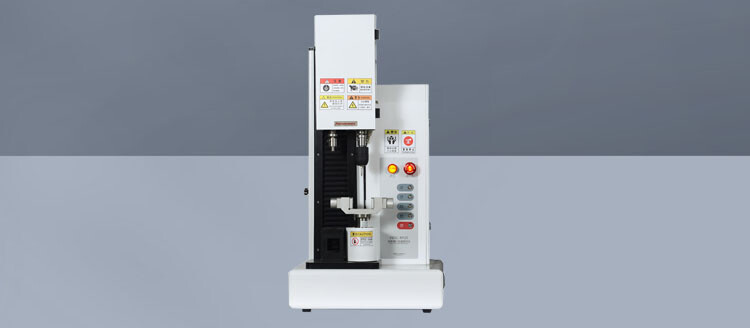
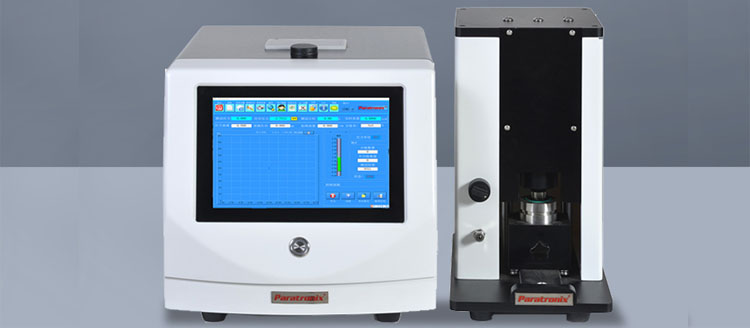
Vacuum decay is among the most widely considered non-destructive approaches for package integrity evaluation. The blister pack is placed in a sealed test chamber, where a controlled vacuum profile is applied. The instrument measures pressure behavior over a defined test cycle. A package with a leak may produce a pressure response different from that of an intact package because air moves between the package and the chamber through the defect path.
The method is attractive because it can provide objective numerical data rather than relying only on an operator’s visual judgment. Properly developed vacuum-decay testing can also support repeatable comparison of lots, sealing conditions, tooling adjustments, and packaging materials. ASTM F2338 describes a vacuum-decay approach for nondestructive leak detection in packages and is frequently reviewed when teams are building or validating this kind of method.
However, a vacuum-decay instrument is not a universal “pass/fail box.” Test sensitivity is influenced by chamber volume, package volume, pack stiffness, lidding behavior under vacuum, vacuum level, stabilization time, test duration, and the algorithm used to interpret the pressure signal. A flexible blister lid can deflect during evacuation; if the test is poorly configured, normal package deformation may be confused with leakage. This is why method development should include known good samples and representative defective samples where technically feasible.
For blister packs, fixture design deserves particular attention. The chamber should hold the package consistently without creating artificial stress points. Packs with different cavity counts or changing formats may require separate recipes, inserts, or acceptance limits. A method that works reliably on a small aluminum-aluminum blister may not transfer directly to a larger PVC blister with flexible foil lidding.
Other Non-Destructive Methods and Their Limits
Vacuum decay is not the only option. The right technology should follow the failure mechanism, rather than a preference for a particular instrument.
Visual seal inspection
Visual inspection remains the first line of defense because it is fast and can identify obvious wrinkles, unsealed regions, contamination, foil damage, misregistration, and cavity deformation. ASTM F1886 is commonly referenced for visual inspection of seals in flexible packaging. For blister operations, magnification, controlled lighting, and clear defect-reference samples can make this step more consistent. Yet visual inspection cannot prove the absence of microleaks, particularly at a clean-looking seal edge.
Ultrasonic seal inspection
Ultrasonic methods examine how sound energy travels through a seal area. Variations in the signal can indicate incomplete bonding, channels, folds, or localized defects. This can be useful when the concern is specifically seal uniformity rather than a leak anywhere in the package. Results depend heavily on material structure, seal width, tooling contact, calibration, and the ability to position the inspection head consistently. It is generally best treated as a targeted seal-assessment technique, not assumed to be a direct substitute for whole-package leak testing.
High-voltage leak detection
High-voltage leak detection can identify defects in some packages containing conductive liquid products. It is more often discussed for liquid-filled pharmaceutical containers than for conventional dry-tablet blister packs. Dry solids and nonconductive package contents limit its relevance in many blister applications. Safety controls, material compatibility, and the product’s electrical characteristics must be evaluated before selecting this method.
Tracer-gas approaches
Tracer-gas testing can offer high sensitivity where a package contains a suitable tracer gas or can be tested within a controlled system. It may be appropriate for specialized barrier-packaging studies, but routine blister-pack deployment can be more complex because the package atmosphere, equipment arrangement, and test workflow must all be controlled. It is not automatically the most practical option for high-throughput blister inspection.
Choosing the Test Around the Real Risk
A useful selection process starts with a simple question: what defect needs to be found? If the concern is gross unsealed foil, visual inspection may reveal it immediately. If the risk is a fine seal channel caused by powder contamination, a quantitative integrity method may be necessary. If a cold-form blister is vulnerable to puncture after forming or handling, the method should assess the entire package rather than only the lidding perimeter.
The decision should also reflect sampling strategy. Non-destructive testing allows a unit to be inspected and then retained for stability work, visual review, or additional testing. That does not mean every unit must be tested. Many operations use it as part of incoming-material assessment, line setup approval, periodic in-process checks, validation studies, or investigation of an unusual trend. The sampling plan itself should be defined within the site quality system and the applicable product requirements.
Standards, Validation, and Defensible Results
Standards provide a framework, but they do not remove the need for package-specific method work. ASTM F2338 can guide vacuum-decay leak testing, while ASTM F88 is commonly used for seal-strength testing and ASTM F1929 is known for dye-penetration evaluation of porous medical packaging. The latter is destructive and is not generally a direct method for nonporous pharmaceutical blister packs. Teams should check the current edition and applicability of any standard before using it in a protocol.
For sterile products, USP <1207> on package integrity evaluation is often relevant to the broader discussion of deterministic test methods and method validation. It should not be interpreted as a single mandatory test recipe for every blister pack. Likewise, ISO 11607 is particularly relevant to packaging for terminally sterilized medical devices, not a blanket standard for all pharmaceutical blisters. Product category, market requirements, and internal quality procedures determine which references apply.
A defensible non-destructive sealing tester method normally addresses repeatability, reproducibility, detection capability, false-positive risk, and robustness against normal variation in materials and package geometry. It should define the test recipe, chamber or fixture configuration, sample orientation, pass/fail logic, data storage, calibration controls, and actions when a result is inconclusive. Deliberately prepared defect samples can be useful during development, but their design must resemble the failure modes that are realistic for the package and process.
Making the Equipment Work on the Production Floor
The practical value of a non destructive sealing tester depends on more than measurement sensitivity. QC teams need a workflow that fits batch documentation, sample traceability, cleaning procedures, operator access, and change control. If test setup requires frequent manual adjustment or operators cannot tell whether a blister is seated correctly, variation can enter the process before the instrument begins its cycle.
When assessing equipment, it is sensible to review the actual blister dimensions, material stack, expected throughput, available utilities, test location, and data requirements early. Ask whether different pack formats can be managed through saved methods, whether results can be exported in a usable format, and how calibration and preventive maintenance will be handled. For regulated environments, audit trails, user access, and electronic-record requirements may also need early review rather than being treated as an afterthought.
Paratronix Instruments Co., Ltd. develops packaging testing instruments for pharmaceutical packaging, plastic packaging materials, high-barrier materials, and related applications. In this field, the useful contribution of an equipment supplier is not merely supplying a tester. It is helping users align test technology, package characteristics, operational constraints, and relevant test references into a workable packaging integrity approach.
For blister pack control, the best method is rarely the one with the longest feature list. It is the method that can reliably distinguish acceptable packs from packages with meaningful defects, without creating unnecessary sample loss or uncertainty. Before finalizing a system, confirm the defect risk, the package formats to be covered, the validation expectation, and the records needed to support quality decisions. Those details determine whether non-destructive testing becomes a useful control tool or simply another instrument in the laboratory.
Leave A Reply
Search by Keywords