




Recent Posts
 Which standards should an ampoule break force tester support?Sep 20, 2026
 Using a Leakage Tester to Meet ISO 11607 Package Integrity RequirementsSep 20, 2026
 Using Leak and Seal Strength Tests for Medical Pouches and Sterile Barrier SystemsSep 18, 2026
 How Leak and Seal Strength Testers Use Vacuum Decay, Burst, and Peel MethodsSep 18, 2026
 Which Features Have the Greatest Impact on Puncture Force Tester Cost?Sep 17, 2026

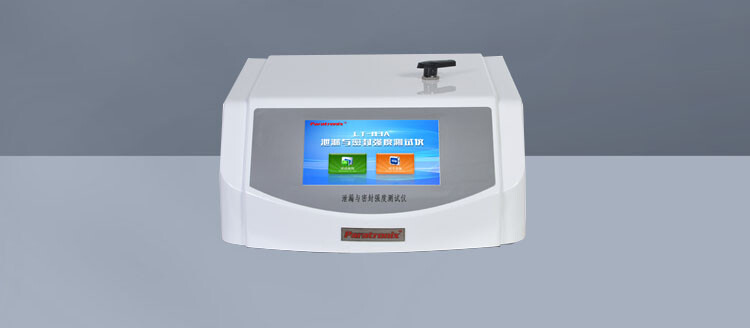
ISO 11607 does not require a manufacturer to buy a particular Leakage Tester, nor does it define one universal leak test that proves a package is acceptable. It requires the sterile barrier system to be designed, validated, and routinely controlled so that it maintains integrity until the point of use. For quality and safety teams, the practical question is therefore more precise: can the selected leak-detection method reliably find defects that matter for this package, this seal design, and this product risk?
A Leakage Tester can be an important part of that evidence, especially where a package relies on a sealed pouch, tray, lidding material, blister, or high-barrier flexible structure. Its value depends on how it is integrated into validation and process control. A test that produces a pass/fail result but cannot detect the relevant failure mode, cannot be repeated consistently, or has no defined relationship to process capability will add little support to an ISO 11607 package integrity program.
What ISO 11607 expects from package integrity verification
ISO 11607 addresses packaging for terminally sterilized medical devices. The standard is generally read in two connected parts: ISO 11607-1 focuses on materials, sterile barrier systems, and packaging systems, while ISO 11607-2 addresses validation requirements for forming, sealing, and assembly processes. Package integrity testing sits between them. It helps demonstrate that the finished sterile barrier system has no defects likely to compromise its intended protective function.
That purpose is broader than checking whether a seal looks complete. A seal can appear uniform while containing a channel, wrinkle path, pinhole, particulate interruption, or local weak area. Conversely, a package may pass a simple gross-leak test while still having a defect too small for that method to resolve. The selected test method must therefore be justified against the package design and the risk posed by undetected leakage.
For an ISO 11607 program, a Leakage Tester is usually used to support one or more of the following activities:
- Package design verification during development or material changes.
- Operational qualification and performance qualification of sealing or packaging equipment.
- Validation of minimum and maximum process settings, including temperature, pressure, dwell time, and cooling conditions where applicable.
- Routine monitoring, periodic requalification, and investigation of suspected package failures.
- Assessment of package condition after distribution simulation, aging, environmental exposure, or other performance testing.
The instrument is not a substitute for process validation. It supplies evidence within a larger system that also includes material specifications, sealing-process control, visual inspection where appropriate, seal-strength testing, sampling plans, records, and change control.
Start with the defect you need to find
The most common selection error is choosing a tester based on a claimed sensitivity value alone. Sensitivity matters, but only after the defect mechanism has been understood. A pinhole in a foil laminate, an open seal channel in a porous pouch, a poorly formed tray lid, and a microcrack around a rigid container feature do not behave the same way under vacuum, pressure decay, bubble emission, or high-voltage detection.
The package construction determines whether a method is suitable. Porous materials can prevent the use of methods that assume a nonporous chamber or package wall. Rigid packs may tolerate different vacuum conditions than thin flexible pouches. A package with a large headspace may give a different pressure-decay response from a tightly packed product, even when the seal condition is identical. Product shape, trapped air, moisture, powder, and seal geometry can all affect test performance.
Before specifying a Leakage Tester, quality teams should document the questions the test must answer:
- Is the purpose to identify gross leaks, microleaks, or seal channels?
- Which locations are most likely to fail: seal interface, film body, tray corner, lid edge, or port area?
- Is the package porous, nonporous, rigid, flexible, or a combination of these?
- Will the product or package be damaged by the test, and is destructive sampling acceptable?
- Does the method need to support laboratory validation, routine quality control, or both?
- Can the chosen method identify failures after aging or transport simulation, rather than only freshly produced defects?
These questions create the link between a test result and package integrity. Without that link, a “no leak detected” result can be misleading because it only confirms that no defect was found under the specific conditions and sensitivity of that method.
Leak testing and seal strength answer different questions
Seal strength testing is often used alongside leak detection, but the two should not be treated as interchangeable. Seal strength measures the force required to separate a seal under defined conditions. It can reveal weak seals, excessive peel force, material tearing, or unstable process settings. It does not necessarily show whether a continuous leak path already exists.
Leak tests, in contrast, look for a pathway through which air, liquid, or another test medium can pass. A seal may have acceptable average strength yet contain a narrow channel caused by contamination, a wrinkle, or uneven pressure. A package may also be leak-free but have peel characteristics that make opening unsafe or inconsistent for the user.
A sound ISO 11607 approach uses these methods as complementary evidence. The appropriate combination depends on the packaging system and the documented risk assessment, not on a preference for one instrument type.
Choosing a leak-detection method that can be defended
Several approaches are used for package-integrity assessment. Their suitability depends on material type, package geometry, defect size, required throughput, and whether the test must be destructive.
Vacuum-based bubble emission testing
A transparent vacuum chamber can be used to observe bubble release from a submerged package under controlled vacuum conditions. This approach is particularly useful for finding larger leaks and locating their approximate position. It is relatively intuitive for operators because the observed bubbles provide visible evidence of leakage.
However, its limitations should be explicit in the validation rationale. The method is operator-observed, may not resolve all small defects, and can be influenced by immersion setup, vacuum profile, package expansion, and interpretation of bubbles from package surfaces or trapped air. It is generally more useful as a gross-leak or defect-location method than as a universal microleak solution.
Vacuum decay testing
Vacuum decay methods evaluate the pressure response of a test chamber containing the package. A measured loss or change in vacuum can indicate leakage. Where package formats and test conditions are stable, this method can provide a more objective result than purely visual observation and may support automated data recording.
Performance still depends on the relationship between the chamber, the package volume, the applied vacuum, stabilization time, test time, and acceptance threshold. Flexible packages can expand under vacuum, creating normal pressure behavior that must be distinguished from a true leak. A threshold should not be selected simply because it produces convenient pass/fail separation in a small trial. It must be challenged with representative known-defect samples and shown to be repeatable.
Dye penetration and related channel-leak methods
For certain porous medical packaging systems, dye penetration methods may be used to reveal channels in seals. These methods can be valuable when the concern is a seal pathway rather than a pinhole in a nonporous package wall. They are typically destructive and require careful control of dye application, exposure time, package orientation, and inspection criteria.
The method is not universally applicable. It may be unsuitable for particular materials, seal constructions, or package designs, and it can be affected by material wetting behavior. The test procedure must match the package type and the applicable recognized method rather than being adapted informally at the production floor.
High-voltage leak detection
High-voltage leak detection can be relevant for suitable nonporous package structures. It may identify defects by detecting an electrical pathway through the package. Its use requires careful consideration of package materials, product conductivity, test configuration, potential effects on the pack, and operator safety controls.
It should not be assumed that a method suitable for one laminate or container will transfer directly to another. Changes in barrier layer, thickness, coating, conductive product residue, or package geometry can materially alter results.
Validation evidence matters more than a tester specification sheet
When a Leakage Tester is introduced into an ISO 11607 validation program, the equipment qualification is only one part of the work. Calibration status, repeatability, software controls, data retention, and operating instructions are necessary, but they do not prove that the method is fit for the packaging system.
A defensible test-method study usually includes representative good packages and deliberately defective packages. The artificial defects should reflect credible failure modes and should be controlled well enough to challenge the method meaningfully. For example, a large hole made with a needle may demonstrate detection of an obvious gross leak, yet tell little about the tester's ability to identify a narrow seal channel produced by a realistic sealing fault.
The study should establish a clear response to several practical questions:
- Does the method consistently accept known-good packages?
- Does it detect known defects at the required level of concern?
- Are results repeatable between operators, shifts, and test runs?
- Do product load, package orientation, and conditioning affect the result?
- Are the acceptance criteria linked to validated test conditions?
- Can the test be performed without creating false failures through handling or fixture variation?
For automated systems, electronic records and audit-trail expectations may also be relevant within the site's quality system. The important point is traceability: a result should identify the package or sample set, the test recipe, the equipment status, the operator or system record, and the applicable acceptance decision.
Where quality teams often overstate compliance
One recurring problem is treating a successful leak test as proof of ISO 11607 compliance. ISO 11607 compliance depends on the complete packaging-system lifecycle: material selection, package design, process development, process validation, routine control, distribution performance, aging considerations, and documented change management. Leak testing provides supporting evidence; it does not replace the rest of the validation file.
Another weakness is applying a laboratory method directly to production release without assessing sampling and process capability. Destructive leak tests generally evaluate a sample, not every package. The sampling rationale should reflect the process risk, lot structure, known failure modes, and the sensitivity of the test. A low sample count can be acceptable only when supported by a controlled and capable process, rather than used as a reason to reduce process understanding.
It is also risky to carry forward test settings after a packaging change. A new film supplier, a revised tray, different lidding adhesive, altered sealing jaw, or changed product configuration can modify leakage behavior and test response. The required action may range from documented assessment to partial or full revalidation, depending on the significance of the change and the established quality system.
Building a practical testing strategy
A useful starting point is to map the package's sterile barrier function and plausible failure paths, then select the leak method that can challenge those paths. The test should be run on packages representing worst-case sealing conditions, material combinations, and product configurations. It should also be considered after conditioning that reflects the package-performance claims being made.
For daily quality control, simpler methods may be appropriate when they are linked to a validated process and supported by more sensitive development or periodic verification work. For high-risk packaging, a more discriminating method may be justified, particularly where small leaks could materially affect sterility maintenance or product protection. The balance is not between “basic” and “advanced” equipment; it is between the test's demonstrated capability and the risk of an undetected defect.
A Leakage Tester earns its place in an ISO 11607 program when its method, settings, acceptance limits, and records can be explained in the context of the package itself. That is the standard quality teams should apply: not whether the instrument can generate a result, but whether that result provides credible evidence that the sterile barrier system remains intact under its intended conditions of use.
Leave A Reply
Search by Keywords