




Recent Posts
 Does your inclined plane friction tester meet TAPPI T 815 requirements?Oct 27, 2026
 TAPPI T 815: What to Check Before Choosing an Inclined Plane COF TesterOct 27, 2026
 Inclined Plane vs. Horizontal COF Testers: Which Fits Your Paper Testing Needs?Oct 27, 2026
 What Can an Inclined Plane COF Tester Tell You About Packaging Slip?Oct 27, 2026
 Which WVTR Tester Is Suitable for Pharmaceutical Packaging?Oct 26, 2026
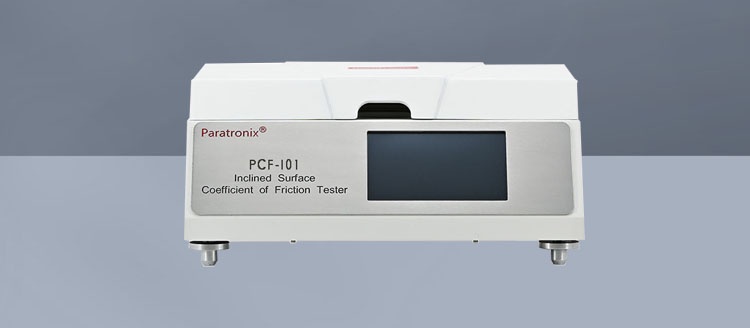
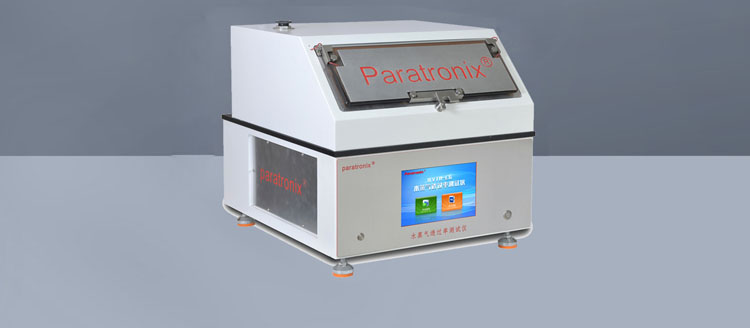
A package that stays in place on a stack may still need to move smoothly through handling equipment. These demands can pull material selection in different directions: too little friction can encourage sliding, while too much can interfere with feeding or positioning. An Inclined Surface Coefficient of Friction Tester helps assess this balance by measuring when one surface begins to slide against another.
The result describes resistance to the start of sliding under defined conditions. It can help compare packaging films, paperboard, coatings, and surface treatments, but it cannot independently predict whether a finished pallet will remain stable during transport. Its value comes from testing the right surface combination and connecting the result to the movement you want to control.
What the slip angle actually tells you
In an inclined plane test, a specimen is secured to a platform, and a sled or test body presents the opposing contact surface. The platform gradually tilts until the upper body begins to slide. The instrument records the angle at which that movement starts.
As the incline increases, the component of gravity pulling the body down the slope increases relative to the force pressing the surfaces together. At the onset of sliding, the angle can be used to calculate the static coefficient of friction:
Static COF = tan(θ)
Here, θ is the inclination angle at the onset of sliding. This relationship assumes that the body slides freely and that friction, rather than a restraint, snag, or tipping motion, determines when movement begins.
A higher slip angle indicates greater resistance to the start of sliding for that surface pair under the test conditions. A lower angle indicates easier initiation of sliding. The coefficient itself has no unit.
This gives a useful comparison, but it does not produce a universal friction value belonging to one material. A printed film against itself, the same film against stainless steel, and that film against corrugated board represent different contact pairs. Each may produce a different result.
Start with the surfaces that touch in use
The most useful test begins with a practical question: which two surfaces are slipping against each other? Testing an easy-to-prepare combination has limited value if it does not represent the contact causing the problem.
For stacked flexible packages, the relevant interface may be the outside of one package against the outside of another. For nested or folded packaging, an inside-to-outside combination may matter. On handling equipment, the opposing surface could be a belt, guide, or metal plate.
Surface identity needs more detail than “film” or “board.” Printing, varnish, embossing, exposed laminate layers, and surface treatments can change the interface. Record which side faces upward, which side contacts the sled, and the direction of the specimen. Otherwise, a comparison may unintentionally involve different surfaces.
Why higher friction is not always better
When the concern is package movement in a stack, a higher static COF may be helpful because it increases resistance to initial sliding. That makes friction testing useful when comparing anti-slip treatments or investigating a packaging change.
However, packaging also needs to separate, feed, align, and travel through equipment. Greater friction can make these actions more difficult at some interfaces. A surface change intended to improve stacking may introduce hesitation where the package must move against a guide or another package.
The appropriate result therefore depends on the application. A material with relatively low friction may suit an interface that needs easy release, while another interface needs more grip. Some structures can achieve different behavior on their inner and outer faces.
It is also important to distinguish friction from blocking. Blocking describes unwanted adhesion between contacting layers or surfaces. A specimen that sticks, then releases abruptly, may be affected by adhesion as well as sliding friction. An inclined plane result alone may not separate those effects.
For material selection, the useful target is usually an acceptable operating range supported by handling observations. Selecting the highest available COF can be as misleading as selecting the lowest.
What the test cannot predict by itself
An inclined plane COF test primarily characterizes the onset of sliding. It does not automatically describe the resistance after sliding begins. That distinction matters when a package starts moving acceptably but then drags, jerks, or moves unevenly during continuous travel.
Static friction concerns the transition from rest to motion. Kinetic friction concerns surfaces already sliding against one another. A method that measures friction during controlled movement is more directly relevant when the main question involves continued sliding. Results from different methods should not be treated as interchangeable simply because both are labeled COF.
Transport stability introduces further variables. Vibration, acceleration, stack geometry, package deformation, load distribution, and restraint all affect whether packages move. Stretch wrapping and other stabilization measures also change the behavior of the complete load.
A flat specimen cannot reproduce every feature of a filled pouch, a bowed carton, or an uneven package seam. A package may rock, deform, or tip before the contact surface begins to slide. The inclined test helps isolate a surface property; complete package or load testing addresses the assembled system.
The same boundary applies to barrier packaging. Friction results describe surface interaction, not oxygen transmission, moisture barrier, or seal strength. A laminate can meet one requirement and perform poorly against another, so those properties need separate evaluation.
Conditions that can change the result
Small differences in preparation can make two nominally identical materials behave differently. Controlling those differences is essential when deciding whether a supplier change, coating adjustment, or production batch has altered packaging slip.
Conditioning and time after manufacture
Temperature and humidity can affect surface behavior, particularly for moisture-sensitive materials such as paper and board. Some films also change with time as slip additives redistribute toward the surface. Samples taken at different ages may therefore give different results even when their formulations are similar.
Compare specimens after a defined conditioning period and record their age when it matters. If packaging will encounter a particular storage environment, include that condition in the evaluation instead of relying entirely on a convenient laboratory setting.
Contact pressure, dwell time, and specimen mounting
In the ideal friction model, the coefficient does not depend on load. Real packaging surfaces can behave differently because coatings, soft layers, and texture respond to pressure. Sled mass and contact geometry therefore need to remain consistent within a comparison.
The time that surfaces remain in contact before tilting can also affect their interaction. Use a consistent dwell period. Mount specimens flat without wrinkles or unintended tension, and prevent attachment materials from entering the contact area.
Surface condition and test motion
Dust, fingerprints, oil, and transferred coating can alter the interface. Handle specimens away from the contact area and use a defined cleaning procedure for reusable opposing surfaces. Cleaning must also suit the question: removing a surface treatment or residue that normally exists in service changes what is being measured.
The platform’s tilt rate and the way the instrument identifies movement should be controlled. An abrupt motion can disturb the sled, while inconsistent detection can shift the recorded onset. Repeatedly sliding over the same track may also polish or damage a specimen, so fresh contact areas may be needed.
How to interpret a set of COF results
A single reading provides little information about material consistency. Test multiple specimens using the same procedure and examine both the typical result and the spread. A material with an acceptable average but substantial variation may behave less predictably than one with more consistent friction.
If results are scattered, check preparation and surface identity before concluding that the material is defective. Local printing differences, creases, contamination, and mixed specimen orientation can all create variation. Once these influences are controlled, the remaining spread becomes more useful evidence about the material.
Comparisons are strongest when they use a reference material with established handling behavior. For example, if an existing film runs acceptably, test it alongside a proposed replacement under matching conditions. This gives the new result an application context that a standalone COF number lacks.
A difference between materials also needs to be considered alongside measurement variation. A small change that sits within the normal spread of the test is weaker evidence than a clear, repeatable shift. Avoid making a material decision from an isolated favorable reading.
A useful report identifies the contact pair, specimen orientation, conditioning, sled configuration, dwell time, tilt settings, and individual results. These details make later comparisons meaningful and help explain disagreements between laboratories.
Choosing a tester around the decision you need to make
For basic material comparisons, prioritize controlled tilting, dependable angle measurement, repeatable detection of sliding, and secure specimen mounting. The instrument should accommodate the actual materials and contact combinations you need to evaluate.
Flexible films need mounting that avoids wrinkles. Textured board requires care with flatness and contact geometry. Soft or tacky surfaces may need a procedure that addresses deformation or adhesion before the calculated COF can be interpreted confidently.
If testing must follow a customer specification or an established method, match the apparatus and procedure to that requirement. The instrument’s general name is not enough to establish equivalence. Sled configuration, surface preparation, motion, and reporting conventions can all affect comparability.
Paratronix Instruments Co., Ltd. manufactures packaging testing instruments for applications including pharmaceutical packaging, plastic packaging, and high barrier materials. When discussing an inclined plane testing setup with a supplier, provide the material structure, the two contacting surfaces, and the handling issue being investigated. Those details help determine whether static slip testing answers the question or belongs alongside other measurements.
Before testing, define what a useful result would change: approval of a replacement film, investigation of a coating variation, or screening of a stacking concern. Then use the measured slip behavior to guide that decision and validate it in the relevant handling conditions. The angle becomes valuable when it explains a specific interface and supports a practical next step.
Leave A Reply
Search by Keywords