




Recent Posts
 Why ASTM D1434 Oxygen Permeability Results Vary Between Test RunsNov 06, 2026
 Testing Oxygen Permeability of Multilayer Packaging Films with ASTM D1434Nov 06, 2026
 Choosing an ASTM D1434 Oxygen Permeability Tester for Plastic FilmsNov 06, 2026
 What Does ASTM D1434 Measure in Oxygen Barrier Film Testing?Nov 06, 2026
 Where should wall thickness be measured on a medicine bottle?Nov 06, 2026

What Does ASTM D1434 Measure in Oxygen Barrier Film Testing?
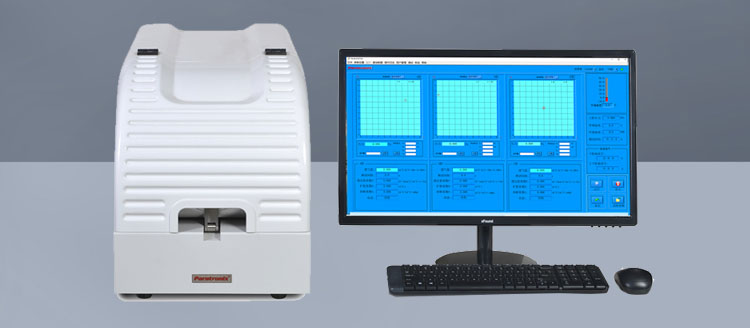
Oxygen barrier films help protect oxygen-sensitive products, but how can manufacturers assess their permeability? ASTM D1434 provides methods for measuring gas transmission through plastic films and sheeting, including tests using oxygen. An ASTM D1434 oxygen permeability tester applies the standard’s principles to determine how readily oxygen passes through a material under specified conditions. The result can help compare candidate films, investigate changes in production and understand one part of a package’s oxygen barrier performance.
The qualification “under specified conditions” matters. A transmission result is not a permanent property of a film in every environment, nor is it a direct prediction of product shelf life. Temperature, pressure difference, specimen preparation and other test details all influence what the number means.
The measurement: oxygen moving through a defined film area
ASTM D1434 addresses the gas transmission properties of plastic film and sheeting. When oxygen is the test gas, a specimen separates two sides of a test cell. Oxygen is supplied on one side, and the test method measures its passage through the exposed film area to the other side.
This passage is called permeation. In a nonporous polymer film, gas generally dissolves into the material, diffuses through it and leaves the opposite surface. The rate depends on both the material and the conditions driving the movement. A visibly intact film can therefore transmit oxygen even when it has no obvious holes.
The result may be expressed as a gas transmission rate or as a permeability-related value, depending on the method, calculation and reporting convention. These terms should not be treated as interchangeable. A transmission rate describes the amount passing through a stated area over time under stated conditions. A permeability coefficient additionally accounts for factors such as specimen thickness and pressure difference, subject to the assumptions used in the calculation.
For packaging teams, oxygen transmission rate is often discussed as OTR. When comparing an ASTM D1434 result with an OTR value from another source, check the units and basis of calculation before deciding which film has the better barrier. A lower transmission rate indicates less oxygen passing through the tested area under the reported conditions; it does not automatically mean the finished package will have a longer shelf life.
How the pressure-based methods work
ASTM D1434 describes manometric and volumetric procedures for determining gas transmission. Both use a pressure difference across the specimen, but they observe the gas that permeates through the film in different ways.
Manometric measurement
In a manometric arrangement, the specimen is mounted between a high-pressure side and a low-pressure side. The apparatus measures the pressure change associated with gas accumulating on the low-pressure side. Once the appropriate measurement conditions are established, the pressure change over time is used to calculate the transmission behavior.
For an oxygen test, oxygen is the gas applied to the supply side. A pressure-based instrument does not identify oxygen by chemistry alone: it measures pressure. Consequently, a sound result depends on the test setup, removal or control of residual gases, leak tightness and adherence to the applicable procedure.
Volumetric measurement
The volumetric procedure determines transmission by measuring the volume of gas that passes through the specimen under the defined test conditions. The measured quantity is different from a pressure-rise reading, but the purpose is similar: to establish how readily the gas crosses a known area of material over time.
An instrument’s description should make clear which procedure it supports. A product described broadly as a gas permeability tester is not necessarily configured for oxygen, the intended pressure range or the barrier level of a particular specimen. The applicable edition of ASTM D1434 and the laboratory’s documented procedure should be checked for the detailed apparatus, calculation and reporting requirements.
What the result can tell a packaging team
A controlled comparison can reveal whether a change in material construction affects oxygen transmission. For example, a team evaluating alternative multilayer films can test samples using the same gas, temperature, pressure conditions and preparation. If the results differ consistently and remain within the measurement capability of the equipment, the data can support a more informed material comparison.
The method can also help investigate variation between film lots or assess whether a processing change warrants further examination. It is more useful when the laboratory retains details of specimen orientation, thickness, conditioning and any visible defects. Without those details, an unexpected result may be difficult to trace to the material rather than the test setup.
For high-barrier materials, the question is not simply whether the instrument can display a low number. The laboratory must be able to distinguish real permeation from background leakage and measurement uncertainty. If the result is near the instrument’s validated lower measurement limit, a small apparent difference between two films may not be meaningful.
Why test conditions change the answer
A permeability value is only as useful as the conditions attached to it. Several details deserve attention when writing a specification or reviewing a supplier’s report.
Temperature: Gas movement through polymers is temperature-dependent. Results obtained at different temperatures should not be ranked as if they came from the same test. Choose conditions relevant to the intended use or to the comparison being made, and record them.
Pressure difference: The driving force across the film affects transmission. The pressure basis used for a result must be clear, particularly if values are calculated or converted for comparison with another report. A conversion may rely on assumptions that are not valid for every material or condition.
Thickness and construction: Thickness is essential when calculating a permeability coefficient. It also helps explain differences in transmission rate. Even so, comparing multilayer structures by thickness alone can be misleading: the barrier layer’s material, condition and continuity may matter more than the total gauge.
Humidity and conditioning: Some barrier materials are sensitive to moisture. Before treating two results as comparable, establish whether humidity was controlled, how specimens were conditioned and which side was exposed to which environment. Do not assume that every pressure-based setup provides the same humidity control.
Time to steady behavior: Gas does not necessarily reach a stable transmission rate immediately after a test begins. Thick or high-barrier specimens can require extended testing. Ending a measurement too early may produce a value that does not represent the intended steady-state result.
Film permeation is not the same as package ingress
A flat-film test isolates the material under a controlled set of conditions. A real package adds seals, folds, closures and handling stresses. Oxygen can enter through the film, but it can also enter through a weak seal or an unintended leak. Those pathways require different investigations.
Consider a package that performs poorly in storage even though its film has a low measured transmission rate. The film result alone cannot establish whether the issue lies in sealing, package damage, residual oxygen inside the pack, product sensitivity or another factor. Seal integrity testing and evaluation of the finished package may be needed alongside material testing.
Likewise, a material specification cannot by itself predict shelf life. Estimating oxygen exposure requires a suitable understanding of package geometry, storage conditions and the product’s tolerance to oxygen. For sensitive pharmaceutical or food applications, the relevant acceptance criteria and validation plan should be established for the specific product and market.
How does ASTM D1434 differ from oxygen-specific testing?
Not all oxygen barrier instruments use pressure-based measurement. ASTM D3985, for example, describes an oxygen transmission rate method for plastic film and sheeting using a coulometric sensor. That approach detects oxygen reaching the sensor rather than relying on a pressure-rise measurement in the same way as the manometric procedure.
The methods should not be assumed to produce interchangeable numbers simply because both can be used to assess oxygen transmission. Gas atmosphere, pressure, humidity, temperature, specimen conditioning and the way results are reported may differ. A comparison between laboratories is most defensible when they agree on the method and test conditions in advance, or establish the relationship between methods for the material in question.
There is no universal reason to select one method solely because it is familiar. The better starting point is the question the test must answer: a supplier specification may call for a particular standard, while a development team may need conditions representative of a proposed application. The expected barrier range and available specimen form also influence the choice.
What to check before selecting a test setup
Begin with the material and the reporting requirement, not the instrument name. Identify whether the specimen is a single film, a laminate or sheeting; whether oxygen is the required test gas; and whether the result must be comparable with an existing specification. Ask the laboratory or equipment supplier to confirm the test method and edition, measurement range, specimen dimensions and expected test conditions.
For a high-barrier film, also discuss leak checking, background measurement, calibration and the uncertainty associated with results near the lower end of the range. For moisture-sensitive structures, establish what humidity control is available and whether the proposed procedure reflects the intended comparison. These questions often determine whether a test result will be usable long before the first specimen is mounted.
Paratronix Instruments develops packaging testing instruments for materials used in applications including pharmaceutical packaging, plastic packaging and high-barrier materials. When discussing a testing solution, sharing the film construction, expected barrier range and required reporting conditions provides a more useful starting point than requesting an oxygen permeability tester by name alone.
A meaningful ASTM D1434 result answers a specific question: how much oxygen passes through a defined film area under a documented set of conditions. Keep the test report with those conditions, and use complementary package tests when the decision concerns the performance of the finished pack.
Leave A Reply
Search by Keywords