




Recent Posts
 How to prepare film samples for ISO 15105-2 oxygen testingNov 06, 2026
 Choosing an ISO 15105-2 oxygen tester by measurement rangeNov 06, 2026
 How does an ISO 15105-2 oxygen permeability tester work?Nov 06, 2026
 Why ASTM D1434 Oxygen Permeability Results Vary Between Test RunsNov 06, 2026
 Testing Oxygen Permeability of Multilayer Packaging Films with ASTM D1434Nov 06, 2026
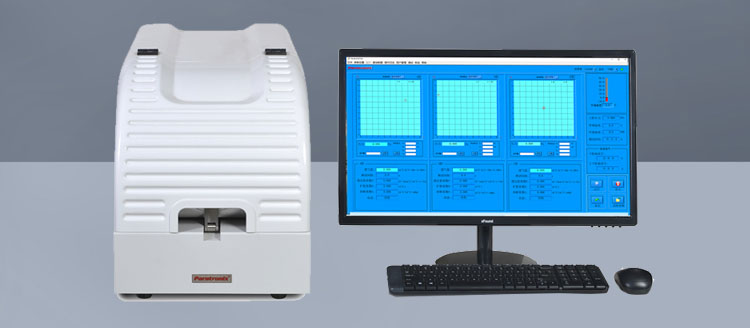
Multilayer packaging films help protect sensitive products from oxygen, but their barrier performance must be verified to support consistent quality and safety. An ASTM D1434 oxygen permeability tester gives quality control and safety teams a way to assess gas transmission through these materials using a recognized pressure-based method. The value of the result depends on more than the instrument reading: specimen preparation, pressure conditions, conditioning, and the way results are reported all influence whether the data can support a sound decision.
For a quality manager comparing incoming film lots, the central question is often simple: has the material’s oxygen barrier changed enough to affect its intended use? Answering it requires a test plan that distinguishes a genuine material change from variation caused by sampling, sealing, or test conditions.
What ASTM D1434 Measures in Multilayer Films
ASTM D1434 describes methods for determining the gas permeability characteristics of plastic film and sheeting. In a typical differential-pressure arrangement, a specimen separates two chambers. The test gas is applied to one side, and gas passing through the film is measured on the lower-pressure side. The standard includes manometric and volumetric approaches, which differ in how permeating gas is measured.
When oxygen is used as the test gas, the measurement can help characterize the oxygen barrier of a multilayer structure. The test may produce a gas transmission rate, and permeability may be calculated when the required thickness and pressure-difference information is available. Laboratories should use the applicable edition of ASTM D1434 and the instrument’s documented procedure for the selected method.
Several related terms deserve careful attention:
- Gas transmission rate: The amount of gas passing through a defined area of film over time under specified conditions.
- Permeance: The transmission rate normalized to the driving pressure difference across the specimen.
- Permeability: A thickness-normalized material characteristic calculated from permeance and specimen thickness under the applicable method and assumptions.
For multilayer films, permeability calculated using total thickness represents an apparent property of the complete structure. It does not reveal the permeability of each individual layer. Transmission rate or permeance may be more useful when the practical question is how the supplied film performs as a complete construction.
Where the Method Fits in a Packaging Quality Program
A multilayer film may combine a sealing layer, a mechanical support layer, adhesives, and an oxygen-barrier layer. A change in any part of the structure can affect performance, even when the outside of the roll looks unchanged. Oxygen testing provides a way to investigate that risk before the material moves further into production.
Common applications include incoming material verification, comparison of film suppliers, monitoring after a formulation or process change, and investigation of an unexpected shift in packaging performance. A pharmaceutical packaging team, for example, may use film-level results alongside its material qualification program. A converter may compare samples from different positions across a roll when uneven barrier performance is suspected.
These results describe the tested film specimens, not the complete package. Seals, closures, folds, handling damage, and package geometry can introduce oxygen ingress that a flat-film test will not capture. Where the intended decision concerns a finished pouch, tray, or other container, a separate package-level assessment may also be needed.
Building a Reliable ASTM D1434 Oxygen Test
The most useful test is one designed around a specific decision. Before cutting a specimen, define what is being compared, which film surface will face the oxygen supply, which conditions will be controlled, and how the result will be judged. The following steps form a practical framework; the applicable standard and validated laboratory procedure remain the authority for the detailed setup.
1. Select specimens that represent the material
Sampling only a convenient, undamaged-looking corner of a roll can produce a reassuring result that says little about the rest of the material. Define sampling locations according to the question being investigated. For routine incoming inspection, that may mean samples from specified rolls and positions. For troubleshooting, it may mean comparing locations associated with a visible defect or a process deviation.
Cut specimens large enough for the test cell and avoid creases, scratches, pinholes, and contamination unless a defect is itself the subject of the investigation. Record the machine direction and specimen location when these details may help explain variation. Test replicates according to the laboratory’s sampling plan; a single specimen cannot show how consistent a roll or lot is.
2. Check thickness and identify the film construction
Measure thickness using an appropriate procedure and record the measurements used for reporting or calculation. Multilayer materials can vary across their width, and local thickness differences may complicate comparisons. If a thickness-normalized permeability value is reported, an inaccurate thickness measurement directly affects the calculated result.
Record the known layer structure, supplier identification, lot number, and relevant processing history. If the structure is asymmetric, identify which side faces the high-pressure oxygen chamber. Orientation should be consistent across comparable tests and documented rather than assumed to be irrelevant.
3. Condition the material and control the environment
Temperature affects gas transport, while moisture can alter the barrier behavior of moisture-sensitive layers. Condition specimens and control the test environment in accordance with the selected procedure and the purpose of the comparison. Record temperature, humidity where relevant, conditioning time, and any deviation from the planned conditions.
Be cautious when comparing results from different laboratories or methods. A difference in relative humidity, pressure, temperature, or conditioning history may be enough to make two numbers unsuitable for direct comparison. A specification is most useful when it identifies the associated test conditions, not just an oxygen transmission limit.
4. Mount the specimen and verify the cell seal
Place the film in the test cell without stretching, folding, or trapping particles at the sealing surface. Use the appropriate exposed test area and follow the instrument procedure for clamping and sealing. A leak around the specimen can be mistaken for gas transmission through the film, especially when testing high-barrier materials with very low expected transmission.
Leak checks and instrument verification should be part of the laboratory’s routine controls. If a result is unexpectedly high, inspect the specimen and sealing surfaces before attributing the change to the film. Repeated mounting problems should be investigated as a process issue rather than simply discarded as inconvenient results.
5. Apply the selected method and allow appropriate test time
Set the oxygen supply, pressure differential, and measurement conditions according to the applicable procedure and the instrument configuration. Depending on the method, the instrument determines transmission from the pressure change or gas volume associated with permeation. The measurement must be evaluated over an appropriate period rather than read immediately after mounting.
Multilayer films can show a transient response before a stable transmission regime is reached. Thick or high-barrier structures may require longer observation than materials with lower resistance. An early reading may be useful for monitoring the run, but it should not automatically be treated as the reportable result. Use the standard and laboratory procedure to determine the appropriate calculation and endpoint.
How to Interpret an Oxygen Permeability Result
A number is only useful when its basis is clear. The report should identify whether it is a transmission rate, permeance, or permeability value; include the units; and state the test gas, temperature, pressure conditions, specimen thickness where applicable, exposed area, and orientation. It should also identify the ASTM D1434 edition and method used, together with relevant conditioning and humidity information.
For acceptance decisions, compare the result with a specification developed for the same material and test conditions. A low transmission value may be desirable for an oxygen-sensitive product, but there is no universal value that makes every packaging application safe. Product sensitivity, intended shelf life, storage conditions, package design, and other evidence all belong in the assessment.
Look at variation as well as the average. If several specimens meet the limit but one result is notably different, the next step may be to review the specimen, mounting record, and sampling location. A repeat test can help investigate the finding, but the original result and the reason for retesting should remain traceable. Replacing an unfavorable result without investigation can conceal a real inconsistency.
Choosing an ASTM D1434 Oxygen Permeability Tester
The right instrument is not simply the one with the lowest stated measurement range. It should be appropriate for the expected barrier level, specimen format, test duration, and reporting requirements of the materials being evaluated. Ask how the system controls pressure and temperature, how leaks are checked, and how users can verify performance over the relevant range.
For high-barrier packaging materials, pay particular attention to background leakage and the practical measurement limit. For laboratories handling different film structures, consider specimen mounting, test-cell compatibility, and the information captured in reports. If humidity is important to the material, confirm whether the proposed configuration can establish and document the required conditions rather than assuming that every pressure-based instrument provides the same environmental control.
It is also worth checking whether the intended method matches the specification or customer requirement. ASTM D1434 is a pressure-based approach; other oxygen transmission methods may use different measurement principles and conditions. Results should not be treated as interchangeable without a justified comparison.
Turning Film Data Into a Defensible Decision
For quality control and safety teams, the strongest result is one that can be traced from the roll to the final report. Retain the specimen identification, preparation details, instrument checks, test conditions, raw or recorded observations, calculations, and any deviation or retest rationale. This record makes a supplier discussion or internal investigation more productive because the team can examine the evidence rather than debate an isolated number.
Paratronix Instruments Co., Ltd. develops and supplies packaging testing instruments and provides packaging testing solutions for applications including pharmaceutical packaging, plastic packaging materials, and high-barrier materials. When evaluating an oxygen permeability testing solution, discussing the film construction, expected barrier range, required test conditions, and intended acceptance criteria helps establish whether a proposed configuration is suitable.
Consistent sampling, controlled conditions, and clear reporting turn oxygen permeability testing into more than a pass-or-fail exercise. They give teams a practical basis for detecting change, investigating uncertainty, and deciding what additional evidence a packaging application needs.
Leave A Reply
Search by Keywords