




Recent Posts
 Can an oxygen permeability tester measure sealed blister packs?Nov 11, 2026
 What Does an Oxygen Permeability Tester Measure in Finished Pouches?Nov 11, 2026
 Which standards apply to oxygen permeability testing of coated paper?Nov 11, 2026
 How does an oxygen permeability tester measure coated paper?Nov 11, 2026
 What Does an Oxygen Permeability Tester Measure in Blister Packaging?Nov 11, 2026
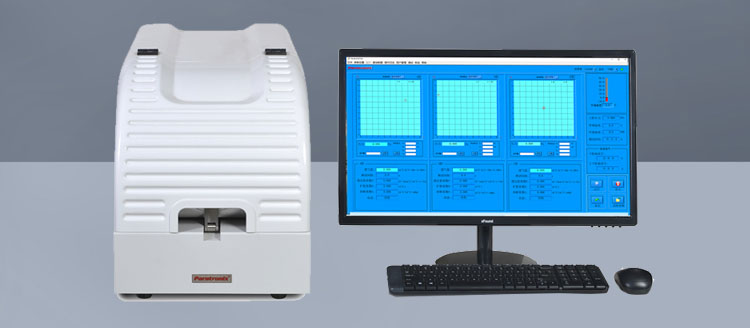
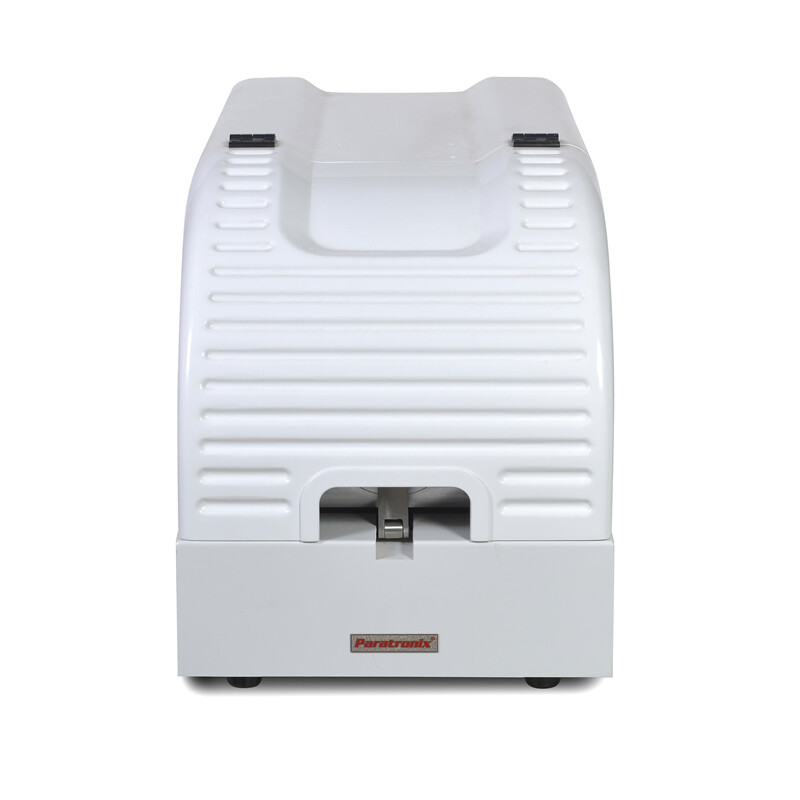
An oxygen permeability tester for pouches measures the rate at which oxygen enters a sealed package under specified conditions. The result is commonly reported as an oxygen transmission rate for the whole package, expressed as a volume of oxygen per package per day. It describes the performance of the assembled pouch, including the material, seals, and any components included in the test.
That distinction matters because a pouch can be made from a high-barrier film and still allow more oxygen through than expected. A weak seal, a flexed area, or a poorly sealed fitment can change the performance of the finished package. The measured rate therefore gives a view of the package as a system, while the test conditions determine how that result should be interpreted.
What the reported oxygen transmission rate represents
Oxygen transmission is the movement of oxygen from one side of a package wall to the other. In a test, a difference in oxygen concentration or partial pressure is established across the pouch. Oxygen moves toward the lower-oxygen side, and the instrument measures the amount reaching a sensor over time. The reported rate represents that flow under the stated conditions.
A whole-pouch result is often expressed in units such as cubic centimeters per package per day. The volume convention and reporting conditions should be recorded because gas volume varies with temperature and pressure. A lower rate indicates that less oxygen entered the tested package per unit of time under those conditions.
The result is a rate, not a direct reading of the oxygen already inside a pouch. It also does not state how much oxygen a product can tolerate. For a package with a stable transmission rate, multiplying the rate by a period provides a simplified estimate of oxygen entry, but real storage conditions and the oxygen gradient can change over time.
Some reports use a transmission rate normalized by exposed area, such as cubic centimeters per square meter per day. This is useful when comparing flat films. A finished-pouch value reported per package includes the effect of package size and the construction presented to the test. Dividing a package result by an assumed film area does not necessarily produce a reliable material property, particularly when seals or fitments contribute to oxygen entry.
What parts of the pouch contribute to the measurement?
A finished pouch has several potential pathways for oxygen. The broad film panels are often the largest exposed surfaces, but the package also contains heat seals, folds, corners, and, in some designs, zippers, spouts, valves, or other closures. A package-level test captures the contribution of the pathways exposed to the test atmosphere and connected to the measured interior.
The film itself may be a multilayer structure. A barrier layer, such as an aluminum foil layer or a suitable polymer barrier layer, restricts oxygen transmission, while other layers provide strength, sealability, or protection. Thickness, coating continuity, and damage to the barrier layer all affect the finished structure. For example, repeated flexing can create defects in a brittle barrier layer even when the outer surface appears visually acceptable.
Seals introduce a different question. The seal area contains fused material, and its performance depends on how the pouch was formed and closed. Contamination in a seal, wrinkles across the seal, or incomplete fusion can create a pathway that is unrelated to the barrier performance measured on a smooth film specimen. A gusseted pouch also has folds and junctions where several layers meet, making its geometry relevant to the finished result.
A whole-package result does not automatically identify which area caused oxygen entry. If a pouch has a higher rate than expected, examining seals and components, comparing it with flat-film data, or testing separately prepared samples can help locate the cause. The original number remains a combined measurement of the tested package.
How the test establishes oxygen entry
One common arrangement places a sealed pouch in a controlled oxygen atmosphere while a carrier gas passes through its interior to an oxygen sensor. Oxygen that crosses the package is carried to the sensor, and the instrument uses the measured oxygen and gas flow to determine a transmission rate. Other instrument designs and package configurations use different arrangements, so the reported result must be read alongside the stated method.
To connect the pouch to the measurement system, tubing or a test port is attached without creating an unintended path for outside air to reach the sensor. The connection itself must be sufficiently tight and suitable for the package. If it leaks, oxygen entering through the fixture can be counted as package transmission and make the pouch appear to have a poorer barrier.
The package is conditioned and tested at defined temperature and humidity conditions. The reading is followed until the method’s criteria for a stable or reportable result are met. High-barrier structures can require longer measurement periods because little oxygen reaches the sensor; an early reading may still reflect residual oxygen or the response of the test setup.
A pouch can be tested empty or in a specified prepared state, depending on the method and the purpose of the measurement. The closure, fill condition, internal support, and any treatment before testing need to be described. These details matter because a pouch that is stretched, folded, or supported differently may expose different areas and place different stresses on its seals.
Conditions that change the result
Temperature and humidity
Temperature affects the movement of oxygen through packaging materials. A result obtained at one temperature should not be treated as an interchangeable value at another. Temperature also affects the package itself: changes in flexibility and dimensions can alter the condition of seals or stressed areas.
Humidity deserves particular attention in structures containing moisture-sensitive barrier materials. A film that performs well when dry can show greater oxygen transmission when exposed to moisture. The humidity on each side of the pouch can matter, so a report that gives only one humidity value may not fully describe the test environment. Comparing two values requires knowing how humidity was controlled and where it was applied.
Oxygen concentration and pressure
The driving force for oxygen transport is the difference in oxygen partial pressure across the package. A test using a high oxygen concentration outside the pouch can produce a different rate from one using ambient air. External and internal pressures also need to be understood: an unintended pressure difference can deform a flexible pouch or encourage flow through a defect.
Results measured under different oxygen conditions should therefore be compared only with an appropriate method or conversion. A simple proportional adjustment assumes behavior that may not hold for every material or for a pouch with a leak.
Package size and construction
Two pouches made from the same roll of film can have different per-package transmission rates because they expose different amounts of material. Their seal lengths and number of junctions may differ as well. A larger pouch is not necessarily made from a poorer barrier material just because its package-level rate is higher.
Construction changes can also affect the result without changing the main film. A new zipper profile, a different seal pattern, or the addition of a spout introduces different surfaces and junctions. Meaningful comparisons keep these details visible rather than treating the pouch material name as a complete description.
Permeation and leakage are different mechanisms
Permeation is molecular transport through a material. Leakage is gas movement through an unintended opening, such as a channel in a seal or a puncture. Both can raise the oxygen detected during a package test, but they point to different causes and may call for different follow-up measurements.
A package with a continuous, low-barrier film can show a high transmission rate without a discrete hole. Conversely, a pouch made from an excellent barrier film can produce a high reading because of a very small seal defect. Visual inspection alone cannot reliably distinguish these situations.
An oxygen transmission test is not automatically a substitute for a dedicated leak test. Its sensitivity to a particular defect depends on the test arrangement, pressure conditions, measurement range, and duration. A leak test is designed to assess package integrity under its own conditions; an oxygen transmission measurement characterizes oxygen entry under the specified barrier test. The two results can provide complementary evidence when a package behaves unexpectedly.
Connecting the measurement to product protection
Oxygen-sensitive products differ in how they respond to exposure. A snack that loses flavor through oxidation, a formulation containing an oxygen-sensitive ingredient, and a component susceptible to discoloration do not share a single acceptable pouch transmission rate. Product sensitivity, the amount of residual oxygen after packing, and the intended storage period all affect the significance of the measured rate.
Headspace is especially easy to overlook. A low oxygen transmission rate limits subsequent entry, but the test result does not remove oxygen already trapped in the pouch at sealing. Likewise, oxygen present in the product or released from the packaging components is not necessarily represented by an empty-pouch transmission test.
Storage conditions add another layer to the interpretation. Temperature and humidity in distribution can differ from those used in the test, and a pouch can be creased or abraded after it leaves the packaging line. Testing samples before and after a defined handling or flexing treatment can reveal whether the barrier changes under that treatment. The result applies to the treatment actually performed; it does not by itself reproduce every shipping environment.
For shelf-life work, the pouch measurement is therefore one input alongside product testing and knowledge of the packed condition. A transmission rate alone cannot establish a shelf-life claim.
Reading a pouch test report
A useful report identifies the pouch construction and dimensions, the closure and fitments included, the number of samples, and the reported unit. It also states the temperature, humidity, oxygen exposure conditions, conditioning, and measurement method. If samples were flexed or otherwise treated, that preparation belongs with the result.
Individual results are informative when several pouches are tested. A single unusually high value can indicate a localized defect or a problem with the test connection; consistently high values can point toward the material, construction, or test conditions. Neither pattern identifies a cause on its own, but the spread helps determine what to investigate next.
Finally, the instrument’s measurement range and reporting limit put very low values in context. A result reported below a detection or quantification limit should be read as a limit-qualified result, rather than as proof of zero oxygen entry. Comparing pouch designs is most meaningful when their reported values, test conditions, and sample preparations are directly comparable.
Leave A Reply
Search by Keywords