




Recent Posts
 Can an ASTM E96 WVTR tester measure coated paper?Nov 14, 2026
 How does an ASTM E96 water vapor transmission rate tester work?Nov 14, 2026
 What does ISO 15106-3 require of a WVTR test method?Nov 14, 2026
 What does ASTM F1249 require for medical packaging WVTR testing?Nov 13, 2026
 Infrared vs Gravimetric WVTR Testing for Food PackagingNov 13, 2026
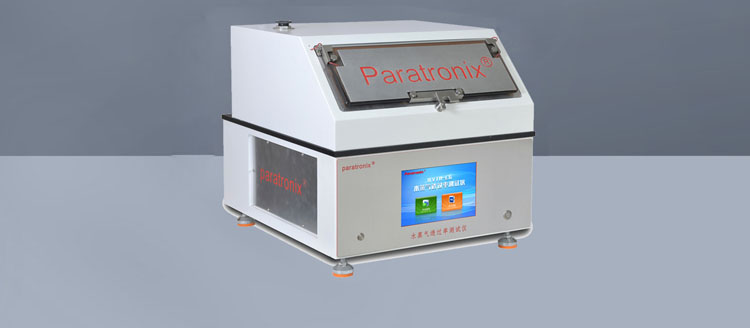
For quality control and safety teams, reliable water vapor transmission rate (WVTR) data is essential to evaluating packaging barrier performance. ISO 15106-3 specifies an electrolytic detection sensor method for measuring water vapor transmission through plastic films and sheeting. But what does the standard require from the test method, and how can an ISO 15106-3 water vapor transmission rate tester support consistent results? This article examines the key testing principles and practical considerations for packaging materials.
What the method measures
ISO 15106-3 describes an instrumental method for determining the rate at which water vapor passes through a plastic film or sheet under specified conditions. A specimen separates a humid side from a dry side. Water vapor permeating the specimen is carried to an electrolytic sensor, where it is measured. The transmission rate is reported relative to the exposed area and time, commonly in g/(m²·day).
The result is not a universal, condition-free property of the material. Temperature, humidity, specimen condition and the direction of exposure can all affect the measured rate. A value obtained under one set of conditions should not be treated as directly interchangeable with a value obtained under another.
The standard concerns films and sheeting, rather than automatically establishing the moisture protection of a finished pouch, bottle or sealed package. Seals, closures, folds and handling damage can introduce pathways that a flat-specimen test does not capture. For a safety-critical packaging decision, film WVTR is therefore one piece of evidence, not a complete package qualification.
The essential requirements of an electrolytic WVTR method
The central requirement is a controlled permeation measurement: the specimen must form a barrier between defined test environments, and the instrument must measure the water vapor that passes through the exposed test area. In an electrolytic detection system, moisture reaching the sensor is absorbed and electrolyzed; the electrical response is used to quantify the water vapor flow.
That principle places practical demands on the whole system, not just the sensor. The test cell must hold the specimen securely and seal around its edges. The humid and dry sides must be maintained at the selected conditions. Carrier-gas flow and the detection system must be controlled according to the applicable method and instrument procedure. The exposed area must also be known, because it is used to calculate WVTR.
A leak around the specimen can be mistaken for permeation through it. Residual moisture in the system can distort a low-rate measurement. A changing temperature can affect both the driving force for permeation and the response of the test system. These are reasons to examine instrument design and operating practice together rather than assuming that an electrolytic sensor alone makes a test compliant.
For formal method implementation, use the applicable edition of ISO 15106-3 and verify its detailed provisions for apparatus, conditioning, procedure, calculation and reporting. This distinction matters: an instrument described as suitable for the method does not, by itself, demonstrate that every test performed on it meets the standard.
Conditions are part of the result
A WVTR number without its test conditions is difficult to interpret. Moisture moves in response to a difference in water vapor partial pressure across the film. Temperature and relative humidity help establish that difference, so a comparison between suppliers or laboratories is meaningful only when the conditions and other relevant method details are aligned.
Consider a multilayer pharmaceutical packaging film being evaluated against an incoming-material specification. If the supplier reports a value at one temperature and humidity and the receiving laboratory tests at another, a disagreement does not immediately indicate a defective lot. The first question is whether the two results describe the same test. The same caution applies when a specification was originally established with a different measurement method.
Conditioning and specimen history also deserve attention. Coatings, moisture-sensitive layers, creases or damage introduced during cutting can affect a measurement. For asymmetric laminates, identify which face was exposed to the humid side and keep that orientation consistent with the specification. Record thickness where required or relevant, but do not assume that a simple thickness correction will make different constructions equivalent.
Equilibrium is another practical issue. A reading taken before the permeation response has stabilized may not represent the intended test result. The time needed depends on the material and test conditions; it should be governed by the applicable standard and a documented endpoint procedure, not by a fixed expectation that every film will finish in the same time.
Why high-barrier materials demand more care
When very little water vapor passes through a specimen, unwanted moisture from the instrument becomes a larger share of the measured signal. Background, contamination, leaks and sensor stability are therefore especially consequential for high-barrier films. A display with many decimal places is not evidence that the result is accurate at the low end of the range.
A useful assessment begins with the expected WVTR range and the decision the result must support. If a laboratory needs to distinguish a material close to a specification limit, it should examine the instrument’s stated measurement range, detection capability and uncertainty under the intended conditions. Those claims should be supported by suitable documentation, not just a brochure value.
Routine checks should address the complete measurement system. Depending on the instrument and laboratory procedure, these may include leak checks, background assessment and verification with appropriate reference materials or transfer standards. The laboratory should also define what happens when a check fails: whether testing stops, how affected results are reviewed and when the system can be returned to use.
Selecting a tester without confusing equipment capability with compliance
An ISO 15106-3 water vapor transmission rate tester should be evaluated against the actual specimens and decisions in the laboratory. A system suitable for routine comparison of conventional plastic films may not have the same practical suitability for very low-permeability laminates. Before selecting equipment, ask the supplier to explain how the proposed configuration supports the applicable standard and the intended measurement range.
Questions worth resolving include:
- Can the instrument maintain and document the required temperature and humidity conditions for the materials being tested?
- Is the claimed range appropriate near the acceptance limit, and what evidence supports performance at that level?
- How are exposed area, sealing, gas supply and flow controlled or verified?
- What calibration, verification, leak-check and background procedures are required, and what consumables or reference materials do they need?
- Can the software retain specimen identification, orientation, conditions, result and any deviations in a form suitable for the laboratory’s records?
- What maintenance, sensor service, training and technical support will be available after installation?
These questions are as relevant to an existing instrument as to a new one. A laboratory can have a capable tester yet obtain inconsistent results because of worn seals, unverified conditions, inadequate training or a poorly defined endpoint. Conversely, careful operation cannot extend a detector’s validated capability beyond the range for which it is suitable.
Comparing methods and reporting results responsibly
Different WVTR methods may use different detection principles and test arrangements. Results should not be assumed equivalent merely because they share the same units. When moving a specification between methods or laboratories, agree on the test conditions, specimen preparation, orientation and reporting rules, then assess comparability using representative materials and an appropriate study. Any acceptance criteria should be established for the application rather than inferred from a single matching result.
A useful report identifies the standard and edition, the material and specimen details, the test conditions, the result and any departures from the specified procedure. Include other information required by the applicable standard and the laboratory’s quality system. For decisions close to a limit, measurement uncertainty and repeatability are especially relevant: a result should not be interpreted more precisely than the measurement process supports.
Paratronix Instruments Co., Ltd. develops and supplies packaging testing instruments for applications including pharmaceutical packaging, plastic materials and high-barrier materials. When discussing a test solution, the most useful starting information is the film construction, expected WVTR, required conditions, applicable standard edition and the decision the data must support. These details allow equipment capability, verification needs and practical operating requirements to be assessed against the actual task.
Leave A Reply
Search by Keywords