




Recent Posts
 What Does an Adhesive Tack Tester Measure in Pressure-Sensitive Tapes?Oct 15, 2026
 Which gases can a gas transmission rate tester actually measure?Oct 14, 2026
 Should you choose a differential-pressure gas transmission rate tester?Oct 14, 2026
 Does your gas transmission rate tester meet ASTM D1434 requirements?Oct 14, 2026
 Horizontal vs. Vertical Peel Testers: Which Fits Your Specimens and Fixtures?Oct 14, 2026


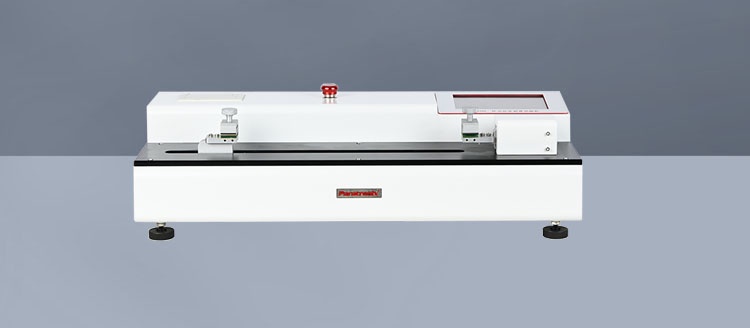
Packaging plants should use a paper tensile tester whenever they need to verify the strength, consistency, and reliability of paper-based packaging materials. From incoming material inspection to production quality control, tensile testing helps identify weak paper, coating-related problems, and process variation before they affect package performance. In pharmaceutical, flexible, and high-barrier packaging supply chains, reliable test data supports safer products, fewer defects, and more confident quality decisions.
The practical question is not whether paper tensile strength matters. It nearly always does. The more useful question is when tensile testing provides information that operators can act on, rather than becoming another number recorded in a quality report. A paper tensile tester is most valuable at points where material changes, machine settings change, or a package failure could be traced back to the mechanical behavior of the substrate.
Use tensile testing before a paper problem reaches the converting line
Incoming inspection is one of the clearest situations for using a paper tensile tester. Packaging plants often receive paper, paperboard, coated paper, label stock, laminated structures, or specialty substrates from several mills or distributors. Materials may have the same nominal grammage and grade, yet behave differently during printing, coating, slitting, pouch making, carton converting, or filling.
A roll or sheet that looks acceptable on delivery can still cause web breaks, edge tears, poor die-cutting performance, or deformation in the finished pack. Tensile testing gives the plant an early indication of whether the material’s resistance to pulling forces is within the agreed control range.
This is particularly important when:
- a supplier has changed pulp composition, furnish, coating formulation, or manufacturing location;
- the plant is qualifying a new paper source or comparing alternative grades;
- an existing supplier delivers material from a different production batch or mill;
- a packaging specification includes minimum tensile requirements in the machine direction (MD), cross direction (CD), or both;
- the material will run on high-speed converting equipment where web tension is difficult to tolerate;
- there has been a recent history of roll breaks, tearing, dust generation, or unstable machine running.
For an operator, the value of incoming tensile testing lies in containment. If the sample is below the internal acceptance limit, the material can be segregated before it is loaded onto a press, laminator, or packaging line. This is usually far less disruptive than discovering weakness after production has started, especially when the material has already been printed or combined with more expensive films, foils, adhesives, or active pharmaceutical components.
When web breaks become frequent, tensile data should be part of troubleshooting
Repeated web breaks are often blamed on machine tension alone. Tension settings, roller alignment, splice quality, static, unwind braking, and winding conditions certainly matter. But a weak or inconsistent paper web can turn a tolerable process setting into a chronic operating problem.
A paper tensile tester helps distinguish between a material issue and a machine issue. If breaks occur with only one supplier lot, one reel position, or one direction of the web, testing can reveal whether tensile strength, elongation, or directional balance is abnormal. That evidence is more useful than relying on visual inspection or operator experience alone.
Testing should be considered promptly when operators notice:
- breaks occurring at normal operating speed after a material change;
- tears starting near edges during rewinding, slitting, or printing;
- web instability after humidity changes in the storage or production area;
- different running behavior between reels of the same declared grade;
- material that survives at low speed but fails during ramp-up or sustained high-speed production;
- unusual variation in break location or force required to pull the web during manual handling.
A tensile result does not automatically identify the root cause. A sample may have acceptable average tensile strength while still containing localized defects, weak splices, damaged edges, or moisture-related variation. However, it provides a disciplined starting point. It can show whether the material is globally weaker than normal, whether variation between samples is excessive, or whether the MD/CD relationship has shifted.
That directional relationship matters because paper is inherently anisotropic. Fibers tend to align during production, so tensile properties are commonly different in the machine direction and cross direction. A plant should not assume that a strong MD value guarantees good converting performance. A web may tolerate longitudinal tension but split or tear more easily across its width, depending on the process and the nature of the stress applied.
Test after process changes that can alter paper strength
Tensile testing is not only an incoming-material activity. It should also be used after operations that may change the mechanical condition of the paper. Converting processes can affect the substrate through moisture, heat, compression, chemical exposure, strain, or structural damage.
Printing, aqueous coating, extrusion coating, adhesive lamination, varnishing, embossing, and drying can all influence how a paper-based material responds to force. Even when the base paper is suitable, the converted structure may become stiffer, more brittle, more extensible, or less uniform.
Testing before and after a critical process can help operators answer practical questions:
- Has high dryer temperature made the sheet more brittle?
- Has a coating operation introduced moisture variation across the web?
- Has lamination changed the load-bearing behavior of the structure?
- Has slitting created edge damage that contributes to later tearing?
- Is a process adjustment improving runnability, or merely shifting the failure point?
This is especially relevant for high-barrier packaging structures. A paper layer may provide printability, stiffness, opacity, or renewable-material content, while films, foil, coatings, and adhesives provide barrier performance. The finished laminate must still withstand converting and filling forces. A material can meet barrier targets and still be unsuitable if its mechanical behavior causes folds, fractures, tears, or poor package formation.
For pharmaceutical packaging, process changes deserve additional caution. Paper-based components may be used in labels, cartons, inserts, lidding structures, sachet materials, or multilayer packs. A mechanical failure may not always create an immediate product leak, but it can affect presentation, traceability, tamper-evidence features, legibility, or the ability of a package to protect a regulated product through distribution.
Use the tester when tensile strength is linked to package performance
Paper tensile testing is most meaningful when the tested property has a defined relationship to an actual risk. A plant should avoid testing simply because the instrument is available. The test plan needs to reflect how the material is stressed in service and during manufacture.
For example, tensile strength can be relevant where paper must resist pulling forces during:
- reel-fed printing and converting;
- automatic carton erection or high-speed folding;
- label dispensing and application;
- paper pouch formation and filling;
- handling of carrier paper, release liners, or coated substrates;
- distribution conditions that place stress on a paper component;
- opening features where controlled tearing is required.
The same test may not answer every package-performance question. Corrugated shipping cases, for instance, are often assessed with additional tests such as edgewise compression, box compression, burst, puncture, or bending stiffness tests, depending on the material and specification. A paper tensile tester is not a substitute for those methods. It is one part of a broader quality-control system.
Likewise, if the problem is adhesive bond failure in a laminate, seal strength, peel adhesion, or delamination, the testing fixture and method may need to be configured for a peel or bond test rather than a conventional paper tensile test. Operators should clarify the failure mode before choosing the test setup. “The package tore” does not necessarily mean that paper tensile strength is the controlling property.
Do not ignore moisture conditioning and sample preparation
Many misleading tensile results come from poor sample handling rather than a faulty tester. Paper is sensitive to moisture. Changes in temperature and relative humidity can alter tensile strength, elongation, stiffness, and dimensional stability. A sample taken from a cold warehouse, a humid converting room, or a freshly dried process may not represent the condition defined by the product specification.
Where test results are used for acceptance, release, supplier comparison, or investigation, samples should be conditioned and tested under the environmental conditions required by the applicable method or internal procedure. International and industry methods for paper tensile testing commonly specify conditioning requirements, specimen dimensions, test speed, and reporting conventions. ISO 1924 series methods and TAPPI tensile test methods are commonly referenced in the paper industry, while ASTM methods may also be used depending on the market and customer requirement.
The key is consistency. The plant should use the same agreed method for routine comparison. Changing sample width, gauge length, crosshead speed, or conditioning practice can change the result. Comparing data from different methods without noting those differences can lead to false conclusions about supplier quality or production stability.
Operators should also pay attention to specimen cutting. Uneven edges, nicks, folds, fingerprints, damaged coated surfaces, and samples cut too close to the reel edge can distort results. If a specimen consistently breaks near the grip rather than in the gauge section, grip pressure, alignment, or specimen preparation may need review.
What to record beyond the maximum force
Maximum tensile force is important, but it should not be the only figure reviewed. Depending on the test method and reporting needs, the plant may assess tensile strength, tensile index, elongation at break, tensile energy absorption, and the direction of testing. These values describe different aspects of behavior.
A paper grade with a high breaking force may still have low elongation and fail abruptly under dynamic conditions. Another material may show adequate elongation but insufficient strength for web tension. Looking at the force-extension curve can be useful during investigations because it shows whether the material fails in a normal pattern or exhibits unusual instability before rupture.
Trend data is often more valuable than a single pass/fail result. If normal production has a stable MD tensile range and a particular lot moves close to the lower limit, operators have an early warning even if the lot technically passes. A gradual downward trend after a coating change, humidity-control issue, or supplier adjustment can be addressed before it becomes a production failure.
For this reason, test reports should identify at least the material grade, supplier or batch, sampling location, test direction, conditioning status, number of specimens, method used, and any visible anomalies. A result without traceability is difficult to use during a supplier claim or internal root-cause review.
When a paper tensile tester may not be the immediate priority
Not every packaging issue requires tensile testing. If carton panels crack during folding, bending stiffness, fold endurance, scoring quality, coating brittleness, and moisture content may be more directly relevant. If packages leak, seal integrity or barrier testing may deserve priority. If printed paper shows scuffing or ink loss, abrasion and adhesion tests may provide better evidence.
Tensile testing also cannot compensate for poor sampling. Testing one specimen from one roll cannot establish the quality of an entire delivery. Sampling plans should reflect material variability, lot size, supplier history, and the consequences of failure. High-risk packaging materials generally require a more disciplined approach than noncritical promotional materials.
The practical aim is not to test everything. It is to use the paper tensile tester at points where a mechanical measurement can change an operating decision: accept or quarantine a delivery, adjust a process, slow or stop a line, investigate a defect, compare a replacement material, or confirm that a corrective action worked.
Building a workable routine on the production floor
A useful tensile-testing routine is simple enough to be followed under production pressure. Operators need clear instructions on where samples are taken, how strips are cut, which direction is tested, how specimens are conditioned, what limits apply, and what action follows an out-of-range result.
Acceptance limits should not be copied blindly from a generic data sheet. They should be linked to the plant’s actual process capability and package requirements. In some cases, a supplier’s nominal minimum value is too broad for a demanding high-speed line. In other cases, an internal limit may be unrealistically tight and reject material that performs adequately. Historical data from successful production runs is essential for setting sensible control ranges.
Instrument maintenance is equally important. Load cells require appropriate verification, grips must be clean and suitable for the specimen, and alignment must be checked. A tester that slips, grips unevenly, or is not verified according to the site’s quality system can create a false sense of control.
Paper tensile testing becomes genuinely useful when it connects material data with operating experience. It gives packaging plants a way to move from “this roll feels weak” or “the line keeps breaking” to evidence that can be reviewed with production, quality, suppliers, and technical teams. Used at the right moments—during incoming inspection, process change, failure investigation, and material qualification—it helps prevent avoidable disruption and improves confidence in paper-based packaging performance.
Leave A Reply
Search by Keywords