




Recent Posts
 How to perform an ampoule break force test according to ISO 9187-1Oct 19, 2026
 How Bone Screw Self-Tapping Testers Measure Axial Force and Tapping TorqueOct 17, 2026
 ASTM F543 Bone Screw Pull-Out Testing: Setup and Reporting RequirementsOct 17, 2026
 What does a lipstick breaking strength tester actually measure?Oct 16, 2026
 What Does an Adhesive Tack Tester Measure in Pressure-Sensitive Tapes?Oct 15, 2026


A packaging film may run smoothly during a short production trial and then begin to wrinkle, drag, telescope, or seal inconsistently after material lots change. In another familiar situation, a lidding film may appear acceptable until operators find that opening force varies from pack to pack, leaving some consumers with a difficult peel and others with a seal that opens too easily. These issues are often discussed as machine settings or sealing problems, but the material’s friction and stripping behavior may be a major part of the cause.
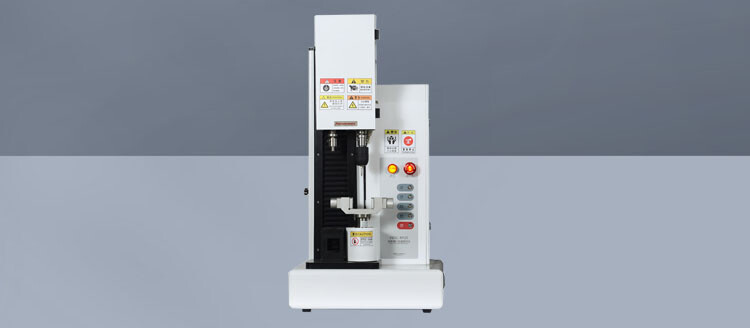
A Friction Coefficient Stripping Tester helps packaging film manufacturers isolate these material-related variables before they become production disruptions. Used correctly, it can measure resistance between contacting surfaces and evaluate the force profile required to separate bonded layers or peelable seal interfaces. The practical value is not simply obtaining a number. It is using repeatable measurements to compare material lots, investigate failures, define workable specifications, and determine whether a film is suitable for its intended converting, filling, sealing, or opening process.
Start with the production symptom, not the instrument
Testing is most useful when it begins with a defined operating question. “Test the coefficient of friction” is too broad for an engineering decision. A more useful question may be: Why does this roll feed unevenly on the form-fill-seal line? Why does one printed surface scuff during rewinding? Why does a peelable pouch open with an inconsistent force? The answer determines which surfaces should contact each other, how specimens should be conditioned, and whether friction, stripping behavior, or both should be examined.
Film friction concerns the resistance generated as one material surface moves across another surface. In packaging operations, this can occur between film layers, between a web and a guide component, between a pouch and a conveyor, or between stacked finished packs. Stripping or peel testing concerns the controlled separation of two bonded materials, such as a lidding film from a tray, a heat-sealed flexible package, or a laminated structure being evaluated for bond performance.
These functions are related because both affect handling and pack usability, but they should not be treated as interchangeable. A film can have acceptable sliding behavior and still show an unsuitable peel profile. Conversely, a peelable package can achieve its intended opening force while the outside film surface causes transport difficulty. Separating these questions prevents a project team from making a broad material decision based on only one measurement.
Map the test to the actual contact pair
One of the most frequent causes of misleading friction data is selecting a test arrangement that does not resemble the real application. Packaging film does not have one universal coefficient of friction. Results depend on the two surfaces in contact and the conditions under which they meet.
For example, a film’s treated side may behave differently from its untreated side. A printed outer surface can slide differently than an unprinted reverse side. A lacquer, coating, slip additive, matte finish, metallized layer, or sealing layer may each change the measured response. Film-to-film testing can therefore require several pairings: inside-to-inside, outside-to-outside, and inside-to-outside. A single result from an arbitrary surface pairing cannot reliably represent all production contacts.
Before specimens are cut, document the intended relationship between the sample and the application:
- Which film surface contacts the opposing surface during unwinding, web transport, stacking, or package discharge?
- Is the opposing material another film, a coated paper, a tray flange, a metal guide, a conveyor belt, or a fixture surface?
- Does the contact occur under a light sliding load, accumulated stack load, or tensioned web condition?
- Does the material travel in the machine direction, transverse direction, or both?
- Will temperature, humidity, dwell time, or contamination alter the contact condition?
This mapping step also makes test reports easier to interpret later. A report that says only “COF result” leaves too much uncertainty. A report that records material identification, side orientation, direction, counterface, conditioning status, and test method gives an engineering team information it can use during a supplier review or line investigation.
Use friction testing to control web handling risks
In film conversion and packaging, friction must fall within a workable range rather than simply be as low as possible. Excessive friction may cause web drag, poor film release, unstable feeding, wrinkles, registration variation, or difficulty separating stacked packages. Very low friction can also be problematic. It may reduce traction at driven rollers, make pouches slide uncontrollably, or alter how packs behave in downstream cartoning and conveying.
A Friction Coefficient Stripping Tester is commonly used to compare static and kinetic friction. Static friction describes the resistance at the moment movement begins. Kinetic friction describes resistance while the surfaces are already sliding. The relationship between them can matter in practice. A large difference may indicate that a web initially resists movement and then releases suddenly, which can contribute to uneven movement under certain handling conditions. A stable kinetic value is often more relevant to sustained sliding, while starting resistance may be important for stack release or initiation of movement.
When a line problem appears after a change in raw material, do not compare only the troubled roll with an internal target value. Test a retained reference roll that is known to process well, using the same surface pairing and orientation. The comparison can show whether the problem material has shifted in the expected direction. It can also reveal that friction is not materially different, allowing the investigation to move toward tension control, roller cleanliness, winding quality, sealing conditions, or mechanical alignment rather than continuing to blame the film.
Directionality deserves a separate decision
Many films are oriented, stretched, embossed, coated, or printed in ways that create directional differences. Testing only one direction may hide a condition that becomes obvious when the web travels through a particular part of a machine. For investigations involving machine-direction travel, test in that direction first. When the application includes cross-web sliding, folding, stack release, or tray contact, evaluate the relevant transverse relationship as well.
Directional testing should be planned rather than added after contradictory results appear. Clearly mark specimen orientation during cutting. Once a sample is removed from the roll, it is easy to lose track of the machine direction, surface side, and location within the web. Those lost details can make a later comparison impossible.
Evaluate stripping behavior as a force profile, not only a peak value
For peelable packaging, the force required to initiate and continue separation affects both package integrity and opening experience. A stripping test can be used to assess a seal interface, laminate bond, or other joined structure by pulling the materials apart under defined geometry and speed. The test curve may be more informative than a single reported number.
A smooth, relatively consistent force trace can indicate a stable separation mode. A highly irregular trace may point to non-uniform seal formation, changing bond behavior across the specimen, material variation, or intermittent tearing. The reason for the variation needs to be identified before a specification is changed. A jagged profile is not automatically unacceptable; some structures separate by mechanisms that naturally produce variation. What matters is whether the observed behavior aligns with the pack design, material construction, and process expectation.
During a stripping investigation, observe the separated surfaces. Did the seal open at the intended interface? Did one film tear? Did the substrate delaminate? Did the seal remain intact while the surrounding material failed? Force data without visual examination can lead to the wrong conclusion. A low measured value caused by film tearing is not equivalent to a controlled peelable seal. Likewise, a high value may be caused by an unintended destructive failure mode rather than a stronger functional seal.
Build a method that can distinguish material variation from test variation
Film testing becomes unreliable when sample preparation changes from one operator or day to another. The instrument may perform correctly while the method introduces uncontrolled differences. A documented procedure should define the specimen dimensions, number of replicates, conditioning approach, sampling positions, test speed, load or fixture configuration, and reporting format appropriate to the application and the applicable test method.
Conditioning is particularly important when film surfaces are affected by moisture, temperature, additives, or post-production aging. Slip additives can migrate toward a surface over time, which may change friction behavior. Recently produced, freshly printed, or freshly laminated material may not behave exactly like material that has been stored under normal warehouse conditions. When comparing lots, keep the conditioning window consistent. If the goal is to understand a warehouse or production issue, reproduce those conditions as closely as practical rather than testing one sample immediately and another after a prolonged delay.
Sampling across the roll is equally important. Material may vary between the roll edge and center, from the outer wraps to the inner wraps, or between printed and unprinted regions. Testing only one convenient piece may miss the pattern behind intermittent production complaints. A practical investigation often begins with samples from several relevant locations, then narrows the sampling plan after a trend is found.
Control the details that can distort the result
- Keep specimen surfaces clean. Fingerprints, dust, loose ink, seal residue, and processing oils can alter both friction and peel behavior.
- Mount samples without wrinkles, curl, slack, or unintended tension. Geometry errors can create false peaks or unstable readings.
- Use the correct surface orientation every time. Marking the sample back side during cutting reduces reversal errors.
- Inspect the sled, fixtures, clamps, and contact surfaces for wear or contamination before comparative work.
- Confirm that the instrument is verified and that the selected load cell or measurement range is suitable for the expected force.
- Do not discard inconvenient data without a documented reason. First determine whether an outlying result reflects handling error, an equipment issue, or actual sample variation.
Turn measurements into release and troubleshooting decisions
Results should be interpreted against functional limits, not against a generic assumption that one friction or peel value is universally good. The useful acceptance range depends on the packaging process and the role of the material. A film intended for high-speed automated pouching may need a different friction window from a film used in manually packed protective overwrap. A lidding system designed for easy opening has different stripping requirements from a permanent seal intended to resist distribution stress.
For new material development, establish a baseline using samples that have demonstrated acceptable performance in the intended process. Test both the baseline and development material under matched conditions. Then connect the laboratory output to observable handling or opening behavior. Over time, this creates an internal relationship between test values, material construction, and process outcomes. It is more useful than adopting broad limits from an unrelated film structure.
For incoming quality control, a staged approach can prevent unnecessary delay. First verify material identity, roll condition, surface orientation, and sample preparation. Next compare the critical friction or stripping result with the approved reference and established limits. When a result is near a boundary, repeat testing with newly prepared specimens and confirm that conditioning and setup were consistent. Escalate only after the result is shown to be repeatable. This approach protects against both accepting an unstable lot and rejecting material because of a preparation error.
During a production investigation, pair test data with line observations. Record where the fault appears, whether it changes with machine speed, whether it is associated with a particular roll position, and whether it occurs at a specific surface contact point. Friction data is strongest when it supports or rules out a mechanism. It cannot, by itself, prove that every handling problem originates in the film.
When friction and stripping results do not match the complaint
A test result within its usual range does not automatically close an investigation. The laboratory arrangement may not reflect the real counterface, contact pressure, speed, temperature, or dwell time. A web may perform poorly against a contaminated guide while showing normal film-to-film friction. A package may have acceptable average peel force but still fail in use because opening direction, seal width, corner geometry, or tear propagation is different from the test setup.
When this happens, revisit the original symptom and adjust the test plan rather than forcing the result to fit the complaint. Test against the actual contact material where feasible. Examine specimens from the specific affected roll area. Compare good and poor samples at the same age. For stripping work, inspect failure modes and consider whether the chosen peel geometry represents how the package is opened. The purpose of the tester is to reduce uncertainty through controlled comparison, not to replace engineering judgment about the complete packaging system.
A well-managed friction and stripping program gives project teams a clearer basis for material approval, process troubleshooting, and change control. By defining the real contact pair, controlling specimen preparation, examining force behavior alongside failure mode, and comparing results with proven references, packaging film manufacturers can use the instrument as a practical decision tool rather than a source of isolated laboratory numbers.
Leave A Reply
Search by Keywords