




Recent Posts
 How to perform an ampoule break force test according to ISO 9187-1Oct 19, 2026
 How Bone Screw Self-Tapping Testers Measure Axial Force and Tapping TorqueOct 17, 2026
 ASTM F543 Bone Screw Pull-Out Testing: Setup and Reporting RequirementsOct 17, 2026
 What does a lipstick breaking strength tester actually measure?Oct 16, 2026
 What Does an Adhesive Tack Tester Measure in Pressure-Sensitive Tapes?Oct 15, 2026

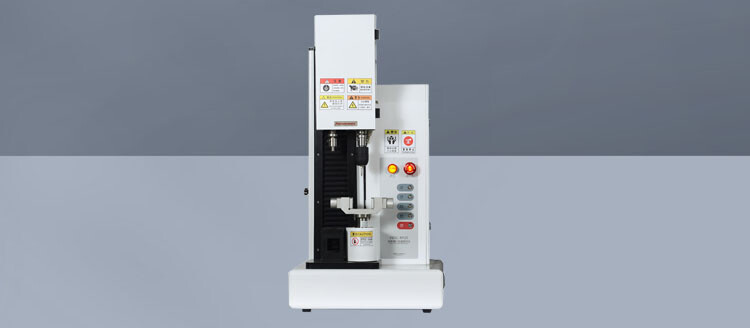

A Friction Coefficient Stripping Tester is used to evaluate two related but distinct behaviors in flexible packaging materials: how easily one surface slides against another, and how much force is required to separate bonded, laminated, sealed, or coated layers. These measurements are important because packaging failures are not always caused by weak material. A film may have adequate tensile strength but still run poorly on a packaging machine, or a laminate may show acceptable adhesion in one direction while requiring excessive force to open or delaminate.
The term can therefore refer to an instrument that combines friction testing with stripping or peeling-force measurement. In practice, the exact function depends on the instrument configuration and the selected test method. Before comparing equipment, it is necessary to confirm whether the required result is coefficient of friction, peel force, seal-opening force, or a combination of these measurements.
What Does a Friction Coefficient Stripping Tester Measure?
Friction testing measures the resistance between two surfaces when one surface moves across another. The result is commonly expressed as the coefficient of friction, or COF:
COF = friction force ÷ normal force
Two values are often considered:
- Static coefficient of friction: the force required to start movement.
- Dynamic coefficient of friction: the force required to maintain movement after sliding has begun.
These values help describe how packaging films behave during feeding, forming, filling, conveying, stacking, and wrapping. A surface with a high COF may resist movement and create feeding or conveying problems. A surface with a very low COF may slide too easily, causing unstable stacks, poor registration, or difficulty controlling the film path.
Stripping or peeling testing measures the force needed to separate two attached materials. The materials may include a laminated film, a coating and its substrate, a lidding material and a container, or a seal formed between packaging layers. Depending on the test method, the result may be reported as force, force per unit width, or a force curve over a defined separation distance.
These are not the same measurement. COF describes surface-to-surface sliding. Stripping force describes separation of an attached structure. A tester may use similar components, such as a motorized drive and load cell, but the specimen preparation, fixtures, movement direction, speed, and calculation method are different.
How the Instrument Works
For a friction test, a specimen is normally fixed to a flat horizontal platform. A second specimen or standard sled is placed on top of it. The sled is connected to a load cell or force-measuring system. As the sled moves at a controlled speed, the instrument records the force required to initiate and maintain sliding.
The software can typically calculate static and dynamic COF from the force curve. The result depends on the applied normal load, sliding speed, specimen orientation, surface condition, and test environment. For that reason, a COF value has meaning only when the test conditions are clearly defined.
For a stripping test, the specimen is prepared with a defined bond, seal, or laminated interface. One layer is clamped while the other layer is pulled away at a controlled angle and speed. The load cell records the separation force. A fixture may be designed for a 90-degree peel, 180-degree peel, T-peel, or another geometry required by the application.
Some tests produce a relatively stable force plateau. Others show peaks and fluctuations caused by seal variation, adhesive distribution, film stretch, coating fracture, or intermittent bond failure. The force curve can therefore provide more information than a single average value. A low average force with severe peaks may indicate a different packaging problem from a consistently low force.
Why COF and Stripping Force Are Both Relevant
Flexible packaging is a moving structure rather than a static sheet. During production, the film may contact guide rollers, forming shoulders, sealing jaws, filling equipment, and other film layers. Its surface treatment and friction behavior influence how reliably it travels through the machine.
At the same time, the finished package must often satisfy a different requirement. A pouch or lidding film needs sufficient seal or bond strength to protect the contents, but it may also need to open within a practical force range. Excessive opening force can damage the package or make it inconvenient for the user. Insufficient force can increase the risk of leakage, contamination, or premature opening.
For multilayer materials, the failure location is especially important. A test may show separation at the adhesive interface, cohesive failure within the adhesive, fracture of a coating, or tearing of one of the film layers. The measured force alone does not always identify the cause. Visual inspection of the separated surfaces and, where necessary, additional analysis are needed to interpret the result.
Where Is It Used?
Pharmaceutical Packaging
Pharmaceutical packaging often combines films, foils, coatings, adhesives, and heat-sealable layers. In blister packs, strip packs, sachets, and pouches, both surface friction and separation force can affect production and use.
COF testing can help evaluate whether a packaging web will feed consistently through forming, printing, sealing, or cutting equipment. It may also be used to compare coated and uncoated surfaces, investigate changes after storage, or check whether a new film behaves differently from an established material.
Stripping measurements are relevant when a lidding material must be removed from a blister or when a layered package is intentionally opened by peeling. The test can help assess opening behavior and detect differences caused by seal temperature, dwell time, pressure, coating formulation, or material thickness.
In pharmaceutical applications, packaging performance cannot be judged by opening force alone. Barrier performance, seal integrity, compatibility with the product, cleanliness, and protection against moisture or oxygen may be equally important. A stripping tester provides one part of the package evaluation rather than a complete assessment of package suitability.
Plastic Films and Flexible Packaging
Plastic films such as polyethylene, polypropylene, polyester, and polyamide may have different surface properties depending on resin composition, additives, corona treatment, printing, coating, and storage conditions. Even films with the same nominal material type can show different COF values.
COF testing is commonly used during film development, incoming material inspection, process troubleshooting, and quality control. It can help investigate issues such as unstable film feeding, poor stacking, web wandering, blocking, or inconsistent machine speed.
Stripping tests are used for laminated films, coated films, peelable structures, and sealed packaging. The purpose may be to compare adhesive systems, evaluate the effect of lamination conditions, or determine whether a film separates at the intended interface. When the material is designed to be peelable, the force profile and the failure mode are often more informative than a simple pass-or-fail result.
High-Barrier Materials
High-barrier packaging may contain aluminum foil, metallized films, deposited oxide layers, tie layers, coatings, and polymer substrates. These structures are designed to restrict the transmission of moisture, oxygen, light, or other gases, but their additional layers can make bonding and separation behavior more complex.
A stripping test can help examine adhesion between the layers or identify whether a barrier coating is being damaged during separation. For example, a laminate may show a suitable average peel force while the barrier layer is removed from the substrate, which may affect the package’s protective performance.
COF testing is also relevant to the handling of high-barrier webs. A low-friction external surface may be desirable for machine transport, while an internal sealant layer may need a different friction and sealing behavior. Testing each relevant surface separately is more informative than assigning one friction value to the entire laminate.
Other Applications
The same testing logic can apply to labels, adhesive-coated materials, medical packaging, tapes, protective films, paper-plastic laminates, and release liners. In each case, the critical question is whether the test reproduces the real interaction in the product or process.
For example, a release liner may require low separation force from an adhesive layer, whereas a medical pouch may require controlled opening without fiber tear or contamination. A label stock may need stable friction during converting but predictable peel behavior during application. The instrument is useful when the measured configuration corresponds closely to the actual use condition.
Common Testing Variables That Change the Result
COF and stripping results are sensitive to test conditions. The following variables should be defined before results are compared:
- Material orientation: machine direction and transverse direction may behave differently.
- Surface selection: the inside and outside surfaces of a film may have different coatings, additives, or roughness.
- Normal load: changing the sled mass can alter the measured friction behavior.
- Peel angle and speed: separation force may change substantially with test geometry and rate.
- Temperature and humidity: polymers, adhesives, and coatings can respond to environmental conditions.
- Specimen width and thickness: these affect force distribution and the way results are reported.
- Conditioning time: freshly laminated or sealed samples may not represent the stabilized structure.
- Surface contamination: dust, oil, printing residues, and handling marks can change friction and adhesion.
Film tension, wrinkles, stretching, and uneven alignment can also distort the measurement. A specimen that is not mounted flat may produce a force peak that is caused by buckling rather than by the material’s true friction or stripping behavior.
Standards and Method Selection
Several standards are used for packaging-related friction and separation measurements, but they address different test purposes. ASTM D1894 and ISO 8295 are commonly associated with the coefficient of friction of plastic film and sheeting. Seal-strength testing may use methods such as ASTM F88/F88M, while peel or adhesion testing can involve other standards, including ASTM D903 or application-specific procedures.
The presence of a standard number in a supplier’s specification does not automatically mean that two instruments or two results are directly comparable. The full method should be checked, including specimen dimensions, sled mass, speed, conditioning, calculation area, peel angle, and reporting format.
A suitable tester should allow the required method to be reproduced consistently. Important features may include stable speed control, appropriate load-cell capacity, interchangeable fixtures, controlled starting position, adequate travel length, and software that records the complete force curve rather than only a final value.
Calibration and verification are also important. The force-measuring system should be checked with traceable loads or according to the applicable quality procedure. Mechanical friction in the instrument itself, fixture alignment, and drive smoothness can influence low-force measurements. A high-capacity load cell is not automatically better if it reduces resolution in the force range being measured.
What the Results Can—and Cannot—Tell You
A friction coefficient can indicate whether two surfaces are relatively easy or difficult to slide under defined conditions. It does not, by itself, predict the complete performance of a packaging machine. Roller geometry, web tension, temperature, speed, static charge, and equipment design may also affect operation.
Likewise, a stripping value can indicate the force needed to separate a defined interface, but it does not prove that the package has adequate barrier performance or long-term stability. Adhesion may change after sterilization, aging, exposure to humidity, contact with the packaged product, or thermal processing.
Comparisons are most useful when the materials are tested under the same method and when the failure mode is recorded. A numerical difference should be interpreted together with the force curve, separated surfaces, and the intended package function.
Choosing the Right Testing Configuration
The correct configuration starts with the question being investigated. If the issue concerns film movement on a packaging line, a COF fixture and a method representing the relevant contacting surfaces are required. If the issue concerns opening, delamination, seal separation, or coating adhesion, a stripping or peel fixture is more appropriate.
For materials with several layers, it is useful to identify the exact interface that must be evaluated before preparing specimens. The instrument should be capable of measuring the expected force range without sacrificing resolution, and the clamps should hold thin films without slipping or cutting into the specimen.
Environmental control may be necessary when the material is moisture-sensitive or when results will be compared across laboratories. A tester used only for basic screening may not need the same configuration as one used for formal quality control, method development, or release testing.
The main value of a Friction Coefficient Stripping Tester lies in connecting a measurable force to a practical packaging behavior. It can support material development, process adjustment, incoming inspection, and failure investigation, but only when the test configuration reflects the real surface interaction or separation mechanism. Understanding that distinction prevents a common error: treating one convenient number as a complete description of packaging performance.
Leave A Reply
Search by Keywords