




Recent Posts
 What does ASTM F543 require of a bone screw torque tester?Oct 23, 2026
 Can a WVTR Tester Test Aluminum Foil Laminates?Oct 22, 2026
 How Do Temperature and Humidity Affect WVTR Lab Comparisons?Oct 22, 2026
 Why Do WVTR Results Differ Between Laboratories?Oct 22, 2026
 What Does a Torque Tester Measure in Bottle Cap Quality Control?Oct 22, 2026
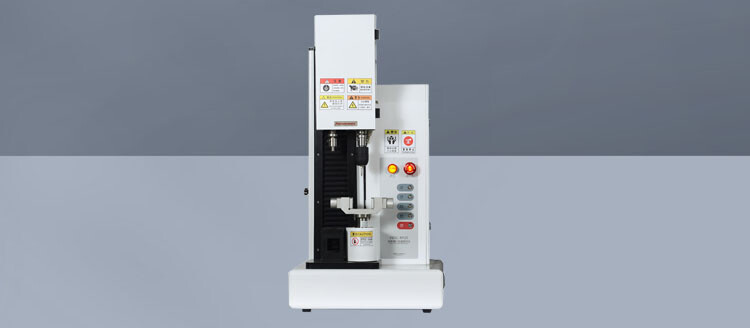
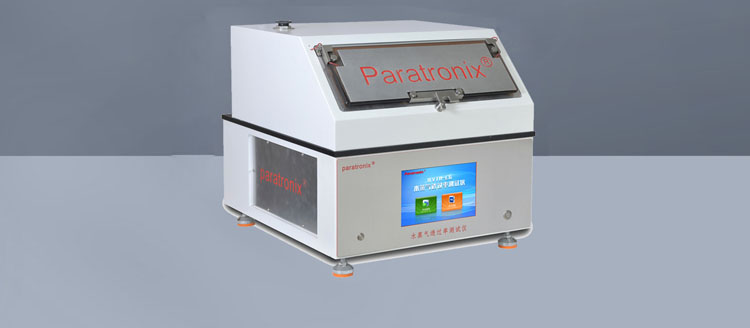
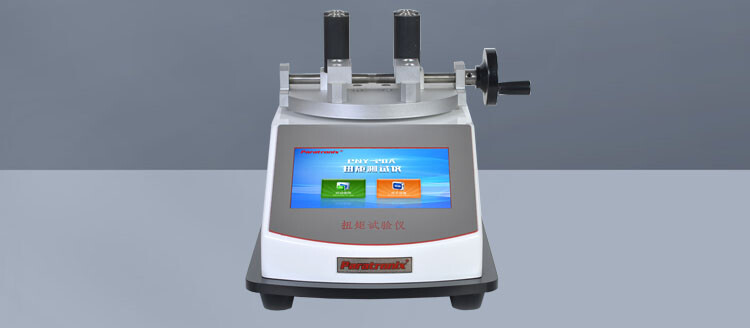
A sauce packet may look simple, but its failure modes are not. A small seal channel, an uneven fin seal, a weakened corner, or a pressure spike during distribution can turn a convenient single-serve pouch into a leakage complaint. For quality and safety teams, the question is not merely whether a packet survives one laboratory test. The more useful question is whether the test reflects the pressure stresses the package will experience during filling, handling, stacking, transport, storage, and consumer use.
When selecting a Sauce Packet Pressure Resistance Tester, the ASTM methods most commonly considered for burst and creep evaluation are ASTM F1140/F1140M and ASTM F2054. Both methods assess internal pressurization failure resistance, but they are designed for different package support conditions. Selecting between them is important because the way a flexible sauce packet is restrained—or allowed to expand—can significantly affect the measured result.
The Short Answer: ASTM F1140/F1140M and ASTM F2054
For flexible sauce packets, sachets, condiment pouches, and similar sealed packages, ASTM internal pressurization methods generally fall into two practical categories:
In most cases, ASTM F1140/F1140M is the starting point for routine sauce packet pressure resistance testing. It is intended for unrestrained packages, meaning the packet can deform and inflate as it would under internal pressure in a relatively free state. This often makes it well suited to flat condiment packets, three-side-seal sachets, four-side-seal pouches, and certain small stand-up pouches.
ASTM F2054 becomes relevant when the package must be physically supported during the test. This may be necessary when the test objective is to control package geometry, evaluate seals while the pouch is constrained, or simulate a condition in which the packet is held against a rigid surface or within a fixture. The result should not be assumed to be interchangeable with an unrestrained F1140/F1140M result.
What ASTM F1140/F1140M Measures in Sauce Packet Testing
ASTM F1140/F1140M, commonly referenced as the standard test method for internal pressurization failure resistance of unrestrained packages, addresses a practical concern: how much internally applied pressure a package can tolerate before it leaks, opens, ruptures, or otherwise fails.
For a sauce packet, failure may occur in several places. A weak heat seal may peel open. A corner may split where sealing conditions were inconsistent. A film structure may puncture or tear. In some cases, the packet body stretches substantially before failure, while in others the package fails abruptly with little visible warning. A properly configured pressure test captures not only the peak pressure but also the observed failure location and mode.
The standard supports three common test approaches:
- Burst testing: Internal pressure is increased until the package fails. The key result is typically the maximum pressure reached before failure.
- Creep testing: The package is exposed to a specified pressure for a specified time. The purpose is to determine whether it can hold that pressure without failure.
- Creep-to-failure testing: A selected pressure is applied and maintained until the package fails, allowing the team to measure time to failure.
These approaches answer different quality questions. Burst testing is often useful for comparing materials, sealing conditions, equipment settings, or supplier lots. Creep testing is more appropriate when the quality specification requires a packet to survive a defined pressure-time combination. Creep-to-failure testing can be especially valuable during package development, root-cause investigations, and margin assessment, where knowing how long a package survives under sustained stress provides more insight than a single burst value.
Why Unrestrained Testing Often Reflects Real Flexible-Packet Behavior
A flexible sauce pouch does not behave like a rigid bottle. As internal pressure rises, the film panels can bow outward, the seals experience changing tensile loads, and stress may concentrate around corners, notches, transition areas, and seal overlaps. An unrestrained test permits these effects to occur naturally.
This matters because a packet that looks strong in a tightly supported fixture may perform differently when it is free to expand. Conversely, if a packet is unusually thin, highly flexible, or difficult to connect securely to the test system, it may need careful handling to avoid introducing artificial damage before the test begins.
For production quality control, ASTM F1140/F1140M can provide a repeatable framework for comparing lots, shifts, sealing jaws, film structures, and process changes. However, repeatability depends on more than the tester itself. Pressure ramp rate, test connection method, specimen orientation, conditioning, fill condition, and failure criteria all need to be controlled.
When ASTM F2054 Is the Better Choice
ASTM F2054 addresses internal pressurization failure resistance for restrained packages. In this method, the package is supported or held in a way that limits its expansion during pressurization. The restraint system becomes part of the test condition, which is why fixture design and consistency matter greatly.
A restrained test may be selected when a quality team needs to isolate seal performance from broad package-body expansion, evaluate a particular seal zone under controlled geometry, or use a test arrangement that represents a specific packaging or handling configuration. It can also be useful where free inflation would make specimen positioning inconsistent.
Still, restraint should never be treated as a neutral detail. A fixture can redistribute stresses and change the measured burst pressure. If the restraint contacts an area close to the seal, pinches the film, or prevents the pouch from deforming in its normal way, the result may no longer represent ordinary package behavior. The method should therefore be chosen because its conditions are meaningful—not simply because the package is easier to test in a holder.
Burst Versus Creep: Which Result Should Drive the Specification?
It is tempting to set a single minimum burst pressure and use it as the entire acceptance standard. That approach is simple, but it can miss a meaningful weakness. Some packages tolerate a short pressure rise yet fail when exposed to a lower pressure for a longer period. This is particularly relevant for flexible structures where polymer relaxation, seal creep, or slow propagation of a seal defect can occur.
A burst requirement is usually appropriate when the main risk is a sudden pressure event, such as a filling upset or transient mechanical compression. A creep requirement is often more relevant where sauce packets may remain under a sustained load, be tightly packed in cases, or encounter extended thermal exposure that affects seal behavior.
Many packaging programs benefit from using both:
- A burst test for monitoring overall package strength and process consistency.
- A creep test for confirming resistance to a defined pressure over time.
- Creep-to-failure testing during qualification or investigation rather than as a high-frequency production test.
The selected pressure and duration should come from package design knowledge, transportation conditions, filling pressure, product characteristics, historical failure data, and internal risk assessment. ASTM methods establish the testing framework; they do not automatically supply a universal pass/fail pressure for every sauce packet.
Test Conditions That Can Change the Result
Two laboratories can test nominally identical packets and obtain different results if the test conditions are not aligned. Quality teams should document the following items in the test method or work instruction:
- Specimen condition: Empty, air-filled, product-filled, or partially filled packets may behave differently. Viscous sauce can influence package deformation and pressure distribution.
- Test medium: Air is commonly used for internal pressurization, but the selected medium and setup should match the applicable method and package design.
- Pressure profile: A controlled ramp rate is essential for comparable burst values. An uncontrolled or inconsistent ramp can distort results.
- Hold pressure and duration: For creep testing, both values must be clearly stated. “No leakage” has little meaning without a defined exposure condition.
- Connection method: The package must be connected without damaging the seal or creating a leak path at the test interface.
- Sample orientation: A packet tested through one side, corner, or seal configuration may not behave the same as one tested in another orientation.
- Environmental conditioning: Temperature and humidity can affect films, adhesives, and heat seals. Testing after realistic conditioning is often more informative than testing only at room conditions.
- Failure classification: Seal separation, film rupture, pinhole leakage, corner split, and test-port leakage should be recorded separately.
For food-contact sauce packaging, it is also wise to consider product compatibility. Acidic sauces, oils, salt, spices, and retort or hot-fill conditions may affect sealant layers or interlayer adhesion. A strong result on an unfilled sample is useful, but it should not be assumed to represent the package after actual processing and storage.
Do ASTM F88, ASTM D3078, or ASTM F2096 Replace a Pressure Resistance Test?
No. These methods may complement pressure resistance evaluation, but they answer different questions.
ASTM F88/F88M measures seal strength. It is valuable for understanding peel force, seal consistency, and failure mode, yet it evaluates a cut seal specimen rather than the finished package’s ability to withstand internal pressure as a complete system. A packet can show acceptable seal strength in an F88 test and still fail at a corner, channel, or localized defect during pressurization.
ASTM D3078, often used for bubble emission leak detection under vacuum, can help identify gross leaks in flexible packages. ASTM F2096 uses bubble emission to detect gross leaks in nonporous packages. These methods are useful for leak screening, but they are not substitutes for burst or creep resistance testing. Leak detection asks whether a package leaks under the defined test condition; burst and creep tests ask how the package performs when challenged by internal pressure.
For a robust sauce packet validation plan, teams may use seal-strength testing, leak testing, and ASTM F1140/F1140M or ASTM F2054 pressure testing together. Each method reveals a different part of the package performance story.
Choosing a Sauce Packet Pressure Resistance Tester
The instrument should support the ASTM approach chosen by the laboratory, rather than forcing the laboratory into a convenient but unsuitable test. A Sauce Packet Pressure Resistance Tester should provide stable pressure control, reliable measurement, programmable test profiles, and clear recording of pressure and time. For burst work, consistent pressurization is crucial. For creep testing, the system must maintain the programmed pressure accurately throughout the hold period.
Practical features also matter on a busy quality floor. Operators need a connection system appropriate for the packet format, a test chamber or safety arrangement where required, and software or data output that supports traceable records. The ability to store test methods can reduce setup variation between shifts. Equally important is a clear indication of whether a test ended in package failure, reached the required hold time, or was invalid because of a fixture or connection issue.
Paratronix Instruments Co., Ltd. develops packaging testing instruments for pharmaceutical packaging, plastic packaging materials, high-barrier materials, and related applications. For sauce packet programs, the right configuration should be based on the pouch dimensions, material structure, seal layout, expected pressure range, test mode, and whether the sample is tested in an unrestrained or restrained condition.
A Practical ASTM Selection Checklist
Before releasing a test method, ask a few direct questions:
- Is the packet normally free to expand under internal pressure? If yes, ASTM F1140/F1140M is usually the more representative starting point.
- Is controlled support essential to the test objective? If yes, evaluate ASTM F2054 and define the restraint fixture carefully.
- Are you measuring peak resistance, survival at a defined pressure, or time to failure? Select burst, creep, or creep-to-failure accordingly.
- Will the test use empty packets, finished filled packets, or conditioned samples after heat exposure and storage?
- What constitutes failure: any visible leak, pressure loss, seal opening, film rupture, or a specific defect category?
- Does the test method identify the current ASTM edition, internal acceptance criteria, sampling plan, and reporting format?
The final point deserves emphasis. ASTM F1140/F1140M and ASTM F2054 are test methods, not standalone product certifications. They define a disciplined way to generate comparable data, but the package specification must still state the required performance level. Organizations should verify the current controlled edition of the applicable ASTM standard and any customer, regulatory, or internal requirements before finalizing a protocol.
Making Pressure Data Useful for Packaging Decisions
A failed sauce packet is rarely just a laboratory number. It can mean product loss, carton contamination, retailer complaints, food safety concerns, production downtime, and costly investigation. A carefully selected ASTM pressure test gives quality teams a clearer view of where the package margin truly lies.
For most flexible sauce packets, ASTM F1140/F1140M provides the natural foundation for burst and creep testing because it evaluates the package in an unrestrained state. ASTM F2054 is valuable when restrained testing is genuinely needed and the fixture condition is part of the intended evaluation. Used alongside seal-strength and leak-detection methods, a properly configured Sauce Packet Pressure Resistance Tester can turn pressure testing from a pass/fail routine into a dependable tool for package control and safer distribution.
Leave A Reply
Search by Keywords