




Recent Posts
 Key Specifications to Compare When Selecting a Lipstick Break Force TesterOct 08, 2026
 What Does a Lipstick Break Force Tester Measure in Quality Control?Oct 08, 2026
 Validation Records and Test Standards for Artificial Skin Puncture TestingSep 24, 2026
 Force Tester or Universal Testing Machine for Artificial Skin Puncture Tests?Sep 24, 2026
 What Does an Artificial Skin Puncture Force Tester Measure in Needle Testing?Sep 24, 2026

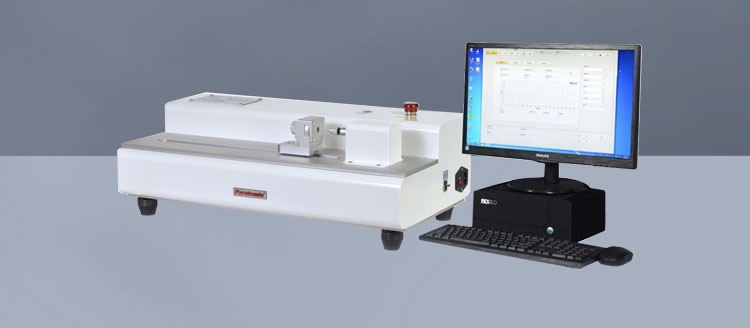
Composite packaging materials are evaluated based on the strength of the adhesive force between layers in multiple materials using peel strength, which is one of the important quality indicators of composite materials.
There are generally two types of peeling experiments: T-shaped peeling (90 degrees) and 180 degrees peeling. The angle and speed of peeling, as well as the temperature of the environment, will affect the results of the test. As a flexible packaging material, 180 degrees peeling is generally used.
The peeling test equipment adopts Paratronix. A tensile testing machine suitable for peeling, breaking and other performance testing of adhesives, adhesive tapes, stickers, protective films, release papers, composite films, synthetic leather, woven bags, films, polarizer sheets, paper, wire, rubber adhesives and other related products. By using different fixtures, quantitative testing of mechanical indicators such as tension, modulus, tear, strength, peeling, puncture, compression, and sliding of products can be carried out.
Testing Instrument:ETT-A Auto Tensile Tester
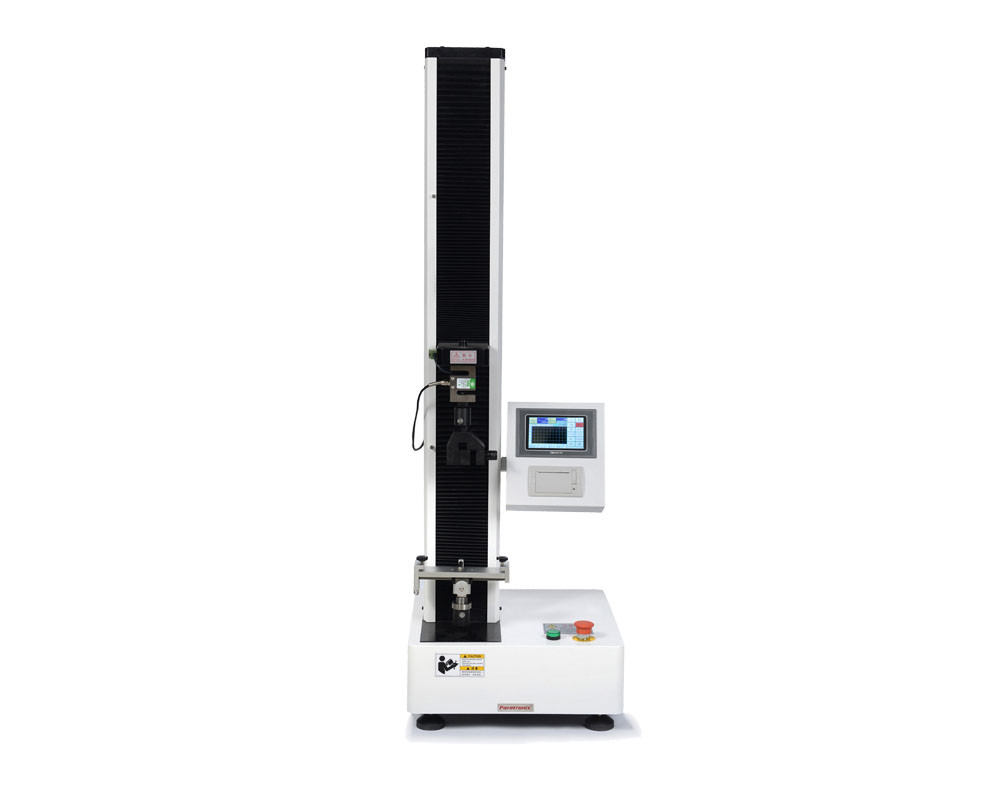
In the actual inspection of peel strength, due to some orientation in the production process of adhesives or other materials, their longitudinal and transverse peel strength may be different. If pre peeling is not possible in the peeling test, it cannot be peeled. If the substrate is pulled apart in the peeling test, it should be noted as substrate breakage. The peeling speed affects the detection results of peeling strength. Generally, increasing the peeling speed leads to an increase in peeling strength. The peeling angle of T-shaped peeling has a significant impact on the peeling strength, so it should be ensured that the peeling angle is 90 degrees in the experiment. In the peel strength test, the composite film should be peeled off in advance. Due to the fact that pre stripping by hand is not an easy task, many operators use ethyl acetate or other solvents, or even some special stripping agents, to soak the sample, which indeed makes pre stripping easier. However, it should be noted that due to the permeation effect and the action of solvent gas molecules in the environment, even for composite films immersed in water, their peel strength will be reduced. Therefore, the actual experimental samples should be kept as far away from the solvent environment as possible, and the samples should be tested away from the soaked parts.
Leave A Reply
Search by Keywords