




Recent Posts
 Key Specifications to Compare When Selecting a Lipstick Break Force TesterOct 08, 2026
 What Does a Lipstick Break Force Tester Measure in Quality Control?Oct 08, 2026
 Validation Records and Test Standards for Artificial Skin Puncture TestingSep 24, 2026
 Force Tester or Universal Testing Machine for Artificial Skin Puncture Tests?Sep 24, 2026
 What Does an Artificial Skin Puncture Force Tester Measure in Needle Testing?Sep 24, 2026

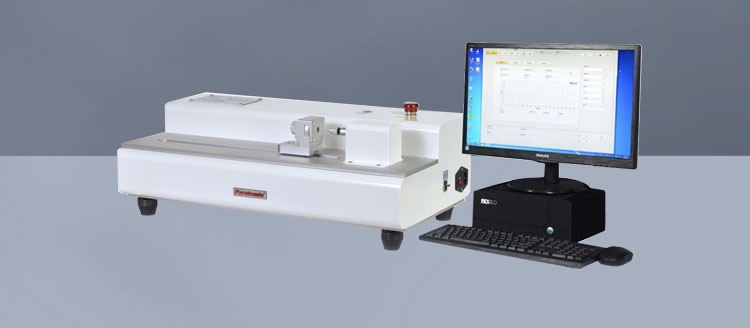
Food chain self sealing bag is a common food packaging made of polymer materials, usually polyethylene (PE), polypropylene (PP), etc. Its main structure includes a bag body and a clip chain, with the clip chain located at the bag mouth and composed of two interlocking plastic strips. The self sealing bag with a clip chain achieves sealing through the biting of the clip chain, effectively preventing items from getting damp or contaminated, keeping them dry and clean, and thus extending the shelf life of food. The opening performance of the clamp chain has a significant impact on the effectiveness of the clamp chain self sealing bag, and the opening tension is an indicator for evaluating the opening performance of the clamp chain.
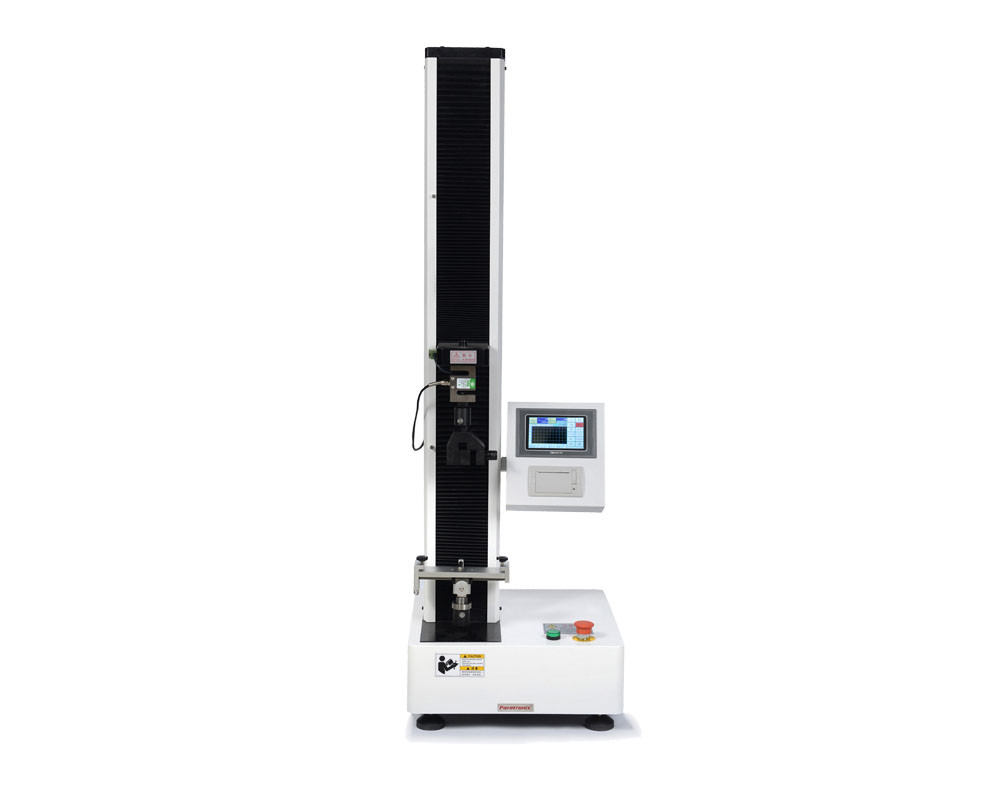
The Paratronix ETT-A Auto Tensile Tester can test the inner and outer opening tensile forces of clamp chain self sealing bag samples. The opening tension of the clamp chain refers to the force required to open the convex edges and grooves of the clamp chain. During the experiment, the two plastic film parts containing one end of the clamped chain sample after cutting are clamped into the upper and lower fixtures of the equipment, so that the clamped chain is in the middle position of the two fixtures. The upper fixture of the equipment pulls apart the clamped chain during the upward movement. The force sensor configured in the equipment monitors the force value generated during the pulling process of the clamped chain in real time. After the test is completed, the opening tension of the clamped chain is calculated and displayed based on the monitoring value.
1. Select representative samples of clamp chain self sealing bags, with a quantity generally not less than 5. Ensure that the sample has no obvious defects in appearance and the clamping chain is intact and undamaged.
2. Place the sample and tensile testing machine in a standard testing environment, typically at a temperature of 23 ℃± 2 ℃ and a relative humidity of 50% ± 5%, for a minimum of 4 hours to achieve environmental equilibrium for the sample.
3. Install the clamp chain self sealing bag flat in the fixture of the tensile testing machine. The fixture should clamp the opening edge of the bag to ensure that the clamp chain is in a natural state and not subjected to additional stretching or twisting.
4. Start the tensile testing machine and apply tension to the self sealing bag of the clamp chain at a constant speed (usually 50mm/min or 100mm/min) to gradually open the clamp chain. Record the tension value displayed by the tensile testing machine when the clamp chain starts to open, which is the opening tension of the sample.
5. Repeat steps 3 and 4 for each sample, and record the opening tension value for each sample separately.
Attention: ① Before the test, check the accuracy of the tensile testing machine and the reliability of the fixture to ensure the accuracy of the test results. ② When installing samples, attention should be paid to avoiding damage or pre stretching of the clamping chain caused by human factors, so as not to affect the test results. If any abnormal phenomena occur during the testing process, such as chain breakage or bag damage, the reasons should be recorded and analyzed.
Leave A Reply
Search by Keywords