




Recent Posts
 How test speed affects lipstick breaking strength resultsOct 10, 2026
 Choosing a Water Vapor Transmission Rate Tester for flexible filmsOct 10, 2026
 How to select a friction peel tester for flexible packaging filmsOct 09, 2026
 Key Specifications to Compare When Selecting a Lipstick Break Force TesterOct 08, 2026
 What Does a Lipstick Break Force Tester Measure in Quality Control?Oct 08, 2026

What Seal Integrity Testing Reveals About Leaks in Sterile Packaging
In sterile packaging, a package can look perfectly acceptable and still be unsafe. A seal may appear continuous, a pouch may feel tight, and a lidding material may remain attached to the tray—yet a narrow channel, a local wrinkle, or a weak area around a transition can allow contamination to enter over time. These are not always dramatic defects. In many investigations, the problem is measured in small, inconsistent leak paths that become relevant only after handling, distribution stress, or extended storage.
That is why Seal Integrity Testing is more than a final inspection step. It is a way to understand whether a sterile barrier system performs as intended, where it is vulnerable, and whether a suspected issue comes from sealing conditions, package design, material behavior, or later damage. For pharmaceutical packaging, medical and high-barrier applications, the test result is most useful when it is interpreted as part of the whole packaging process—not as a simple pass-or-fail number.
The practical question is rarely just, “Does this package leak?” Quality teams usually need to know what kind of leak may be present, how repeatable it is, whether it affects the sterile barrier, and which production or handling condition created it. The answer depends heavily on selecting a method that fits the package and the failure mode.
A seal is not one uniform line
Sterile packaging seals are often described as if they were simple bonded edges. In reality, they are interfaces formed under specific combinations of heat, pressure, dwell time, cooling conditions, material surface characteristics, and machine control. A seal around a thermoformed tray, for example, may behave differently at the corners than along a straight edge. A pouch seal can be affected by film curl, contamination in the sealing area, uneven jaws, or small variations in coating distribution.
This matters because a package can have adequate average seal strength while still containing a localized integrity defect. Seal strength testing and leak testing answer related but different questions. Strength testing evaluates the force needed to separate a seal under defined conditions. Integrity testing looks for pathways through which gas, liquid, microorganisms, or contaminants could potentially pass. A strong seal does not automatically prove the absence of a channel, and a leak test does not explain every aspect of peel performance.
In day-to-day quality work, the most difficult defects are often the ones that sit near the boundary between obvious failure and normal process variation. A gross opening may be visible. A very small defect may only appear under a sensitive test method or after the package has undergone conditioning. That gap is where a well-designed testing program earns its value.
What leaks can reveal about the packaging process
When Seal Integrity Testing identifies leakage, the leak itself is only the first finding. The location, appearance, and recurrence pattern can point toward a likely process issue. A defect repeatedly found near one corner of a tray may suggest uneven pressure distribution, geometry-related stress, or a sealing surface that does not sit flat. Failures concentrated near the beginning or end of a pouch seal can indicate jaw alignment, material tracking, or inconsistent cutting and registration.
Contamination is another common source of concern. Fine powder, fibers, product residue, lubricants, or moisture in the seal area may prevent a complete bond. The resulting defect may be intermittent rather than present on every package, which makes sampling and investigation more complicated. If testing finds only occasional failures, it is tempting to dismiss them as isolated events. In sterile applications, however, an intermittent defect can be exactly the issue that needs attention, because it may reflect a process condition that is not under sufficient control.
Leak patterns can also distinguish manufacturing defects from distribution damage. A seal failure that appears immediately after packaging may be connected to the sealing process. Damage seen only after transportation simulation, vibration, compression, or temperature exposure may instead reveal that the package is vulnerable during its real journey. The distinction affects the corrective action. Adjusting heat-seal settings will not solve a packaging design that is easily punctured by a sharp component inside the pack.
Not every leak test sees the same defect
There is no universal test that is automatically best for every sterile package. Methods differ in sensitivity, destructive effect, suitability for porous or nonporous materials, and ability to locate a defect. The right choice begins with the package construction and the risk being evaluated.
For nonporous flexible packages, vacuum decay is often considered when a non-destructive, quantitative approach is needed. The principle is straightforward: the package is placed in a chamber, a controlled vacuum is applied, and pressure behavior is monitored. The actual challenge is less simple. Flexible packaging expands under vacuum, and that expansion can influence the measurement. A method must therefore separate normal package movement from behavior caused by leakage.
Bubble testing remains useful because it can make a gross leak visible and can sometimes help locate the area of failure. But it relies on observing bubbles, so package geometry, test setup, lighting, immersion depth, and operator technique can all affect the result. It is a practical investigative tool, not a shortcut around method qualification.
Dye-based methods can be effective for certain seal-channel evaluations, particularly where package materials and test conditions are appropriate. They are destructive and may introduce their own interpretation challenges. A dye finding at the edge of a seal may indicate a genuine channel, but it may also require confirmation that the test itself did not create or exaggerate the observed pathway. This is one reason experienced teams do not rely on a single method for every investigation.
The real issue is defect relevance, not just test sensitivity
It is easy to assume that the most sensitive available method is always the best option. In practice, a test program must be sensitive enough to detect defects that matter to the package’s intended use, while remaining repeatable and meaningful in routine operation. A highly sensitive method can create confusion if normal material variability produces unstable results. Conversely, a simple method may miss the defect mode that presents the greatest risk.
A useful method-development conversation usually starts with a few unglamorous but decisive questions: What does the package protect? Is the sterile barrier porous or nonporous? Is the product itself rigid, sharp, liquid-filled, or moisture-sensitive? Could the package be damaged after sealing? Is the concern a seal channel, a pinhole, a cracked tray, or leakage around a closure? These questions should come before selecting an instrument.
For sterile barrier systems, standards such as ISO 11607 are often part of the broader validation discussion, while specific test methods may be selected from relevant ASTM or other applicable standards. The exact requirement depends on the product, market, package configuration, and quality system. It is sensible to verify the current version of any standard and confirm how it applies to the particular project rather than treating a standard name as an automatic test plan.
Why apparently good seals fail later
Some integrity failures do not originate at the sealing station. A package may leave the line intact but develop a problem during sterilization, aging, shipment, or opening-related handling. Material stiffness can change with temperature. Adhesive or coating behavior can shift after exposure to a sterilization process. A rigid tray may flex under compression, placing stress on the lidding seal. In high-barrier packaging, a fold or abrasion point may become more significant as the material is handled through multiple stages of the supply chain.
This is why testing only freshly produced samples can give a false sense of security. Fresh-package testing is necessary, but it may not represent the condition of a package at the end of its intended life. Where the risk assessment indicates it is relevant, integrity testing may be considered alongside aging studies, distribution evaluations, package opening assessments, and seal-strength measurements. The purpose is not to run every available test. It is to avoid leaving the most likely failure mechanism unexamined.
A recurring mistake is treating a leak test as an isolated quality-control gate. If failures occur, the investigation should compare samples across cavities, shifts, material lots, sealing lanes, and process conditions where possible. A pattern that is invisible in a small mixed sample may become clear once test results are mapped back to production information.
Building a more useful testing workflow
A sound workflow begins with visual examination and package knowledge, then uses instrument-based testing to answer a defined question. For example, if a production team suspects contaminated seal areas, a method capable of detecting channel-type defects may be more informative than a general gross-leak screen. If the concern is a pinhole in a barrier film, the team may need a different challenge method entirely.
Controls are particularly important. Known good samples, intentionally defective samples where appropriate, and repeat testing help establish whether the method can distinguish acceptable packages from relevant failures. Without this work, an instrument may produce readings, but the organization may not know what those readings mean. The acceptance limit should not be selected simply because it looks tight; it should be supported by package performance requirements, method capability, and the risks being controlled.
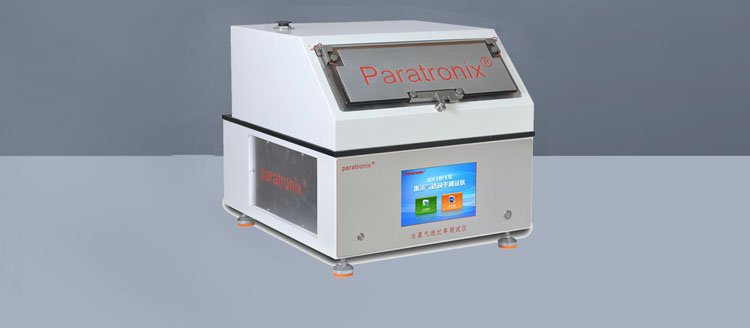
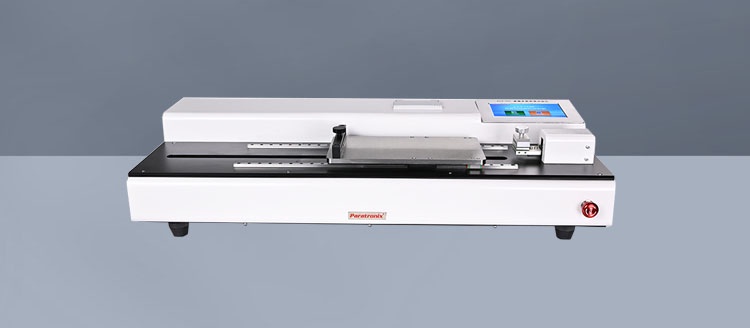
Equipment design also has practical consequences. Chamber size, vacuum control, sensor resolution, data recording, test repeatability, and fixture compatibility can all affect routine usability. Manufacturers such as Paratronix Instruments Co., Ltd. develop packaging testing instruments for pharmaceutical packaging, plastic packaging materials, and high-barrier applications, where these details are often more important than a broad product label. The most suitable configuration is usually the one that matches the actual package dimensions, material response, and validation approach—not necessarily the system with the longest feature list.
What a test result should prompt next
A passing result supports confidence only within the boundaries of the tested sample, method, and conditions. A failing result should trigger questions rather than immediate assumptions. Was the defect in the seal, the substrate, or the closure? Was it present before testing? Does it repeat under the same setup? Is it associated with a particular material lot or machine condition? Can another suitable method confirm the finding?
The strongest use of Seal Integrity Testing is therefore diagnostic as well as preventive. It exposes hidden leakage pathways, but it also helps teams decide where to look next: at sealing parameters, package geometry, incoming materials, transport protection, or test-method suitability. In sterile packaging, that disciplined interpretation is what turns a leak test from a routine check into evidence that can protect the product barrier throughout its intended life.
Leave A Reply
Search by Keywords